New Conflicts Strain Ukraine Aid, Oil Prices Benefit Russia
New global conflicts, particularly in the Persian Gulf, are diverting critical U.S. air defense resources away from Ukraine and driving up oil prices, which benefits Russia. Former Ambassador Steven Pifer discusses how these international events create significant challenges for Ukraine's war effort and expresses skepticism about the effectiveness of current U.S. mediation efforts without stronger pressure on Moscow.

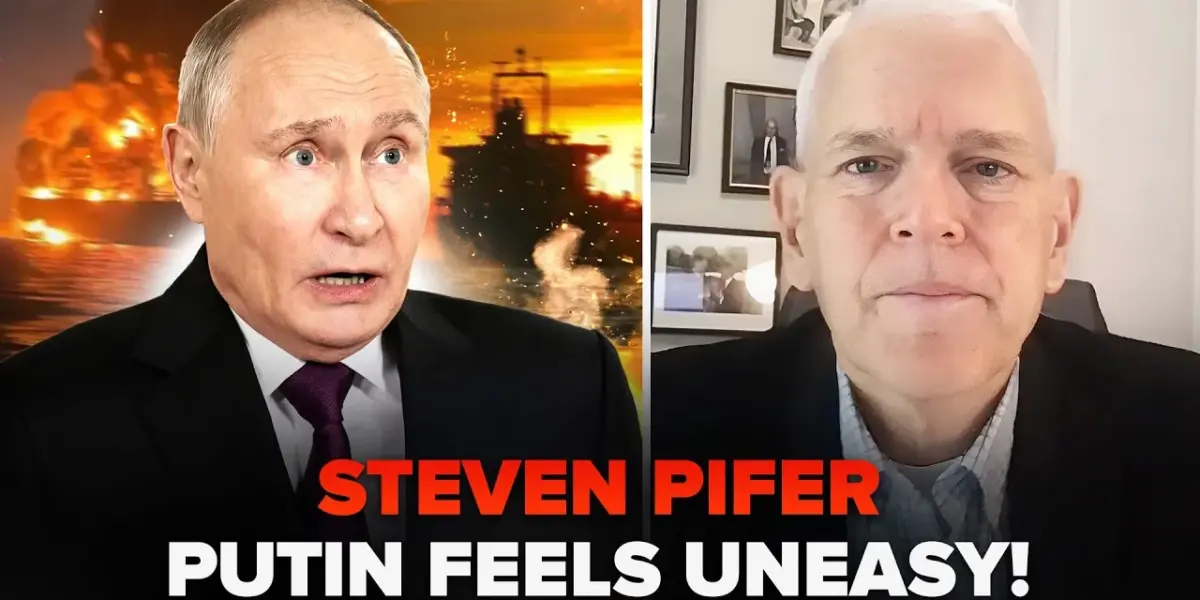
Global Tensions Shift Focus, Impacting Ukraine’s War Effort
In a rapidly evolving geopolitical landscape, the emergence of new conflict zones, particularly in the Persian Gulf, is creating significant challenges for Ukraine’s ongoing defense against Russian aggression. Former U.S. Ambassador to Ukraine, Steven Pifer, speaking on the “24 War and Politics” YouTube channel, outlined two primary ways these international developments could negatively impact Ukraine’s position.
Air Defense Demand and Rising Oil Prices Erode Ukrainian Advantage
The first major concern highlighted by Pifer is the increased demand for American air defense capabilities. As the United States and its allies engage in military actions against Iran, these crucial air defense assets, which are also desperately needed on the Ukrainian front lines, will be stretched thin. This diversion of resources could leave Ukraine more vulnerable.
“The need to defend American forces and also other countries in the Persian Gulf is going to place a demand for American air defense capabilities, which of course are very much needed in Ukraine,” Pifer explained. “So I think that’s one potentially negative impact for Ukraine.”
The second significant factor is the impact on global oil prices. The conflict in the Persian Gulf, a major oil-producing region, has already led to a surge in oil prices.
This increase, Pifer noted, directly benefits Russia, which has struggled with oil revenues in recent years. While 2025 was reportedly a poor year for Russian oil income, higher prices can significantly strengthen Moscow’s war chest.
“About 20% of the oil produced in the world comes out of the Persian Gulf region, and that has caused an increase in the price of oil, and that will benefit Russia,” Pifer stated. He expressed a hope for a swift resolution to the conflict with Iran to alleviate pressure on air defense systems and to help stabilize oil prices, thereby reducing Russian revenue.
Uncertainty Surrounds U.S. Objectives in Iran Conflict
Pifer also expressed uncertainty regarding the United States’ objectives in its military engagement with Iran. He pointed to conflicting statements from senior American officials about whether the aim is to dismantle Iran’s nuclear program, destroy its ballistic missile capabilities, or pursue regime change. This lack of clarity, he suggested, makes it difficult to predict the duration and ultimate impact of American involvement.
“I’m not sure at this point yet there whether there’s a fixed objective. And you hear different things from the president, from the secretary of state, from the secretary of defense,” Pifer commented. He added that the conflict’s trajectory is also influenced by Iran’s actions, as evidenced by its attempts to expand the conflict by targeting energy infrastructure in the region.
Secondary Sanctions and Trump’s Hesitation
The discussion also touched upon the potential use of secondary sanctions against countries, particularly China and India, that continue to import Russian oil. Pifer noted that while such sanctions could be a powerful tool, leveraging the dollar’s dominance in global trade, there is no clear indication that the Trump administration is prepared to implement them.
Senator Lindsey Graham’s proposed legislation for secondary sanctions has languished for nearly a year, with Pifer suggesting that its progress is contingent on a “green light” from Donald Trump, which has yet to materialize. Pifer speculated on Trump’s reluctance, referencing a perceived affinity for strongmen like Vladimir Putin, and suggesting that Trump’s mediation efforts in the Ukraine war are failing due to a lack of pressure on Moscow.
“Mr. Trump has not done much to disabuse Putin of that idea and get Putin to think that he will fail on the battlefield and therefore he needs to negotiate in a serious way to end this conflict. And that’s a failure. Mr. Trump’s.”
European Concerns and Russia’s Diminishing Global Influence
The role of European allies was also a key point of discussion. Pifer emphasized the importance of involving European nations in the planning and negotiation stages of any potential peace settlement, citing the Reagan administration’s approach of ensuring allies are present from the outset if their participation is expected later.
Pifer observed a decline in Russia’s global influence, noting its inability to effectively support allies like Syria, Venezuela, and Iran when faced with adversity or U.S. Actions. This impotence, he argued, stems from Moscow’s deep entanglement in the Ukraine conflict, leaving little capacity to project power elsewhere.
China’s Role and the Stalemate in Peace Talks
China’s position was analyzed as a critical factor, with Pifer expressing skepticism about Beijing’s willingness to play a constructive role in ending the Ukraine war. Despite President Xi Jinping’s significant influence over Vladimir Putin, China’s support for Russia’s defense industry has been substantial, undermining efforts to pressure Moscow.
Pifer believes that while China has the potential to be a responsible global actor, its past actions do not suggest a readiness to use its leverage to facilitate peace. He concluded that the current U.S. Effort to broker a peace deal is failing because it lacks sufficient pressure on Russia. Pifer suggested concrete steps, such as increased sanctions, closing loopholes for high-tech goods, targeting the Russian shadow tanker fleet, utilizing frozen Russian assets, and providing substantial military aid to Ukraine, could compel Putin to negotiate seriously.
Putin’s Biggest Fear: Loss of Trump’s Leverage
Regarding Vladimir Putin’s greatest fear, Pifer posited that it likely lies in the potential loss of Donald Trump’s perceived goodwill. Putin, he suggested, is carefully avoiding actions that would antagonize Trump, hoping to prevent further sanctions. Should Trump shift his stance and apply significant pressure on Moscow, it could force a reassessment of the war in the Kremlin.
“If he loses that and if Trump wakes up one morning and says, ‘I am tired of being gained, being strung along by Putin. I’m going to take some serious steps.’ I think that greatly changes the picture for the Kremlin,” Pifer stated. He acknowledged the efforts of European nations in stepping up to support Ukraine but emphasized that a change in U.S. policy under Trump could be the decisive factor in altering Putin’s calculus and potentially leading to an end to the conflict.
Source: Moscow is silent about this! Putin is torn apart by latest events. Listen to what way out they have (YouTube)

Related Articles

Russia’s Economy Faces Deep Deficits
Russia's economy is facing severe deficits, with 83% of its regions in financial trouble by the end of 2025. Ukraine's targeted strikes on critical infrastructure are exacerbating these issues, disrupting oil revenues and increasing costs. Senior Kremlin officials are beginning to acknowledge the economic decline, indicating a difficult path ahead for the nation.

Mysterious Blasts Rock Iran Amid Escalating Tensions
Mysterious explosions continue to target critical sites in Iran, fueling fears of escalation amid stalled ceasefire talks. With Iran refusing negotiations and suspecting an imminent attack, and military airlifts ongoing, the region faces heightened tensions.

Ukraine Fights On Amid Shifting US Support
Ukraine demonstrates growing self-reliance amidst shifting U.S. support, bolstered by EU aid and its own emerging military tech exports. Russia's demands remain firm, while Iran leverages control of the Strait of Hormuz. President Trump faces domestic and foreign policy challenges.