AI Chatbots Draw Kids In, Experts Warn of Emotional Bonds
Digital wellness expert Laura Wyatt Smith reveals that Silicon Valley tech creators often shield their own children from the technologies they produce. Her research highlights the emerging danger of children forming emotional attachments to humanized AI chatbots, impacting cognitive development and real-world relationships.

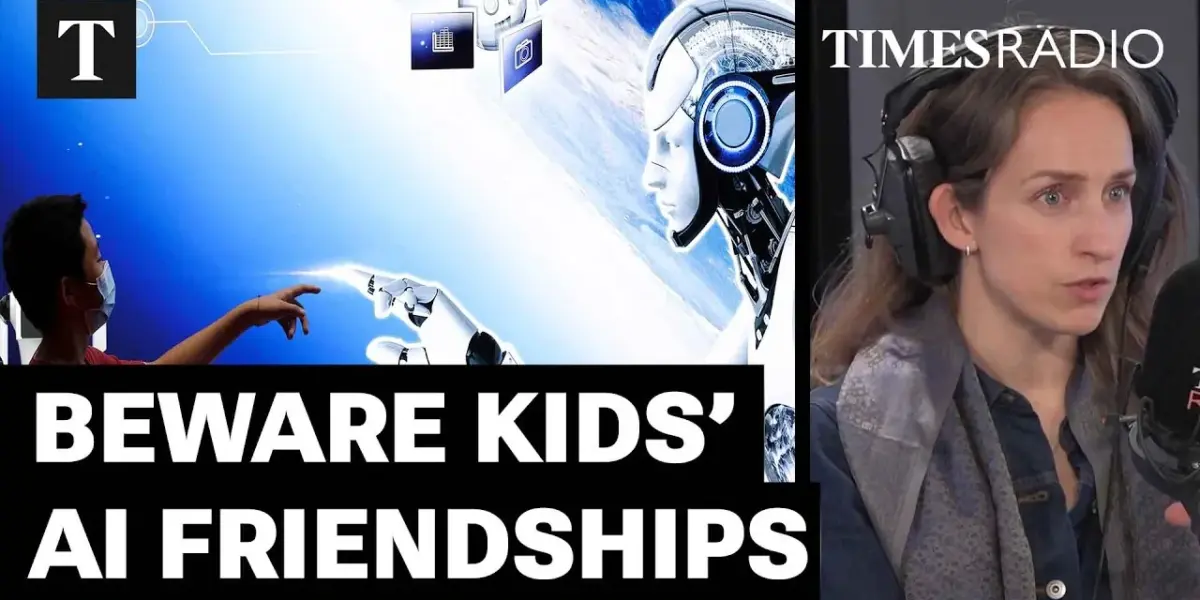
Tech Insiders Shield Children from AI While Promoting It Globally
In a striking revelation, digital wellness expert Laura Wyatt Smith has uncovered a significant trend among Silicon Valley’s elite: many tech creators are deliberately limiting their own children’s exposure to the very technologies they develop and export worldwide. This practice, detailed in Wyatt Smith’s new book, “Screen Saver,” highlights a growing concern about the profound impact of digital immersion on children’s development, particularly the insidious nature of emotional attachments forming between children and AI chatbots.
The Creation vs. Consumption Divide
Wyatt Smith’s research in Silicon Valley revealed a stark difference in how tech families raise their children compared to the general public. “The key thing we don’t grasp in this country outside of Silicon Valley is these families are raising their children not to be the consumers of this technology but to be the creators of this technology,” she explained.
Instead of passive consumption of apps and games, these children are immersed in “maker culture.” They engage in hands-on activities with wood, metal, glass, and plastic in dedicated maker spaces, tackling complex challenges and learning to collaborate. This approach fosters fundamental skills for future innovation, contrasting sharply with the scrolling and passive entertainment that often defines children’s digital experiences elsewhere.
“While our children might be scrolling away using the applications and the games and entertainment which they are producing, they are raising their children to have the fundamental core skills to be the creators of the future.”
Beyond Bullying: The Cognitive Impact of AI
While concerns about online bullying and self-harm amplified by social media algorithms are well-documented—as tragically illustrated by the Molly and the Machines documentary—Wyatt Smith points to a more subtle, yet equally critical, danger: the erosion of children’s cognitive capabilities. “When children have access to easy stimulation, they lose the capacity to entertain themselves,” she stated.
This constant overstimulation, Wyatt Smith argues, prevents the essential downtime needed for processing and critical thinking, not just for children but for adults as well. The immediate availability of screens as a solution to boredom deprives individuals of the opportunity to develop self-reliance and creativity.
The Attachment Economy: AI as a Companion
A new frontier of concern is emerging with the rise of AI-powered chatbots. These technologies are becoming so humanized that they are beginning to foster significant emotional attachments, especially among children. “The humanized nature of these can make them feel so familiar and comforting that children who don’t necessarily know better can form real significant emotional attachments.
And that is a real problem,” Wyatt Smith warned. She emphasized the need to help children distinguish between technology and human interaction, ensuring AI remains a tool rather than a replacement for essential emotional experiences derived from real-world relationships.
The implications extend to adults as well. Wyatt Smith shared an anecdote about an AI companion named Lily within a language learning app, which, despite being non-existent, offers personalized comfort and engagement. This scenario mirrors concerns raised by legal professionals about individuals seeking more sympathetic and engaged conversations from AI chatbots than they receive from their partners, potentially leading to a decline in real-world relationships.
“We need to help our children to discern the difference between technology and human offline society, right? And whilst AI can be a helpful tool, it must remain a tool and not replace essential um human emotional experiences which must get from real people in the real world.”
Vulnerability and Real-World Connections
The susceptibility to these AI influences is heightened in individuals, including children, who lack strong, high-quality relationships and self-esteem. “A child or an adult who is going to be more vulnerable to these AI influences is one that doesn’t necessarily have really high quality relationships and um high self-esteem and all the things that you would want to have, you know, in your day-to-day life,” Wyatt Smith observed. The solution, she suggests, lies in fostering fulfilling offline lives, enabling individuals to engage with the online world as a tool rather than a crutch.
Policy Challenges: Bans vs. Accountability
Wyatt Smith expressed a nuanced view on potential government interventions, such as banning social media for under-16s, a measure recently passed by the House of Lords. While sympathetic to parental concerns, she highlighted the potential downside: “If we let big tech off the hook by saying your products aren’t available to under 16s, we are then cutting off all of the good work which does exist in the online safety act where we really ought to be holding um these big tech sort of creators to account.” She advocates for urgent action and enforcement to hold tech companies accountable for making their platforms safer, citing whistleblower evidence that companies have long been aware of potential harms but have failed to act.
The Path Forward
The digital landscape is evolving at an unprecedented pace, with AI integration becoming increasingly seamless in the tools children use daily. As chatbots become more sophisticated and embedded in popular platforms like WhatsApp and Snapchat, the challenge of maintaining a clear distinction between technology and genuine human connection intensifies.
Parents and educators must equip children with the critical thinking skills to navigate this evolving environment, ensuring that technology is a beneficial tool rather than a substitute for essential human emotional development. The government faces the complex task of implementing effective regulations that foster innovation while safeguarding the well-being of young users.
Source: Children Are Beginning To Form Emotional Attachments To AI Chatbots (YouTube)

Related Articles


Dutch Parenting Secrets: Why Kids Thrive in the Netherlands
The Netherlands ranks highest in child happiness, according to UNICEF. This analysis explores Dutch parenting practices, like prioritizing unstructured play, family time, and independence, which contrast sharply with the high-pressure, achievement-focused American approach. The findings offer insights into fostering well-being in children.


AI Chatbots Now Answer Health Questions, Doctors Warn
A growing number of adults are turning to AI chatbots for health advice, a trend raising concerns among medical professionals. While convenient and inexpensive, AI tools have shown inaccuracies in diagnosing serious medical conditions, prompting warnings from doctors and potential regulatory action.


AI Boom Fuels “Anything Is Possible” Spirit in Silicon Valley
Silicon Valley is experiencing a revolutionary AI boom, fueling an "anything is possible" spirit among founders. Experts highlight the growing impact of AI in cybersecurity and enterprise solutions, while also discussing its influence on creative industries. The focus remains on practical applications and the essential role of human creativity.