Iran’s Internal Strife: Coup Attempt Revealed Amidst Escalating Tensions and Missile Drills
A recently uncovered coup attempt within Iran's leadership, coupled with escalated missile drills targeting U.S. ships and U.S. military preparations, signals a heightened risk of imminent conflict. The internal power struggle and external posturing suggest a volatile geopolitical landscape.


Coup Attempt Uncovered Within Iran’s Ruling Elite
In a significant development that has sent ripples through the international community, news has emerged of a thwarted coup attempt within Iran’s highest echelons of power. The plot, reportedly aimed at removing Supreme Leader Ali Khamenei from decision-making processes, occurred in early January amidst widespread protests and a brutal crackdown that resulted in the deaths of thousands of citizens. While the full details are still emerging, the revelation points to deep-seated fissures within the Islamic Republic’s leadership.
Details of the Alleged Coup
According to reports citing informed Iranian sources interviewed by the French newspaper Le Figaro, the coup attempt was spearheaded by former President Hassan Rouhani. He allegedly collaborated with figures from his former government, including ex-foreign minister Mohammad Javad Zarif, alongside clerics from Qom and individuals associated with the Islamic Revolutionary Guard Corps (IRGC). The operation reportedly took place on the nights of January 7th and 8th, coinciding with a peak in domestic unrest.
The primary objective of the plot, as described by a source familiar with the matter, was to sideline Khamenei during a critical period of national crisis. However, the attempt faltered due to a lack of support from Ali Larijani. Larijani, who was appointed as the Secretary of the Supreme National Security Council in August, ultimately remained loyal to the current regime. His refusal to join the coup is seen as a pivotal moment that led to its failure.
Consequences and Power Consolidation
Following the discovery of the plot, Rouhani and Zarif were reportedly placed under house arrest for several days, and other reformist figures associated with the movement were detained. The timing of this revelation is particularly striking, as Iranian officials had confirmed just over a month prior to these events that Larijani had been tasked with managing the country in the event of any harm befalling Khamenei. This suggests that Larijani’s loyalty was recognized and rewarded, leading to his current position as arguably the second most powerful individual in Iran, overseeing all military and security operations.
The failure of the coup attempt appears to have inadvertently strengthened the regime’s grip on power. The narrative suggests that the leadership is using the failed coup to further consolidate control, eliminating potential internal dissent and centralizing authority between Khamenei and Larijani. This development indicates that while cracks may exist within the dictatorship, the system has proven resilient, emerging with a more unified and powerful leadership structure.
Escalating Military Posturing: Iran’s Missile Tests and US Response
Coinciding with the internal political drama, Iran has intensified its military posturing, conducting significant missile drills in the Strait of Hormuz. These exercises, involving coastal launches of anti-ship missiles from the families of Nour and Qadir, are explicitly aimed at targeting U.S. naval assets. The drills underscore Iran’s stated intent to potentially disrupt maritime traffic and directly challenge American naval presence in the region.
Iran’s Anti-Ship Missile Capabilities
The IRGC Navy’s drills demonstrate Iran’s focus on developing and testing its anti-ship missile capabilities. The strategic deployment and testing of these weapons, designed to target vessels like U.S. aircraft carriers, guided missile destroyers, and other naval platforms, signals a readiness to engage in direct confrontation. Analysts suggest that Iran’s strategy may involve overwhelming U.S. defenses through mass saturation attacks, launching a large volume of missiles simultaneously to breach defensive perimeters and strike high-value targets.
The potential consequences of such an attack are severe. U.S. officials have issued stern warnings, indicating that any attempt by Iran to sink an American aircraft carrier would be met with a devastating retaliatory response, disproportionate to the initial act. The rhetoric suggests a readiness for extreme escalation, painting a grim picture of potential future conflict.
U.S. Military Preparations and Intelligence Gathering
In response to the escalating tensions and Iran’s military activities, the United States has been observed undertaking significant preparatory measures. A highly sophisticated RC-135 Rivet Joint reconnaissance aircraft, capable of intercepting and analyzing signals intelligence, electronic warfare data, and troop movements, has been rerouted towards the Middle East. This deployment is crucial for building detailed intelligence packages, identifying Iranian missile sites, launchers, and air defense systems, thereby enabling precision strikes and minimizing collateral damage should hostilities commence.
Further evidence of U.S. preparedness comes from reports of U.S. refueling tankers being stationed at Ben Gurion Airport in Israel. This logistical support is essential for sustaining prolonged aerial operations in the region. Additionally, the U.S. State Department has ordered the evacuation of non-essential personnel and eligible family members from the U.S. embassy in Beirut, a standard procedure preceding potential military conflict aimed at safeguarding diplomatic staff.
Psychological Warfare and Information Operations
Adding another layer to the complex geopolitical situation, phones across Iran reportedly received mysterious text messages over the weekend. These messages, attributed to U.S. President, stated that he is “a man of action” and urged recipients to “wait and see.” This move is widely interpreted as a form of psychological warfare, intended to sow discord within Iran, signal U.S. resolve to the Iranian populace, and potentially embolden anti-regime elements. It represents an effort to influence perceptions and expectations amidst heightened tensions.
Imminent Conflict? Analyzing the Indicators
As of February 23rd, the confluence of events – the revelation of a failed coup attempt, Iran’s aggressive missile testing targeting U.S. ships, the deployment of advanced U.S. intelligence assets, and the evacuation of non-essential personnel from diplomatic missions – paints a stark picture. All indicators suggest that the possibility of a major military conflict involving Iran is increasingly imminent. The internal power struggles within Iran, coupled with external military posturing and U.S. preparations, have created a volatile environment where miscalculation or escalation could rapidly lead to open hostilities.
The situation remains fluid, with daily updates shaping the evolving dynamics. The coming days and weeks will be critical in determining whether diplomatic channels can de-escalate the situation or if the region is indeed on the precipice of war.
Source: BREAKING: Coup Attempt In Iran – War Appears IMMINENT (YouTube)

Related Articles

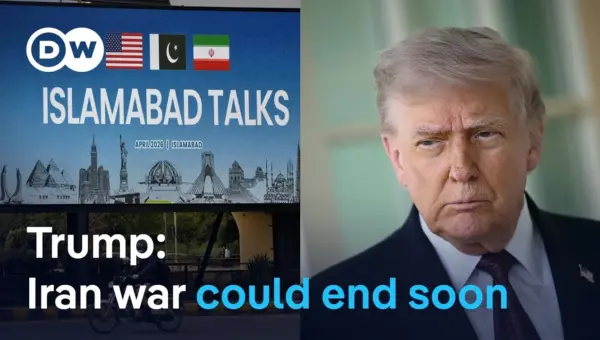
Trump Sees Iran War Ending Soon Amidst Escalating Threats
U.S. President Donald Trump expressed optimism that the conflict with Iran could end soon, despite ongoing threats between the two nations. A senior Iranian official warned of regional trade blockades if U.S. naval blockades are not lifted. Experts caution that any deal must address core issues, not just short-term military gains, to achieve lasting strategic success.

Israel Eyes Lebanon Peace Deal Amid Hezbollah Clashes
Israel is pursuing peace talks with Lebanon while continuing military operations against Hezbollah. An Israeli official expressed hope for a deal, emphasizing the need to dismantle Hezbollah and ensure border security. This dual approach aims to reshape regional stability.

US-Iran Nuclear Talks Collapse, Raising Regional Tensions
High-level U.S.-Iran nuclear talks have collapsed due to significant differences on key issues, leaving diplomatic channels strained. Both sides remain prepared for military action, while the security of the Strait of Hormuz remains a critical concern for global energy markets.