Trump’s Iran Action Sparks War Debate, Risks Political Future
The U.S. has launched military strikes against Iran, sparking a fierce debate over the legality and necessity of the action. The Trump administration's refusal to label the engagement a "war" to avoid congressional approval faces criticism, with public opinion largely favoring legislative oversight. This move also exposes deep divisions within the Republican party and carries significant political risks for the president.

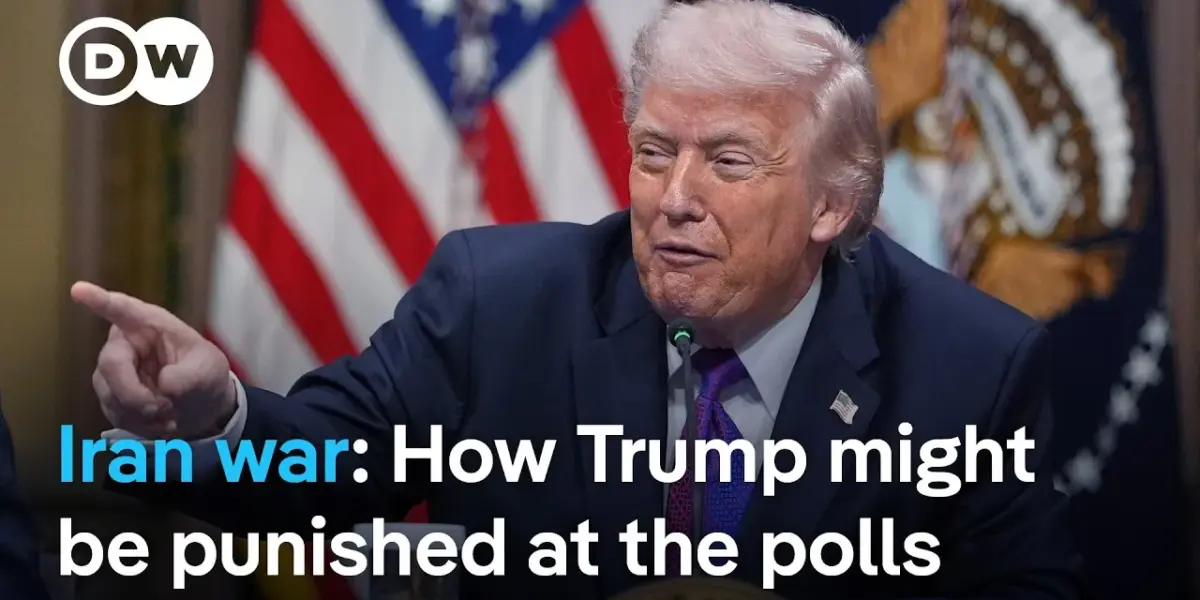
US Launches Strikes on Iran, Sparks Congressional Debate
The United States, in conjunction with Israel, launched military operations against Iran early Saturday, initiating a new phase of conflict in the Middle East. However, the Trump administration has avoided officially labeling these actions as a “war,” a move that would necessitate congressional approval. This semantic distinction has drawn sharp criticism from Democrats and some Republicans who accuse the president of overstepping his constitutional authority.
The administration’s stance is exemplified by statements from prominent Republican figures, such as one who stated, “>>We’re not at war right now. We’re 4 days in to a very specific u clear mission and operation operation epic fury.”
This carefully worded defense echoes the linguistic strategies employed by other global leaders when describing military engagements, drawing parallels to Russian President Vladimir Putin’s framing of the invasion of Ukraine as a “special military operation.”
Legal and Constitutional Challenges to Military Action
Scott R. Anderson, a fellow in government studies at the Brookings Institution with extensive experience advising U.S. Policymakers on legal issues related to foreign policy and national security, particularly in the Middle East, explained the legal rationale behind the administration’s avoidance of the term “war.”
“In the US legal system, at least the way it’s been interpreted by the executive branch… The essential line is unclear, but they’ve defined what the line for a war for constitutional purposes, meaning a war that requires congressional authorization, as being a pretty high threshold, usually involving the exposure of US soldiers, a significant number of US soldiers, to risk over an extended period of time, usually something like a major ground campaign on par with the Iraq war, the Vietnam War, something along those lines. Air campaigns, many executive branch presidential administrations have said, don’t qualify, but primarily because US soldiers are really not put at risk in substantial numbers, particularly when you’re dealing with a weaker adversary over whom the United States has air superiority.”
Anderson noted that this interpretation, while contested, has been consistently upheld by successive executive branches and is now being leveraged by the Trump administration to justify the current campaign without seeking explicit congressional authorization. The War Powers Resolution of 1973 typically limits a president’s ability to engage U.S. forces in hostilities to 60 days, after which congressional authorization or troop withdrawal is required. However, the executive branch has historically deployed arguments to extend certain types of campaigns, such as air operations, beyond this timeframe, though these have rarely faced judicial scrutiny.
Congressional Opposition and Public Opinion
A significant pushback against the administration’s actions has emerged from within Congress. Prominent Democrats and a segment of Republicans have introduced resolutions aimed at limiting the president’s ability to escalate military actions against Iran. These efforts, however, have faced significant hurdles, with one resolution already being rejected by the Senate and another anticipated to fail in the House of Representatives.
Critics argue that the president has failed to provide evidence of an imminent threat to the American people, a prerequisite for unilateral military action. Concerns have been raised that the administration’s objective may be regime change in Iran, a strategy with a history of unfavorable outcomes for the U.S.
Public opinion appears to align with these concerns. A recent poll conducted by YouGov for CBS News revealed that a clear majority of Americans, 69%, believe that President Trump needs congressional approval to continue military action against Iran, while only 31% disagree.
Divisions Within the Republican Party
The military action has exposed deep divisions within the Republican Party itself. A notable faction of the party, often described as “restraint-oriented” and skeptical of overseas military intervention, particularly regime change operations, finds itself at odds with the administration’s current policy.
Anderson elaborated on this internal conflict:
“In the current moment, there’s a big part of the Republican party that is restraint oriented, that’s skeptical of overseas adventurism and particularly regime change. President Trump really rallied these people that was those reviews he’s espoused. Those are views JD Vance, the vice president, have espoused very clearly for a long time.
And that part of the party is really skeptical of what’s happening here. So this effort to not call it a war is an effort by Republican politicians, I think, to try and make the case that this is limited in scale.”
This internal party dynamic creates a complex political landscape for Republican lawmakers, especially those facing re-election in an election year. While President Trump currently wields significant influence over the party base, compelling many to avoid direct confrontation, this calculus is expected to shift as the general election approaches, potentially leading more Republicans to distance themselves from controversial policies to appeal to swing voters.
Political Risks for Trump and Broader Implications
The decision to engage in military action without clear congressional backing and against a backdrop of public skepticism carries significant political risks for President Trump. While he currently maintains strong control over his party, the long-term consequences of a protracted conflict could erode this support.
Anderson cautioned about the potential ramifications:
“This is a really, really risky maneuver. The reason why prior presidents have stopped short of doing anything like this, even though it’s been deliberated multiple times by multiple presidents, is because everyone was concerned exactly what would happen with Iran after the fact. And the fact that if you have a destabilized Iran, a country of 90 million people in a crucial corner of the Middle East, one of the most sensitive and strategically significant parts of the world, that the consequences could be dramatic and go bad very quickly.”
The economic and daily lives of Americans could also be impacted. Disruptions to shipping and oil trade, alongside potential risks to Americans abroad and at home, could become more pronounced the longer the campaign continues. Such tangible consequences, Anderson suggests, have the potential to “come back to bite” the president politically, especially as the election nears and voters begin to weigh the foreign policy decisions against their own well-being and economic stability.
Looking Ahead
As the military operations in the Middle East continue, the political and legal ramifications for the Trump administration are likely to unfold. The coming weeks and months will be critical in observing how Congress responds, how public opinion evolves, and whether the administration’s strategy in Iran leads to escalating regional instability or a swift resolution. The impact of these developments on the upcoming presidential election remains a significant question, with potential economic fallout and prolonged conflict posing substantial risks to President Trump’s political future.
Source: Why Trump's war is so risky for his political future | DW News (YouTube)

Related Articles
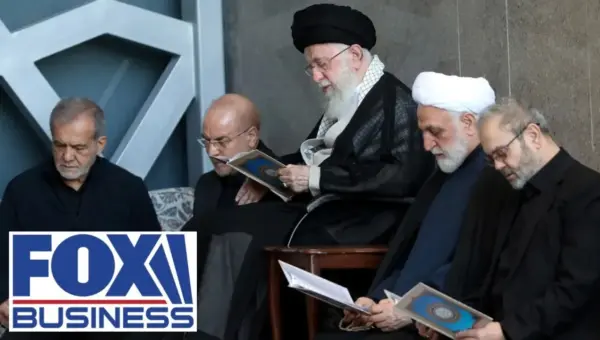
Iran Faces Economic Collapse Amid Trump’s Blockade Strategy
Iran faces severe economic pressure from a U.S.-led blockade, potentially leading to its collapse. Analysts believe President Trump's strategy of taking adversaries' threats seriously, combined with economic sanctions, is designed to force Iran's unconditional surrender on nuclear and regional issues.
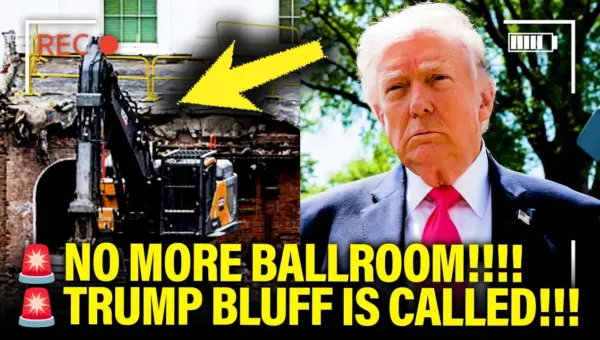
Judge Blocks Trump’s Ballroom Dream at White House
A federal judge has ruled against Donald Trump's plan to build a 90,000-square-foot ballroom at the White House. While underground construction for security facilities is permitted, the above-ground ballroom has been blocked due to lack of congressional approval. The case highlights the balance of power between the president and Congress regarding federal property.
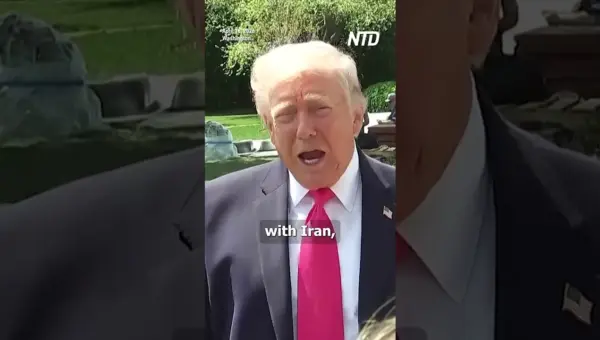
Trump Signals Iran Deal Talks Could Happen This Weekend
President Trump indicated that in-person talks with Iran could occur this weekend, expressing optimism for a "good deal" focused on preventing nuclear weapons. He linked diplomatic progress to positive economic signs like a strong stock market and falling oil prices.