Noem Faces Fury: Accountability Demanded for DHS Lawlessness
Lawmakers are demanding accountability from DHS Secretary Kristi Noem, alleging a pattern of lawlessness, including lying to federal judges and ignoring court orders. The criticism points to a failure to hold individuals responsible, with accusations that such conduct is impeachable and has led to tragic outcomes.

Noem Under Fire: Accusations of Lawlessness and Cover-Up at DHS
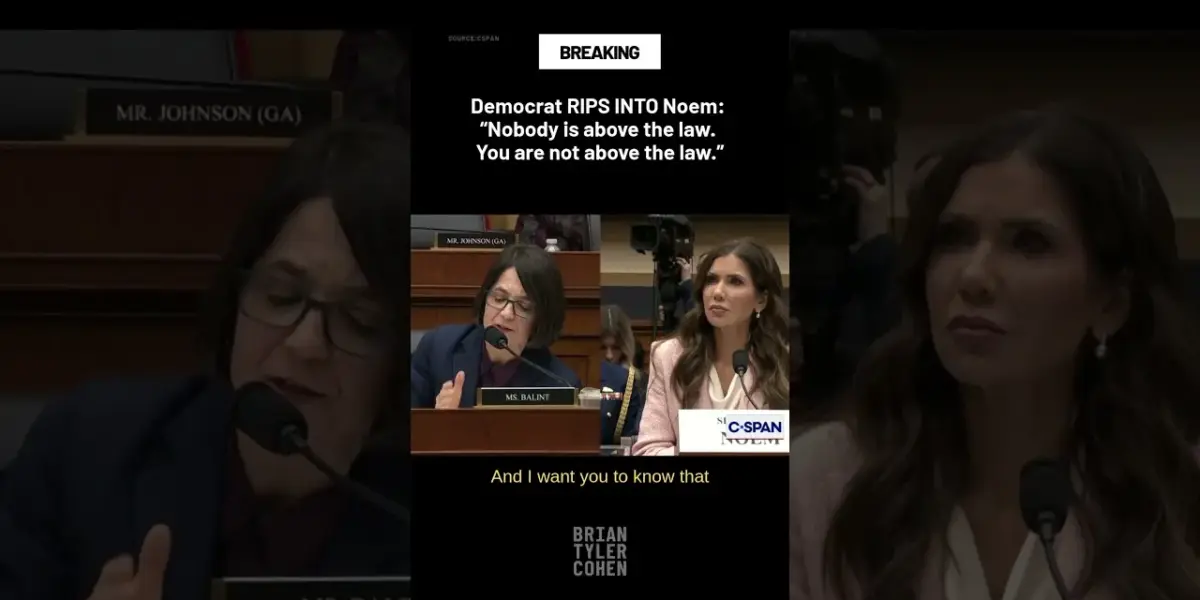
In a fiery congressional hearing, a stark accusation has been leveled against Department of Homeland Security Secretary Kristi Noem: that her department, under her leadership, has engaged in a pattern of lawlessness, including lying to federal judges and ignoring court orders, resulting in tragic consequences for innocent Americans. The core of the criticism centers on a perceived failure to hold individuals within DHS accountable for their actions, with lawmakers asserting that Noem herself is ultimately responsible. The forceful rhetoric suggests a deep-seated frustration with the current administration’s approach to law enforcement and accountability within a critical federal agency.
The Central Allegation: A Culture of Impunity
The transcript reveals a direct confrontation where a lawmaker declares, “Nobody is above the law. You are not above the law.” This statement serves as the leitmotif for the entire critique. The specific accusations are grave: employees within DHS have allegedly “regularly ignored court orders and lied to federal judges.” The lawmaker expresses profound shock that Secretary Noem would “sit in front of this committee and continue to cover for people who are working under you.” The assertion is clear: the buck stops with the Secretary, and her failure to take responsibility and impose accountability is seen as a dereliction of duty.
The consequences of this alleged lawlessness are painted in stark terms: “killing innocent Americans, for terrorizing children.” While the transcript does not provide specific details or instances of these tragic outcomes, the gravity of the claims highlights the urgency and anger expressed during the hearing. The lawmaker contends that such conduct, “alone, is impeachable,” signaling the extreme severity with which these actions are viewed.
A Promise of Future Reckoning
Beyond the immediate accusations, the critique carries a distinct promise of future accountability. The lawmaker states, “Americans will get accountability for the damage that you have done for the lawlessness of aspects of DHS.” This sentiment is directed not only at Secretary Noem but also, implicitly, at the broader administration. The assertion that Noem may feel “immune from accountability” while the current president is in office is met with a firm rebuttal: “one day he is not going to be president anymore.
He is not going to be in charge. And when that day comes, we will still be here and we will still be seeking accountability.” This indicates a long-term strategy to pursue justice and consequences, regardless of the current political landscape.
The hearing itself is framed as a step in this process, with the lawmaker vowing, “in hearings like this, we are going to continue to prove your guilt.” This suggests a methodical approach to building a case for accountability, utilizing legislative oversight as a platform to expose alleged wrongdoing.
Why This Matters
The allegations against Secretary Noem and the Department of Homeland Security strike at the heart of public trust in government institutions. The foundational principle of any democratic society is the rule of law, which dictates that all individuals, especially those in positions of power, are subject to and accountable under the law. When a federal agency tasked with national security and immigration enforcement is accused of systematically disregarding legal mandates and deceiving judicial bodies, it erodes the very fabric of that society.
The implications are far-reaching. If federal employees are indeed lying to judges and ignoring court orders with impunity, it undermines the integrity of the judicial system.
It suggests that legal protections for individuals may be rendered meaningless if enforcement agencies can operate outside of judicial oversight. The claims of harm to innocent Americans and terrorizing children are deeply disturbing and, if substantiated, would represent a profound moral and ethical failing.
Historical Context and Precedents
While the specific context of this hearing is current, the tension between executive power and accountability is a recurring theme in American history. Debates over executive overreach, the limits of presidential and agency authority, and the mechanisms for holding officials accountable have been central to political discourse and legal challenges throughout different administrations.
Impeachment proceedings, while rare, have historically been the ultimate recourse for addressing alleged abuses of power and violations of the law by high-ranking officials. The accusation of impeachable conduct, even if not immediately acted upon, is a significant political statement and a warning.
Trends and Future Outlook
The current political climate is characterized by intense partisan scrutiny of federal agencies. This hearing reflects a broader trend of heightened oversight and a demand for transparency, particularly concerning agencies involved in immigration, border security, and law enforcement. The rhetoric employed suggests a willingness by some lawmakers to pursue aggressive accountability measures, potentially including impeachment, if their allegations are substantiated.
The future outlook for Secretary Noem and the DHS under the current administration will likely involve continued intense scrutiny and potential legal or political challenges. The promise of future accountability, as articulated in the hearing, indicates that these issues may extend beyond the current term, shaping the legacy of those involved.
The core message is one of unwavering commitment to the principle that no one is above the law. The lawmaker’s closing words, “we will still be here and we will still be seeking accountability,” serve as a powerful reminder that the pursuit of justice, particularly in cases of alleged governmental misconduct, can be a long and arduous process, but one that some are determined to see through.
Source: Democrat RIPS INTO Noem: “Nobody is above the law. You are not above the law.” (YouTube)

Related Articles


Trump’s Pardon Promises Signal a Troubling Future
Reports indicate Donald Trump has promised widespread presidential pardons for his staff and associates in a potential second term. While his administration downplays these remarks as jokes, the broad power of the pardon raises concerns about accountability and the rule of law.


NYPD Officers Brutalize Innocent Man in Botched Bust
Shocking video shows NYPD officers violently beating Timothy Brown in a mistaken identity drug bust. Despite being cuffed, Brown was punched and had his head slammed on a counter. The community is demanding justice and prosecution for the officers involved.

Capitol Hill Culture Under Fire Amid Staffer Protection Calls
Following recent high-profile resignations, Capitol Hill faces calls for improved staffer protections and cultural change. A lack of centralized oversight in individual congressional offices creates vulnerabilities for employees. Lawmakers are now discussing reforms to restore public trust and ensure accountability.