Spain Denies US Claims of Military Cooperation Amid Trump Tensions
Spain has vehemently denied White House claims of agreeing to cooperate with the U.S. military on operations related to Iran. The denial comes after President Trump threatened trade sanctions following Spain's refusal to allow the use of its air bases for potential attacks. European allies have expressed solidarity with Spain, highlighting the complexities of U.S.-EU trade relations and differing foreign policy approaches.

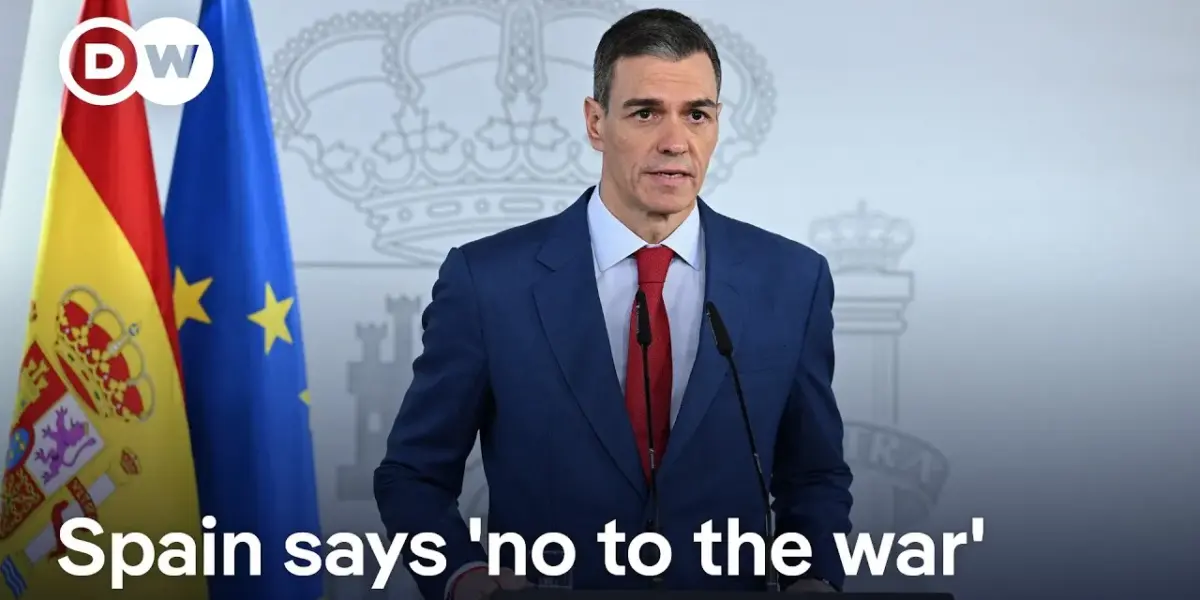
Spain Rebuffs US Claims of Military Cooperation
Madrid has firmly denied assertions made by the White House that Spain has agreed to cooperate with the U.S. military. The assertion from Washington followed threats by U.S. President Donald Trump to sever trade ties after Spain refused to grant access to its air bases for potential U.S. military operations against Iran. White House Press Secretary Caroline Levit had stated that Spain had “backed down,” indicating an understanding that Madrid had “agreed to cooperate with the U.S. military.” Levit emphasized the president’s expectation for all European allies to support what she termed a “long sought-after mission” to “crush the rogue Iranian regime.”
Spain’s Unwavering Stance
In direct response to the White House statements, Spain’s Foreign Minister unequivocally stated that the country’s position on the conflict and the use of its military bases remained unchanged. Spain’s Prime Minister, Pedro Sanchez, had previously articulated the government’s stance in four words: “no to the war.” Sanchez had explicitly refused to allow the U.S. To utilize Spanish air bases, warning that Europe should not be drawn into a conflict that could exacerbate economic instability.
Escalation and International Reactions
The diplomatic rift widened significantly when President Trump, during a meeting with German Chancellor Angela Merkel, issued a stern warning, stating, “Spain has been terrible. We’re going to cut off all trade with Spain.
We don’t want anything to do with Spain.” This was reportedly fueled not only by Spain’s lack of support but also by its failure to commit to increased defense spending. French President Emmanuel Macron offered solidarity to Spain against what he described as “economic coercion.” Meanwhile, Spain’s financial markets appeared largely unfazed, viewing Trump’s remarks as an “empty threat.”
Analysis of the Dispute
Paul Marilas, Director of the Barcelona Center for International Affairs, provided insight into the dispute. He clarified that Spain had cooperated up until the initial intervention in Iran but would no longer do so if its bases were requested for further action.
Marilas explained that these bases are under Spanish sovereignty, and the existing agreement with the U.S. Requires mutual terms, which Spain is currently not fulfilling. He suggested that the White House’s statements might refer to broader aspects of the bilateral relationship, including trade and investment, which generally remain stable despite foreign policy disagreements.
“Spain cooperated up until the uh invasion uh and the intervention in Iran. Uh what Spain’s government has said is that it will no longer cooperate uh in case uh there are requests for these bases to be used again.” – Paul Marilas, Director, Barcelona Center for International Affairs
Trade Threats and EU Solidarity
Regarding President Trump’s threat to cut trade ties, Marilas noted that such a move would be complicated. Spain has found alignment with other European Union member states and Brussels, which view threats to a member of the single market as a concern for the entire bloc.
The EU’s common commercial policy and its single market serve as tools to present a united front against external economic pressure. While the U.S. might target specific Spanish products, Spain is not heavily exposed to the U.S. Market compared to other EU nations.
Divergent EU Views on International Conflicts
The article also touched upon the varying perspectives within the EU regarding recent international conflicts. While the EU has shown unity on the Ukraine front, positions on the conflict in Iran and the situation in Gaza differ.
Spain’s argument is that the principles of international law and the prohibition of the use of force and military interference should apply universally, drawing parallels between the situations in Ukraine, Gaza, and Iran. The lack of a clear UN Security Council pronouncement or a U.S. Congressional vote on the intervention in Iran was also highlighted.
Intra-EU Relations and German Chancellor’s Silence
The Spanish Foreign Minister’s criticism of German Chancellor Olaf Scholz for his silence during President Trump’s remarks about Spain was noted as unusual. Marilas suggested that while Spain was disappointed, leaders are mindful of potential U.S. Backlash, referencing the treatment of Ukrainian President Zelenskyy. He emphasized that maintaining EU unity, particularly on trade matters, is crucial, even if foreign policy and security remain areas of division among member states.
Broader Implications for Ukraine Aid
Concerns were raised about the potential impact of the latest U.S.-led military actions on aid to Ukraine. The article questioned whether U.S. Interest in Ukraine might wane and whether American arms manufacturers could sustain supply to multiple conflicts simultaneously. It was noted that European countries, including the UK, have increasingly stepped in to fill gaps in U.S. Support for Ukraine, highlighting the need for the EU to strengthen its own defense industry and maintain its commitment to Ukraine amidst U.S. Hesitation.
EU Council and French President Express Support
Terry Schultz, reporting from Brussels, confirmed that European Council President Charles Michel and French President Emmanuel Macron had expressed solidarity with Spain. While European leaders tread a fine line to avoid openly opposing the U.S., they are also unwilling to allow President Trump to “trash” fellow leaders. Support for Spain was framed around the rule of law and respect for international order, without explicitly opposing the actions in Iran.
Trade Policy and Brussels’ Response
Schultz elaborated on the complexities of U.S.-EU trade relations, explaining that trade policy with EU member states is handled at the EU level. This means the U.S. cannot unilaterally target bilateral trade deals with individual countries.
The existing EU-U.S. Trade deal is currently on hold due to previous U.S. Threats of tariffs, indicating a precarious trade relationship. Despite President Trump’s directive to explore punitive measures against Spain, a complete trade cutoff is unlikely due to the structure of EU trade policy.
German Chancellor’s Position and EU Industrial Policy
The criticism leveled by the Spanish Foreign Minister against Chancellor Scholz for not speaking up during Trump’s remarks was discussed. While Scholz cited a desire to avoid tension with the U.S. President, there were subsequent statements from EU officials, such as the Industrial Commissioner, emphasizing that attacks on one member state are an EU-level concern, referencing past EU unity during the Greenland trade dispute.
NATO Dynamics and Potential Future Tensions
Regarding NATO, the article noted that Spain’s refusal to allow its bases to be used for offensive attacks on Iran had not yet caused significant tension within the alliance. The U.S. had relocated aircraft to Germany, and the full extent of U.S. military operations from European bases remains unclear.
The potential for future tensions was highlighted, particularly if Iran were to target NATO allies, which could trigger a more unified and assertive alliance response. Professor Alana Maseri from IE University added that Spanish public opinion is largely anti-Trump, providing Prime Minister Sanchez political incentive for his stance, which aligns with his party’s anti-war and pro-international law principles.
Spain’s Defense Spending Commitments
Professor Maseri also addressed Spain’s defense spending, noting that while public opinion is generally against increased military expenditure, Spain has pledged to increase its contribution towards the NATO target of 2% of GDP. This represents a significant commitment for the country, which has historically spent less than 1% of its GDP on defense.
Future Outlook
The situation remains fluid, with ongoing diplomatic maneuvering and potential for further escalation or de-escalation. The EU’s unified stance on trade is likely to be tested, and the long-term implications for U.S.-European relations, as well as the ongoing conflicts in Ukraine and the Middle East, remain to be seen. Spain’s firm position, supported by key European allies, signals a growing assertiveness in challenging U.S. Foreign policy directives when they clash with national interests and international law principles.
Source: Spain rebuffs rumor that it is cooperating with US military | DW News (YouTube)

Related Articles
Trump Predicts Lebanon-Israel Peace Deal in Two Weeks
Former President Donald Trump believes a peace agreement between Lebanon and Israel could be finalized within two weeks. He suggests that direct talks, the first in 44 years, might occur at the White House. Trump expressed confidence in securing a deal that could also address the issue of Hezbollah.
Jayapal Demands Trump Ouster Via 25th Amendment
Representative Pramila Jayapal is calling for President Trump's removal from office using the 25th Amendment. She cited his handling of Iran policy as 'illegal' and 'immoral,' joining other Democrats who question his actions. The 25th Amendment allows for a president's removal if deemed unable to perform their duties.

Vance Blasted for Challenging Pope on War Theology
Senator JD Vance's recent warning to Pope Francis about discussing theology has sparked a significant backlash from the Vatican and Catholic officials. The Pope responded by quoting scripture against manipulating religion for political gain, a message widely seen as directed at Donald Trump's foreign policy. This clash highlights a deep theological debate rooted in centuries of Catholic teaching on 'just war' and raises questions about the intersection of faith and politics.