South’s Housing Market Sees Inventory Surge, Price Drops
The U.S. South is seeing a significant surge in housing inventory and early signs of price declines. This shift, driven by factors like rising interest rates, presents new dynamics for buyers, sellers, and investors.


South’s Housing Market Sees Inventory Surge, Price Drops
The U.S. Housing market is experiencing a significant shift, with an increasing number of homes hitting the market and some sellers facing the prospect of selling at a loss. This trend is particularly pronounced in the Southern United States, where data indicates the most substantial surge in inventory and the earliest signs of price depreciation.
Inventory Swells Across the Nation, Especially Down South
Across the country, for-sale signs are becoming a more common sight, signaling a cooling market. In many cities and states, prices are beginning to decline, a phenomenon most acutely observed in the South. Data from Reventure App highlights this region as the epicenter of rising inventory levels and subsequent price corrections.
The sheer volume of homes available for sale is becoming noticeable. In some areas, properties are listed adjacent to one another, a visual testament to the growing supply. This increase in inventory is a critical indicator of changing market dynamics, moving away from the seller’s market conditions seen in recent years.
Sellers Face Price Reductions and Potential Losses
The narrative of ever-increasing home prices is beginning to fray for some sellers. In a stark example, a property purchased for $267,000 in early 2024 is now listed for $230,000, representing a potential loss for the owner. This situation highlights the pressure sellers are under as market conditions shift.
Large institutional players are also participating in this market adjustment. Open Door, a major home flipper, has listed a three-bedroom, one-bathroom, 900-square-foot house south of Atlanta for $216,000. The question remains whether this price point will be achievable in the current market, reflecting broader uncertainties about property valuations.
Factors Driving the Market Shift
Several macroeconomic factors are contributing to the current housing market conditions. Rising interest rates, a direct consequence of the Federal Reserve’s efforts to combat inflation, have significantly impacted affordability. Higher mortgage rates mean higher monthly payments for potential buyers, reducing their purchasing power and dampening demand.
Inflationary pressures, while potentially slowing, have also played a role. The cost of materials and labor for new construction, though easing from peaks, can still influence pricing. Broader economic uncertainty, including concerns about a potential recession, can lead prospective buyers to adopt a more cautious approach, further reducing demand.
Regional Variations and Impact
While the trend of rising inventory and softening prices is national, the South is currently leading the charge. This is often attributed to the rapid price appreciation seen in many Southern markets during the pandemic-driven housing boom. Areas that experienced the most significant price run-ups are often the first to see corrections when market conditions change.
This shift has a varied impact. For prospective buyers, particularly those who have been priced out of the market, the increase in inventory and potential price drops could present new opportunities.
However, higher interest rates remain a significant barrier. For sellers, especially those who purchased recently or are looking to move quickly, the current environment demands a realistic assessment of market value and potential price adjustments.
Real estate investors are also navigating this evolving landscape. While lower prices might seem attractive, investors must carefully consider the impact of interest rates on their financing and the potential for sustained cash flow. Key metrics such as capitalization rates (cap rates), which represent the potential rate of return on an investment property, and loan-to-value (LTV) ratios, which indicate the amount borrowed against the value of the property, become crucial in evaluating the viability of new investments.
Looking Ahead
The current housing market is characterized by a dynamic interplay of supply, demand, and macroeconomic forces. The surge in inventory and price adjustments in the South serve as an early indicator of broader market shifts. As the year progresses, close monitoring of interest rate movements, inflation data, and regional housing trends will be essential for understanding the trajectory of the U.S. Real estate market.
Disclaimer: This article is for informational purposes only and does not constitute investment advice. Market data is based on information available at the time of writing and is subject to change.
Source: Houses piling up for sale across the U.S. South (YouTube)

Related Articles


Housing Market Correction: Why Sellers Are Staying Put
The housing market is currently undergoing a correction, not a crash, according to recent data. Inventory levels are flat or declining as sellers hold back, indicating a rational market response rather than panic. Delinquency rates remain below pre-pandemic levels, suggesting widespread financial distress is not imminent.
War Fuels Inflation, Squeezes Housing Market
Geopolitical conflict has driven inflation up, pushing mortgage rates higher and signaling a slowdown in the housing market. While a crash is unlikely, savvy investors can find opportunities by focusing on cash flow and buying below market value.

Top States Show Housing Bubble Risk
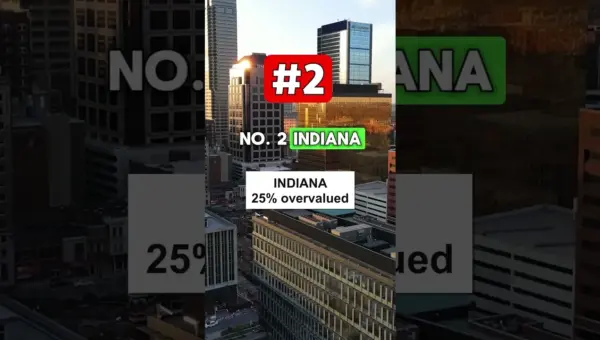
Several states show significant housing overvaluation in 2026, with home prices far exceeding local incomes. New Hampshire, Indiana, and Michigan are among the most overvalued markets, signaling potential price corrections. This trend highlights the importance of income-price balance for market stability.