Ex-CIA Chief: Trump Misjudged Iran, Echoes Iraq War Mistakes
Former CIA Director John Brennan warns that the Trump administration has misjudged the situation in Iran, drawing dangerous parallels to the Iraq War. He highlights the complexity of Iranian domestic support and the potential for regional escalation.

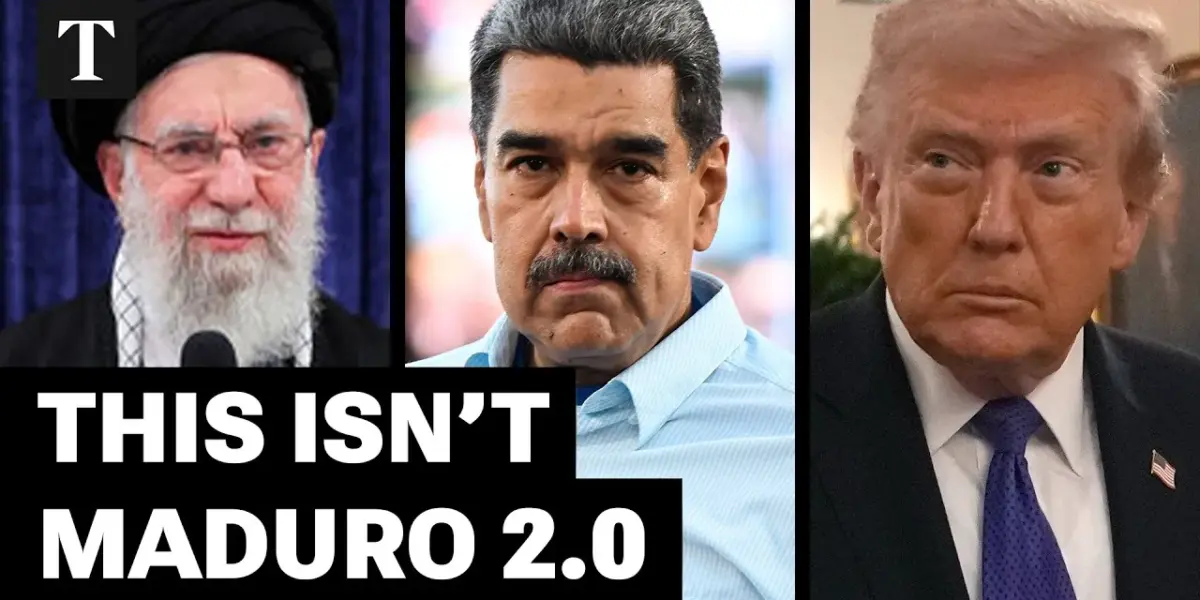
Ex-CIA Director John Brennan Assesses Iran Conflict, Warns of Escalation
In a candid assessment, former CIA Director John Brennan shared his insights on the escalating tensions with Iran, suggesting that the Trump administration significantly miscalculated the situation and drew dangerous parallels to the ill-fated Iraq War. Speaking on the complexities of Iranian domestic support, the potential for regional destabilization, and the strategic blunders of the current US approach, Brennan offered a stark warning about the unintended consequences of military action.
Understanding the Internal Dynamics of Iran
Brennan began by dissecting the notion of monolithic support for the Iranian regime, emphasizing that the population is far from uniform in its sentiments. “Like all countries, the population is not a monolith,” he stated.
While acknowledging that many Iranians, particularly in educated, urban centers, may resent the theocracy and welcomed the death of Qasem Soleimani, Brennan pointed to significant conservative and rural segments that remain supportive of the Islamic Revolution and the government. He highlighted the loyalty of security and military forces and their families, who are intrinsically linked to the regime.
Ironically, Brennan suggested that recent aggression from US and Israeli forces may have inadvertently strengthened domestic support for the government. “If anything, I think the support for the regime may have increased as a result of the aggression that has been carried out by US and Israeli military forces, and there’s usually a rallying around the flag so to speak, when something like that happens,” he explained. This internal resilience, he believes, is a crucial factor that the current leadership in Iran is relying upon.
Trump’s Venezuela Analogy and Shifting War Aims
The former CIA chief expressed skepticism about the Trump administration’s initial understanding of the situation, suggesting that President Trump was influenced by Israeli Prime Minister Benjamin Netanyahu’s long-standing desire for action against Iran. Brennan posited that Trump may have been misled by the perceived success of operations in Venezuela, believing that military action in Iran would be similarly straightforward.
“I think Donald Trump was led into this war by Bibi Netanyahu who’s been wanting to carry out these types of attacks against Iran for many many years,” Brennan said. “And I think Trump was lulled into feeling that just as the successful operation in Venezuela demonstrated you know the US military can do some wonderful things but again a sovereign state and engaging in sort of war activities it’s much more complicated.”
Brennan observed a swift shift in the administration’s rhetoric, moving from calls for Iranians to rise up to a recalibration of war aims. “So I think he is being a little bit now chastened by the uh the early um response of the Iranians which has taken a toll and so there’s shifting not only shifting rationale for this needless in my view war but also shifting emphasis on different types of objectives,” he noted.
He criticized the apparent lack of strategic foresight, stating, “Quite frankly, I don’t think there’s really been much strategic thought that has been put into this military operation aside from just wanting to rain down on the Iranian military security services and leadership the brute force of American military power. Uh, but that’s the easy part. Complicated part is what happens next.”
Intelligence Warnings and the Specter of Escalation
When asked about the intelligence community’s role, Brennan expressed hope that warnings were issued to the President but voiced concern over the current partisan nature of its leadership. “I’d like to think so, but um the leadership of the intelligence community these days is rather partisan and very supportive of Donald Trump,” he admitted. He questioned whether professional intelligence officers had sufficient opportunity to convey the realities of the situation inside Iran and the regime’s potential for defiance.
Brennan believes the timing of the operation was likely triggered by the successful intelligence gathering that pinpointed the location and timing of the meeting resulting in Soleimani’s death. However, he reiterated his concern that insufficient thought was given to the aftermath. “Again, I think not much thought has been given into what is going to now be in front of us,” he stated.
The former CIA director warned of Iran’s likely response, including broadening the conflict to inflict greater impact. “I expect Iran to resort to whatever means it has probably depleting its missile inventory pretty quickly, but it has cyber capabilities, it has terrorist capabilities, it has standoff capabilities that it can exercise in different locations,” he said. He also raised the alarming possibility of increased terror attacks on American soil, citing the recent incident in Austin, Texas, as a potential indicator.
Echoes of Iraq: A Second Tragic Mistake?
Brennan drew strong parallels between the current situation and the 2003 invasion of Iraq, a comparison that resonates deeply in the UK and the US. He described the US intervention in Iraq as a pivotal mistake that led to immense violence, chaos, the rise of ISIS, and widespread terrorism. “To me, what’s happening now is the second biggest um or the second US mistake of tragic proportions in terms of impacting the region,” he asserted.
He argued that the current actions in Iran risk perpetuating a destructive cycle of violence and retribution, failing to address underlying issues through non-military means. Brennan criticized President Trump’s apparent lack of historical perspective, suggesting he was perhaps “intoxicated with power” and believed he could unilaterally “clean up the Middle East.”
“This is going to be an issue and a problem I think for for a long time to come,” Brennan concluded regarding the long-term implications of the current policy.
Strain on the “Special Relationship”
Addressing the relationship between the US and the UK, Brennan acknowledged President Trump’s differing views on alliances like NATO. He commended Prime Minister Boris Johnson’s caution in not participating in the initial strikes, contrasting it with the rushed nature of the current US action, which he believes lacked sufficient consultation and a clear rationale.
“I didn’t see any imminent threat at all and I think that this administration now is is grasping its straws to try to explain the rationale,” Brennan commented. While hoping the US-UK relationship is robust enough to withstand current tensions, he advised the UK to pursue pragmatic and rational foreign policies, even if they diverge from those of the current US administration.
“They cannot just go along with what they might see as um ill-advised policies and actions just because Donald Trump wants them to do it,” he urged.
Brennan’s analysis underscores a deep concern that the administration’s actions in Iran are driven by a flawed understanding of the region, a disregard for historical lessons, and a potential for catastrophic escalation, echoing the gravest foreign policy errors of the recent past.
Source: Trump Thought Iran Would Go Like Venezuela – Here’s Why It Hasn’t | Ex-CIA Director (YouTube)

Related Articles


Ukraine Strikes Russian Oil Refineries Deep Inside
Ukraine's drone strikes are targeting Russia's vital oil refineries deep within its territory, aiming to cripple its war economy. These attacks, reaching up to 2,000 kilometers inside Russia, highlight Ukraine's growing offensive capabilities and Russia's economic vulnerabilities. The strategy focuses on cutting off crucial revenue from oil and gas exports, impacting Moscow's ability to fund its military operations.
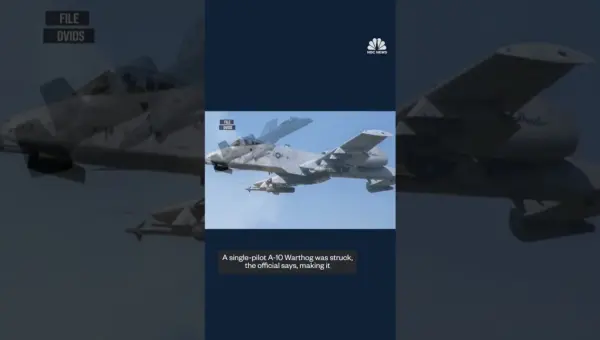
Iran Downs US Jet, Fires on Rescue Craft
A US F-15E Strike Eagle was shot down by apparent Iranian fire, sparking a search for a missing pilot while a second crew member was rescued. Three US aircraft involved in the rescue mission were also hit by Iranian fire, contradicting recent presidential claims about Iran's air defense capabilities.
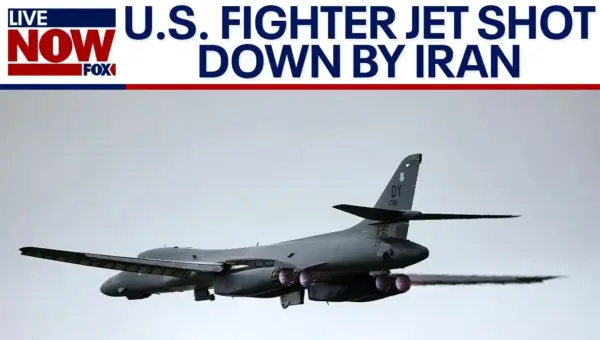
Iran Downs US Jets; Search Continues for Missing Pilot
Iran has shot down two U.S. military planes in separate attacks, marking a significant escalation. One service member was rescued, but a search is ongoing for another. The incidents challenge previous U.S. claims about Iran's weakened defenses.