Iranians Rejoice as US Strikes Target Regime, Not Nation
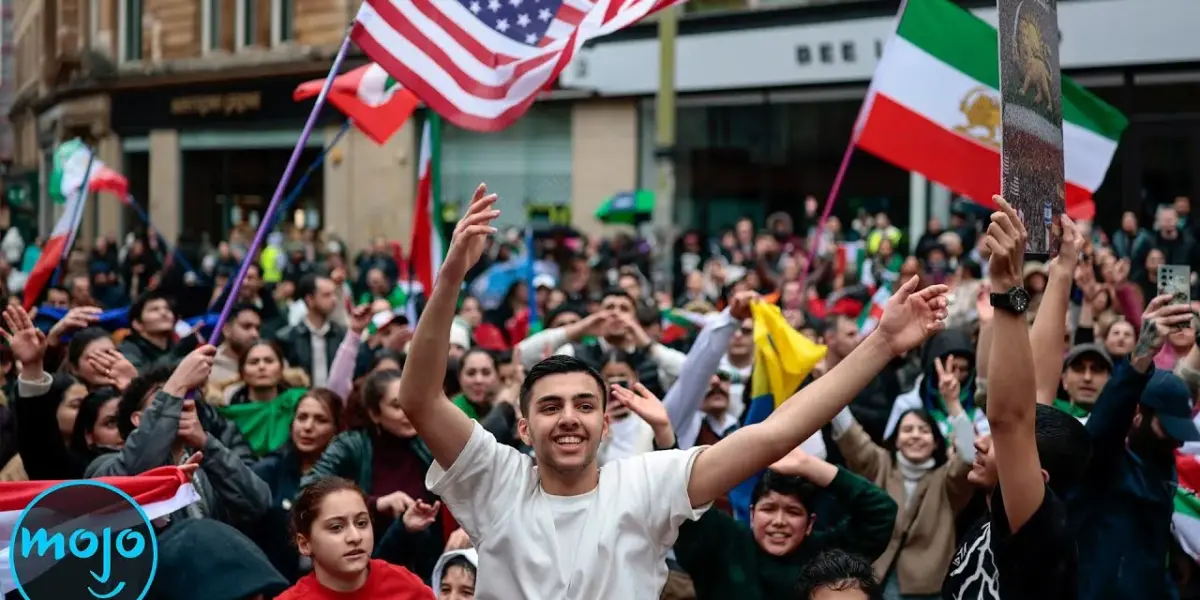
In a significant development in March 2026, the U.S. and Israel launched joint military strikes in Iran, reportedly assassinating Supreme Leader Ali Khamenei. While condemned by some, the operation has ignited widespread celebrations within Iran, with many citizens viewing it as a blow against the oppressive regime rather than their nation.

Iranians Rejoice as US Strikes Target Regime, Not Nation
In a dramatic escalation of geopolitical tensions, the United States, in a joint operation with Israel, launched significant military strikes against Iran in March 2026. Codenamed Operation Epic Fury by the U.S. And Roaring Lion by Israel, the coordinated attacks targeted key officials, military commanders, and strategic facilities within the Islamic Republic. The operation culminated in the reported assassination of Ali Khamenei, the Supreme Leader of Iran for 37 years, a move that has sent shockwaves across the globe and ignited unprecedented celebrations within Iran itself.
Regime Change Objective Amidst Joint Assault
The attacks, which commenced on February 28th, 2026, followed weeks of strained negotiations between the U.S. And the Islamic Republic. President Donald Trump and Israeli Prime Minister Benjamin Netanyahu spearheaded the offensive, aiming to dismantle the theocratic regime that has been in power since the 1979 Islamic Revolution and has consistently espoused anti-American and anti-Israeli rhetoric. The operation’s objective was explicitly stated as regime change, a sentiment echoed by the symbolic targeting of sites associated with the regime’s foundational ideology, including the atomic energy organization and the Supreme Leader’s compound.
Reports detailed a massive barrage of Tomahawk missiles followed by bunker-buster strikes, hitting hardened command sites, military compounds, strategic headquarters, and high-level meeting locations. Among the prominent casualties confirmed were IRGC chief Mohammad Pakpour, Army Chief Amir Hatami, Defense Minister General Aziz Nasirzadeh, and senior advisor to Ali Khamenei, Ali Shamkhani. The White House later confirmed the death of Khamenei himself, along with several family members, a claim later admitted by Iranian state television.
A Nation Divided: Celebrations Erupt While the Regime Mourns
The news of Khamenei’s demise was met with widespread jubilation on the streets of Iran. While the ruling elite mourned the loss of their long-standing leader, a significant portion of the Iranian population, both inside and outside the country, celebrated with what has been described as relief and cautious optimism. This reaction might seem counterintuitive to some in the West, but it underscores a deep-seated division between the Iranian people and the Islamic Republic’s ruling faction.
The distinction between ‘Iran’ and the ‘Islamic Republic’ is crucial. Iran, as a civilization, boasts a history stretching back thousands of years, with a rich cultural heritage.
The Islamic Republic, established in 1979, has governed for a mere 47 years and is viewed by many as an oppressive regime that has prioritized religious ideology over national well-being. This has led to a significant diaspora, estimated at up to 8 million Iranians worldwide, many of whom have been vocal critics of the current government.
The IRGC: A Target of Both Foreign Powers and Domestic Discontent
The Islamic Revolutionary Guard Corps (IRGC), designated as a terrorist organization by the U.S., was a primary target. Beyond its role as a military branch, the IRGC functions as a powerful economic conglomerate and a domestic security apparatus, overseeing foreign operations, missile programs, and internal repression. Its perceived role in widespread corruption and its involvement in violent crackdowns on internal dissent, such as the ‘Women, Life, Freedom’ movement following the death of Mahsa Amini in 2022 and subsequent protests in January 2026, have made it a symbol of oppression for many Iranians.
The text highlights that for many Iranians, especially younger generations, the regime is not synonymous with their nation. They see it as a political system that seized power and has ruled through a fusion of theology and state authority, framing dissent as heresy. The strikes, therefore, are viewed not as an attack on Iran, but as a necessary pressure on the machinery of control, with regime change being the ultimate goal.
Beyond Islamophobia: Critiquing Political Islam
The article also addresses the Western hesitation to criticize the Islamic Republic, often out of fear of appearing Islamophobic. However, it argues that Iranians are largely unbothered by this accusation because they have experienced the detrimental consequences of political Islam, or Islamism, firsthand. They have witnessed the weaponization of religion as an ideology of control, leading to economic hardship, resource scarcity, and a decline in living standards.
Unlike some Arab nations where anti-American sentiment is prevalent among the populace while governments maintain ties, Iran presents a contrasting scenario: the regime chants ‘Death to America’ while its people often hold a favorable view of the U.S. This distinction is attributed to the difference between state-enforced ideology and genuine popular sentiment.
Uncertainty and Hope for the Future
The aftermath of the strikes has ushered in a period of significant transition and uncertainty. A temporary leadership council has been formed, featuring Ayatollah Ali Arafei, but follow-up strikes suggest the pursuit of regime change is ongoing. The defection of IRGC members and calls for surrender from military personnel indicate cracks within the regime’s structure.
While critics warn of potential instability, drawing parallels to Iraq and Libya, supporters argue that Iran’s unique cultural cohesion, educated populace, and strong civil society differentiate it. For many Iranians, the aspiration is for freedom, liberty, and happiness, with some even expressing a desire for the return of the monarchy to rebuild the country.
The strikes, though controversial internationally, have been met with a profound sense of relief and hope by a segment of the Iranian population who see it as a potential pathway to liberation from decades of authoritarian rule. The future remains uncertain, but the celebrations within Iran signify a deep-seated yearning for change that the current regime has failed to address.
Source: When US Struck Islamic Republic, Iranians Celebrated – Explained (YouTube)

Related Articles

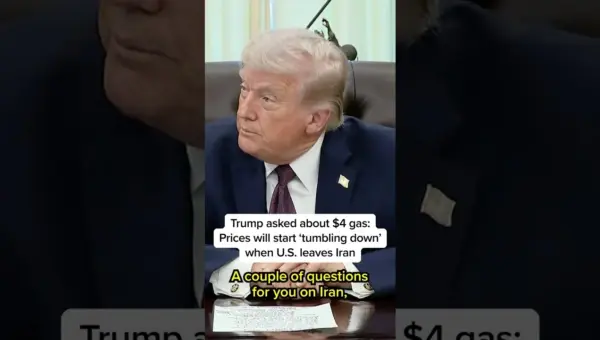
Trump: Iran Exit Will Trigger Fast Gas Price Drop
Former President Donald Trump believes that withdrawing U.S. involvement from Iran will cause gas prices to fall rapidly. He stated that this action would ease pressure on global energy markets, impacting fuel costs for Americans. The comments come as gas prices have risen above $4 per gallon due to supply disruptions.

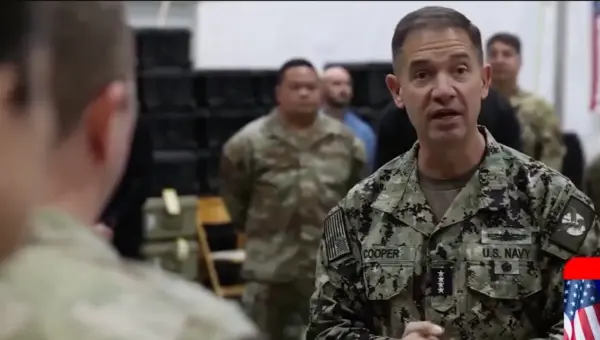
US Military Crushes Iran’s Global Power Projection
The US military has significantly weakened Iran's global power projection capabilities through Operation Epic Fury. Admiral Brad Cooper reported major successes in dismantling Iran's drone, missile, and naval forces, while maintaining vigilance.
Trump’s Iran Gambit: A Risky Bet for Global Oil Prices
Donald Trump's potential withdrawal from the Iran conflict could destabilize global oil prices. Leaving allies to manage the Strait of Hormuz risks empowering Iran to control energy markets. This move could lead to significant economic pain worldwide.