US Tightens Iran Grip, Sparks Global Economic Ripples
The US has imposed a naval blockade on Iran, impacting global oil prices and sparking debate. Meanwhile, political scandals in Congress highlight differing accountability standards between parties. Generational divides on dating and power dynamics are also discussed.

US Tightens Iran Grip, Sparks Global Economic Ripples
The United States has implemented a naval blockade targeting Iranian ports, a significant move that is already sending waves through the global economy. This action, initiated by President Trump, aims to cut off Iran’s income sources without directly increasing oil prices for Americans. The blockade, which focuses on ships entering and leaving Iranian coastal ports, comes after Iran’s closure of the Strait of Hormuz. This strategic move by the US seeks to counter Iran’s actions by economically pressuring the nation.
The economic effects are beginning to show. The S&P 500 has seen an increase, nearing a record high and adding trillions in market value since late March. Oil prices have also dropped below $100 a barrel, falling significantly since the blockade began. This suggests the US strategy of economic pressure is having an impact on global energy markets and financial indicators.
Shifting Alliances and Peace Efforts
Amidst the tensions with Iran, diplomatic efforts are also underway. Senator Marco Rubio is facilitating peace talks between Israel and Lebanon. President Trump has expressed optimism about progress with Iran on a peace deal, though significant differences remain. Iran reportedly offered a five-year period without nuclear enrichment, while the US has requested twenty years. These ongoing negotiations highlight the complex geopolitical landscape surrounding Iran.
Political Scandals and Accountability Debates
The transcript also touches on significant political scandals involving members of Congress. Republican Representative Tony Gonzalez resigned following accusations of infidelity with a staffer whose subsequent suicide cast a shadow over the situation. Separately, Democratic Representative Eric Swalwell faces multiple accusations, including rape and sending unsolicited explicit images. These events have sparked a debate about accountability within both major political parties.
One perspective argues that the timing of the Swalwell accusations, surfacing as he campaigns for governor, suggests a politically motivated effort to remove him from the race. This view posits that the Democratic Party may have used the allegations to clear the path for a more favorable candidate, potentially a billionaire like Tom Steyer. This highlights concerns about cynicism in politics and the influence of wealth.
Conversely, another viewpoint emphasizes the swift action taken by Democrats to pressure Swalwell to drop his campaign. This is contrasted with the Republican Party’s approach to similar scandals, citing figures like Matt Gaetz and Donald Trump as examples of alleged cover-ups. The argument is made that Republicans are less likely to hold their own members accountable, suggesting a pattern of protecting party members regardless of the severity of accusations.
Generational Divides on Power Dynamics and Dating
A significant portion of the discussion explores generational differences in understanding power dynamics and their impact on social interactions, particularly dating. One speaker expresses concern that a heightened awareness of power imbalances, possibly amplified by the #MeToo movement, might be making younger generations, especially men, hesitant to approach women. This, coupled with the isolation caused by the COVID-19 pandemic and the influence of social media, is suggested as a reason for decreased socialization and difficulty in forming relationships.
The younger commentator acknowledges that while the #MeToo movement addressed serious issues, some cases may have involved overreach. However, they attribute the current dating challenges primarily to the pandemic’s impact on social skills and the pervasive influence of social media, which can lead to hyper-politicization and radicalization. The idea that political ideology alone prevents dating is seen as overstated, with lack of in-person socialization being a more significant factor.
This generational perspective also touches on the perceived differences in how political parties handle scandals. The younger participant suggests that the Republican Party’s structure, influenced by figures like Donald Trump, may create incentives for corruption, with an expectation of pardons. This contrasts with the Democratic Party’s quicker response to scandals involving their members, though the timing and motives behind such responses remain a subject of debate.
Global Impact and Shifting World Order
The US naval blockade of Iran is a clear example of how geopolitical actions directly impact global economic stability. By attempting to cripple Iran’s oil revenue, the US influences international energy prices and trade flows. This demonstrates a broader trend where major powers use economic tools to exert influence, affecting nations far beyond the immediate conflict zone.
The debate over accountability in politics also reflects a changing global dynamic. As scandals emerge and are debated, the public’s expectations for ethical conduct from leaders are evolving. The differing approaches to handling such issues by various political parties can shape international perceptions of governance and stability. Furthermore, the discussion on dating and generational divides highlights how social trends, influenced by global events like pandemics and digital communication, can reshape societal norms and interpersonal relationships worldwide.
Historically, the Strait of Hormuz has been a critical chokepoint for global oil supplies. Its closure by Iran has been a recurring threat, leading to heightened tensions and US military responses in the past. The current blockade represents a new phase in this long-standing strategic competition, underscoring the enduring importance of energy security and maritime control in international relations.
The convergence of economic pressure, diplomatic maneuvering, and domestic political controversies paints a picture of a world order in flux. The actions taken by the US regarding Iran, the internal political debates within the US, and the evolving social dynamics among its youth all contribute to a complex and dynamic international environment.
Source: Adam Mockler Debates Batya on Swalwell Scandal, GenZ Dating & Politics | Prove It with Batya! (YouTube)

Related Articles

Oil Prices Surge to $91 Amid Geopolitical Tensions
Oil prices have surged to $91 a barrel, driven by disruptions in the Strait of Hormuz. This is leading to higher gas prices across the U.S., with California facing particularly steep costs. The situation is fueling debate on energy policy, exports, and the transition to renewable fuels.

China’s Iran Gambit: Deception or a New World Order?
President Trump claims China will stop sending weapons to Iran, but deep skepticism remains due to China's past support and use of spy satellites to aid Iran. This move could be a strategic ploy to weaken the US military.

China Aids Iran Amid US Conflict Escalation
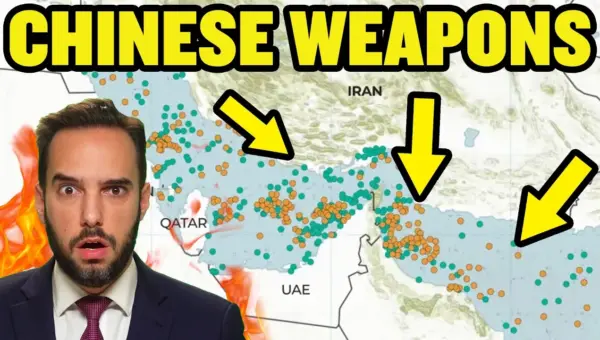
Recent intelligence suggests China is secretly supplying Iran with weapons like MANPADS and sharing critical intelligence, a significant escalation from its previous stance. This move, if confirmed, could deepen regional conflict and lead to severe US economic retaliation, while highlighting long-standing strategic ties between Beijing and Tehran.