US Navy Enforces Strict Blockade on Iran Amidst Operation Epic Fury
The Pentagon has provided a detailed update on Operation Epic Fury, highlighting the ongoing U.S. naval blockade of Iran. Officials issued stern warnings to Iran's leadership regarding military disparities and the consequences of non-compliance. Alongside military pressure, Operation Economic Fury aims to maximize economic sanctions against the nation.

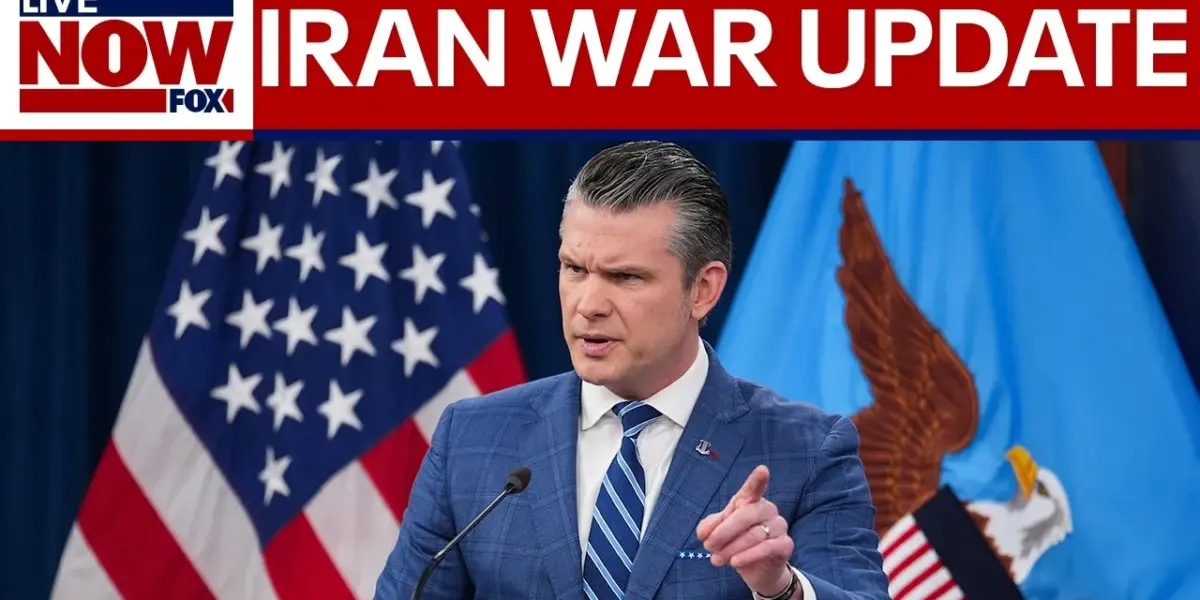
US Navy Tightens Grip: Operation Epic Fury Blockade Against Iran Continues
The Pentagon provided a critical update on Operation Epic Fury, detailing the ongoing naval blockade of Iran. Admiral Bradley Cooper, recently returned from the region, joined military leaders to explain the operation’s status and its implications. The United States is maintaining a firm stance, urging Iran’s new regime to accept a deal and avoid further escalation.
Message to Tehran: “We Are Watching You”
In a direct address to Iran’s military and IRGC leadership, officials issued a stern warning: “We are watching you.” The message emphasized the significant military disparity between the U.S. and Iran, highlighting that any conflict would not be a fair fight. U.S. forces are aware of Iran’s movements and capabilities, noting that while Iran attempts to recover damaged facilities and re-position remaining assets, its ability to rebuild or replace offensive and defensive weapons is severely limited.
The U.S. military stated it is strengthening its position with enhanced intelligence and superior capabilities. The warning extended to Iran’s critical infrastructure, including power generation and energy industries, with readiness to strike at the President’s command. The blockade is presented as the “polite way” to exert pressure, preventing Iran’s energy exports from reaching the market.
Control of the Strait of Hormuz: A Matter of Capability
Officials asserted that Iran’s claims of controlling the Strait of Hormuz are unfounded, lacking the necessary naval power and situational awareness. The U.S. Navy, by contrast, demonstrated its control through the presence of significant assets, managing traffic in and out of the vital waterway. This control is being exercised with less than 10% of America’s naval power, contrasting sharply with Iran’s negligible naval presence.
Threatening commercial ships is characterized not as control, but as piracy and terrorism. The U.S. reiterated its long-standing experience in dealing with such threats.
An alternative path for Iran was presented: choosing a prosperous future through a negotiated deal. However, the blockade will persist, with the potential for escalation to include strikes on infrastructure if Iran does not comply.
Operation Economic Fury: A Two-Pronged Approach
Alongside the naval blockade, the Treasury Department is launching “Operation Economic Fury.” This initiative aims to maximize economic pressure on Iran, working in concert with military actions. The dual approach highlights a comprehensive strategy to compel Iran’s leadership to make a wise choice, emphasizing the availability of a “golden bridge” to a better future for the Iranian people.
Press Criticism: A Call for Patriotic Reporting
Pentagon officials also addressed the media, criticizing what they termed “relentlessly negative coverage” of the operation and its successes. The press was urged to report more patriotically, drawing a parallel to the Pharisees in the Book of Mark who observed miracles but sought to find fault. The criticism suggested that some media outlets are blinded by political animus, failing to recognize the courage and achievements of American troops and the potential for a diplomatic resolution to the Iranian nuclear threat.
Specific examples cited included successful rescue missions, the effectiveness of the blockade, and record-breaking military recruiting numbers, which were noted as receiving insufficient media attention. The sentiment was that the press often focuses on the negative, missing the broader picture of American strength and resolve.
Blockade Details: Execution and Effectiveness
The Chairman of the Joint Chiefs of Staff detailed the implementation of the blockade, which began on April 13th. The operation targets all ships, regardless of nationality, heading to or from Iranian ports.
Enforcement occurs within Iran’s territorial seas and international waters. The U.S. military is also monitoring and interdicting any vessel providing material support to Iran, including “dark fleet” vessels carrying illicit oil.
The operation involves over 10,000 personnel, more than a dozen ships, and dozens of aircraft. Visual aids showed the blockade line and the presence of U.S. forces (in blue) compared to Iranian ships (in red).
The effectiveness of the blockade was demonstrated by multiple ships turning around before attempting to breach the line. Warnings were issued to vessels, stating that non-compliance would result in boarding and seizure, with the potential use of force.
As of the briefing, 13 ships had wisely chosen to turn around, and U.S. forces had not yet needed to board any vessels. The Chairman highlighted the capabilities of the Arleigh Burke-class destroyers, describing them as the backbone of the U.S. Navy and emphasizing the key role of the American sailors who operate them. These sailors, some as young as 18, are entrusted with immense responsibility, demonstrating remarkable skill and dedication.
Admiral Cooper’s Regional Assessment: Troops Motivated and Ready
Admiral Cooper shared insights from his recent trips to the Middle East, meeting with over 50,000 American service members. He reported that troops are highly motivated, focused, vigilant, and ready.
They are using the current pause in combat operations to rearm, retool, and adjust tactics. Admiral Cooper noted the strength of partnerships with regional allies, who are committed to shared security and defense.
He specifically mentioned Bahrain, UAE, Saudi Arabia, Qatar, Kuwait, and Jordan as exceptional teammates. Israel was highlighted as a particularly strong partner, with the U.S. and Israeli air forces achieving shared military objectives. Admiral Cooper concluded by commending the bravery and readiness of all service members, emphasizing their unwavering commitment and the pride felt by the American people.
Q&A Highlights: Ceasefire, Houthis, and Allied Support
During the question-and-answer session, officials addressed the degraded command and control capabilities of Iran, stating that while their ability to communicate is low, their motivation to maintain the ceasefire is high due to the negative consequences of prior engagements. The Houthis have, thus far, stayed out of the Strait of Hormuz and Bab al-Mandab, a decision attributed to past U.S. military demonstrations of capability.
Regarding allied support for maritime security, officials noted a significant gap between talk and action from many allies, with the exception of regional partners mentioned by Admiral Cooper. The U.S. reiterated that while it welcomes collective defense efforts, it cannot perpetually bear the burden alone. The message to allies is to invest in their own capabilities to handle basic tasks like clearing straits.
Updates on the condition of Iran’s Supreme Leader indicated he is believed to be alive but wounded and disfigured, with his status remaining unchanged. The Pentagon condemned propaganda videos, such as an AI-generated depiction of Jesus Christ attacking President Trump, labeling them as disgusting and detached from reality, characteristic of Iran’s history of lies and misrepresentation.
Source: LIVE SOON: Pentagon update on Operation Epic Fury (YouTube)

Related Articles

Oil Prices Surge 50% Amid Iran Tensions, Gas Prices Eyed
Oil prices have surged 50% amid rising U.S.-Iran tensions, with potential for $3 gas this summer. The U.S. is tightening sanctions on Iran's oil exports and has warned ships about a naval blockade, aiming to pressure the regime and prevent nuclear proliferation.
US Tightens Grip: Iran Blockade Targets Revolutionary Guard
The United States has initiated a naval blockade of Iran, targeting the revenue streams of the Islamic Revolutionary Guard Corps (IRGC). This strategy aims to halt Iran's oil exports and smuggling operations, applying direct financial pressure. While the blockade presents challenges, including potential Iranian retaliation and land-based supply routes, it marks a significant escalation in U.S. policy.
China’s Spy Satellite Aided Iran’s Attacks on US Bases
A new report reveals Iran has used a Chinese spy satellite to monitor US military bases in the Middle East, potentially aiding in recent attacks on American warplanes. Leaked documents suggest Iran purchased the satellite, which significantly outperformed its own capabilities, raising concerns about China's role in regional conflicts.