Oil Prices Surge 50% Amid Iran Tensions, Gas Prices Eyed
Oil prices have surged 50% amid rising U.S.-Iran tensions, with potential for $3 gas this summer. The U.S. is tightening sanctions on Iran's oil exports and has warned ships about a naval blockade, aiming to pressure the regime and prevent nuclear proliferation.


Oil Prices Jump 50% as Iran Tensions Escalate
Global oil prices have seen a significant jump of 50% in recent weeks, driven by rising tensions with Iran. This sharp increase has put pressure on the stock market, which experienced a tough first quarter. Despite the market’s challenges, some stocks have managed to recover and show gains.
US Navy Warns Ships Amid Iran Blockade
The U.S. Navy has issued stern warnings to commercial vessels in the Gulf of Oman. These warnings are part of a formal blockade of Iranian forces, with ships being told to obey or face boarding and potential force. The entire U.S. Navy is reportedly on standby, signaling a serious escalation in the region.
Gas Prices Could Hit $3 This Summer, Officials Say
Amidst the geopolitical turmoil, there is a possibility of gas prices returning to $3 per gallon between June and September. This projection comes as the U.S. considers applying secondary sanctions on countries purchasing Iranian oil. This move would mean that any Iranian money held in banks would be subject to these new, strict measures.
Energy Secretary Wright indicated that seeing $3 gas prices this summer might be an aggressive prediction. However, Secretary Bessent suggested it’s a possibility. The administration is willing to take these stern measures, viewing them as the financial equivalent of military actions against Iran.
Sanctions Target Iran’s ‘Terror Regime’
The U.S. is preparing to impose further sanctions on nations that continue to buy oil from Iran. This strategy aims to cripple Iran’s economy and prevent it from funding its military and supporting what the U.S. calls a ‘terror regime’. The goal is to increase economic pressure, making it difficult for the Iranian government to pay its forces.
Dr. Sheila Nazarian, an Iranian-American activist who escaped the regime, believes this economic pressure is the most effective non-violent way to encourage regime change. She stated that eventually, the Iranian government won’t be able to afford its internal security forces, which could empower the Iranian people to reclaim their country.
Iran’s Human Rights Record Under Scrutiny
Beyond the economic and military actions, concerns are mounting over Iran’s human rights record. Reports indicate that Iran’s government continues to execute its citizens, including women. One woman, Beta Hamati, is reportedly among an estimated 1,600 people sentenced to death in the past year.
Dr. Nazarian highlighted that Iran has consistently ranked high in per capita executions for many years. Public executions are used as a tool to intimidate the population and suppress dissent. She described these acts as a response to a government that feels threatened and paranoid, seeking to crush any opposition.
Concerns Over Nuclear Ambitions
President Trump has stated that higher oil and gas prices are a necessary cost to prevent Iran’s regime from obtaining a nuclear weapon. This stance suggests that Iran’s nuclear ambitions are viewed as an imminent threat by the administration.
Dr. Nazarian drew a parallel to the period before World War II, where some argued against intervention until directly attacked. She believes that ignoring Iran’s actions, including the killing of protesters, poses a significant risk not only to the Middle East but also to global peace. The stated goal of the Iranian regime, she emphasized, is ‘Death to America,’ a threat that should not be underestimated.
Market Impact and Investor Considerations
The escalating tensions with Iran and the resulting surge in oil prices create a complex environment for investors. The 50% rise in oil prices directly impacts energy costs for businesses and consumers, potentially leading to higher inflation.
For investors, this situation may present opportunities in the energy sector, particularly in companies that benefit from higher oil prices. However, the broader market could face volatility due to geopolitical uncertainty. The imposition of secondary sanctions on countries buying Iranian oil could also disrupt global trade flows and affect companies with significant exposure to Iran or its trading partners.
The long-term implications depend heavily on the diplomatic and military outcomes. A de-escalation of tensions could lead to a stabilization of oil prices and a recovery in the stock market. Conversely, further conflict could lead to sustained high energy prices and increased market instability.
The focus on preventing Iran from acquiring nuclear weapons adds another layer of risk. Any perceived progress by Iran in its nuclear program could trigger further sanctions or military responses, leading to unpredictable market reactions. Investors will need to monitor these developments closely.
Looking Ahead
The coming months will be critical in observing how these geopolitical pressures evolve and their impact on energy markets and global stability. The U.S. administration’s commitment to economic pressure and potential military readiness suggests a sustained focus on Iran’s actions.
Source: Iranian-American activist: We have been dealing with this ‘monstrosity’ for 50 years (YouTube)

Related Articles

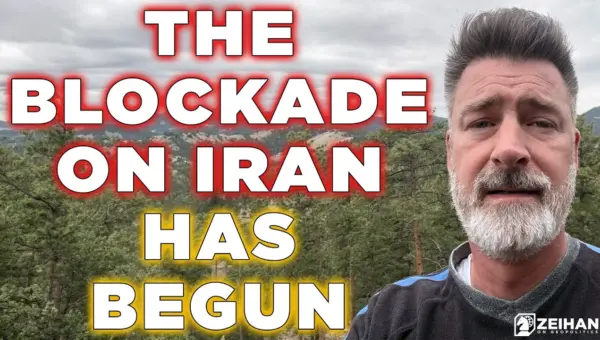
US Tightens Grip: Iran Blockade Targets Revolutionary Guard
The United States has initiated a naval blockade of Iran, targeting the revenue streams of the Islamic Revolutionary Guard Corps (IRGC). This strategy aims to halt Iran's oil exports and smuggling operations, applying direct financial pressure. While the blockade presents challenges, including potential Iranian retaliation and land-based supply routes, it marks a significant escalation in U.S. policy.
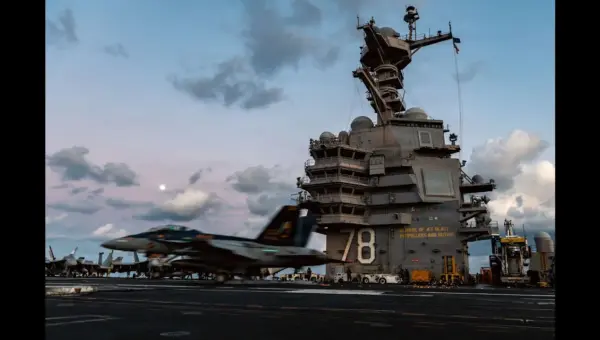
US Tightens Grip: Iran’s Oil Blockade Cripples Regime
The U.S. is employing a dual strategy against Iran, first militarily and now economically, to force regime change. By blocking oil exports and threatening secondary sanctions, Washington aims to cripple Iran's economy and disrupt China's geopolitical influence. This move could reshape regional power dynamics and influence future global conflicts.

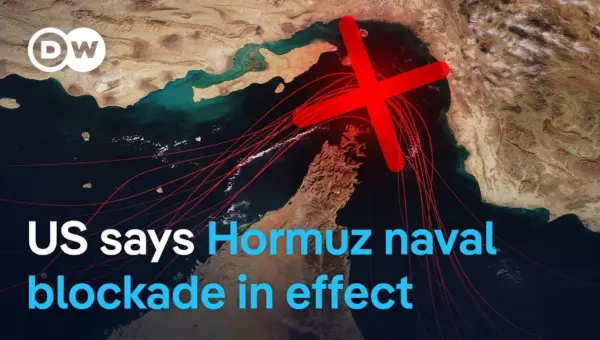
US Navy Blocks Iran’s Sea Trade, Escalating Regional Tensions
The U.S. military has announced a naval blockade on Iran, halting all sea-based trade and asserting control over maritime traffic. This action follows Iran's earlier disruption of the vital Strait of Hormuz. Experts weigh in on the legality, effectiveness, and potential for escalation, with concerns raised about China's role and the strain on U.S. naval resources.