Trump’s Iran Policy: A Confused Strategy in a Dangerous Game
President Trump's conflicting statements on the Iran war raise serious questions about U.S. strategy. Professor Scott Lucas argues that focusing on Trump's words misses the real issues of damaged capabilities and lingering threats in the Strait of Hormuz. The administration's approach appears uncertain, marked by diplomatic stumbles and internal Pentagon shake-ups, creating a dangerous global environment.

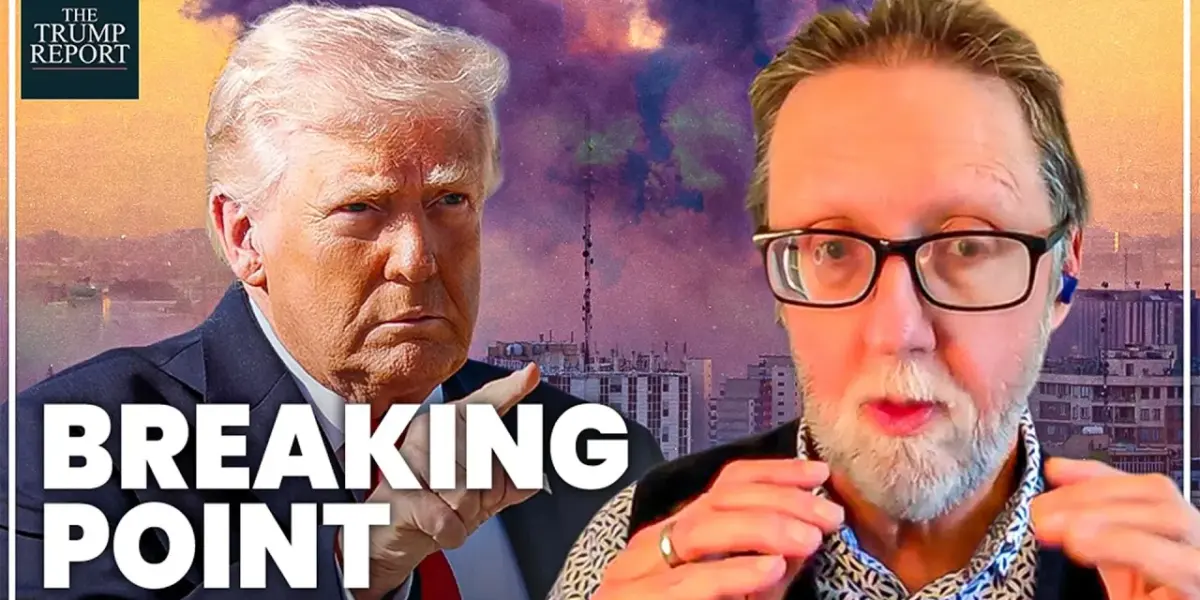
Trump’s Iran Policy: A Confused Strategy in a Dangerous Game
President Donald Trump has presented conflicting messages about the Iran war, leaving many to question the actual strategy. In a recent interview, Trump stated there was no time frame for ending the conflict, insisting the U.S. faced no pressure to conclude it quickly.
However, he had previously suggested in separate interviews that the U.S. had limited time, then later stated they had all the time in the world. This confusion leads to a critical question: what is the truth behind the administration’s approach?
Professor Scott Lucas, from University College Dublin, argues that the media should stop focusing on Trump’s public statements and instead look at the actions and their consequences. He believes that headlines based on Trump’s tweets or casual remarks do not reflect the reality of the situation. The core issue, according to Lucas, is that the Trump administration is at a loss regarding its next steps in Iran.
Eight Weeks In: Damage and Disagreement
After nearly eight weeks, the Trump administration has inflicted significant damage on Iran’s leadership and military capabilities. This includes assassinating top officials and commanders and hitting military facilities and infrastructure. However, quiet admissions from both U.S. and Israeli officials reveal that a substantial portion of Iran’s military strength remains intact.
Reports indicate that around half of Iran’s missiles and launchers are still operational, with Israeli figures being slightly lower. About 60% of the Iranian Revolutionary Guard’s navy, crucial for controlling the Strait of Hormuz, remains intact, as do two-thirds of its air force and a significant number of drones. This contradicts earlier claims by some officials that Iran’s military was effectively destroyed.
The Strait of Hormuz: A Lingering Threat
The military situation is not the only concern. Iran’s retaliation against Gulf States has created lasting issues for oil and gas markets.
Even with a ceasefire, Iran retains leverage over the Strait of Hormuz, a vital global shipping lane. This control directly impacts the global economy, creating a difficult situation for the U.S.
While the U.S. has imposed a blockade on Iranian ports, this action does not prevent other nations’ ships from being targeted in the Strait. The Pentagon has informed Congress that it would take six months to clear mines placed by Iran in the waterway. This highlights the challenges in securing passage for international shipping.
Conflicting Signals and Escalation
Recent events have further complicated the situation. Iran fired on three ships and seized two in the Strait of Hormuz.
The White House responded by stating that no action would be taken because the vessels were not U.S. or Israeli. This response suggests a lack of concern for the seizure of ships from other nations, which constitute the vast majority of traffic in the Strait.
This passive reaction, Lucas argues, might embolden Iran. He notes that Iran now possesses its own form of leverage, similar to how the Trump administration has threatened action. By seizing ships, Iran signals that it can disrupt shipping and that the U.S. may not be able to prevent it, especially if negotiations do not lead to a compromise.
Economic Pressure and Diplomatic Stumbles
The Trump administration has pursued a strategy of economic pressure, aiming to cripple Iran financially. Officials claim Iran is losing $500 million daily due to sanctions and blockades. However, Iran has faced sanctions for decades, and increased pressure since 2018 has not led to the regime’s downfall.
Adding to the confusion, the same administration that seeks to break Iran economically recently offered to lift sanctions on 140 million barrels of oil, allowing Iran to earn billions. Analysts suggest Iran can withstand economic pressure for several months, making the effectiveness of this strategy questionable.
Diplomatically, the U.S. has also faced setbacks. Iran stood up U.S. negotiators for talks in Islamabad, keeping them waiting for three days before refusing to meet. This diplomatic snub has left the U.S. appearing weak.
The Path Forward: Back Channels and Compromise
Lucas suggests that a path back to negotiations requires back-channel talks and careful timing. He believes Iran will not return to talks while the U.S. blockade is in place. The U.S. also faces pressure, as the ongoing limbo in the Strait of Hormuz harms the global economy and U.S. domestic opinion.
For negotiations to resume, both sides must signal a willingness to de-escalate. This could involve Iran stopping attacks on civilian shipping and the U.S. indicating a willingness to lift the blockade if discussions begin. While not openly stated, such signals could lead to renewed talks, potentially in Islamabad.
Trust and Uncertainty in Leadership
The constant contradictions and shifting statements from President Trump raise questions about his competence and the reliability of his administration’s policies. Many world leaders and affected countries struggle to trust that Trump knows what he is doing, especially when his pronouncements can change course on a whim.
This uncertainty forces other governments and businesses to look for signals from within the Trump administration, examining the actions of officials at the Treasury, Federal Reserve, and figures like Marco Rubio and JD Vance. Even allies like Saudi Arabia have shifted their stance, now favoring a negotiated settlement after losing faith in the U.S. approach.
Pentagon Shake-ups and Expertise Drain
The ongoing turmoil extends to the Pentagon, with significant shake-ups and dismissals. The removal of Navy Secretary John Felan, seemingly due to personal conflicts rather than war strategy, highlights internal chaos. This dismissal, along with the firing of other civilian staff and generals, suggests a pattern of purging those not deemed loyal to Trump or those who clash with Defense Secretary Pete Hegseth.
More significantly, the firing of the Army Chief of Staff and other high-ranking officers, reportedly over issues like diversity and inclusion or perceived disloyalty, signals a drain of military expertise. This internal instability and disregard for established military protocols during a conflict raise serious concerns about the administration’s ability to manage the Iran crisis effectively.
Why This Matters
The erratic and contradictory nature of the Trump administration’s Iran policy creates a dangerous environment. The confusion over strategy, combined with internal purges and diplomatic missteps, increases the risk of unintended escalation. For global stability and economic well-being, clear, consistent, and reliable leadership is essential, something that appears to be critically lacking in this situation.
Future Outlook
The situation remains volatile, with the potential for further escalation or a gradual return to diplomacy. The effectiveness of economic sanctions, the possibility of back-channel negotiations, and the internal dynamics of both the U.S. and Iranian governments will shape the future. The upcoming weeks will be critical in determining whether a path toward de-escalation and a negotiated settlement can be found.
The next step will likely involve increased pressure through back-channel communications, aiming to synchronize a de-escalation of actions in the Strait of Hormuz with the potential for renewed diplomatic talks. The world watches to see if a stable strategy can emerge from the current uncertainty.
Source: Trump ‘at a complete loss’ — breaking point closing in | Scott Lucas (YouTube)

Related Articles

US Navy Readies Lethal Force Against Iran in Hormuz Strait
President Trump has ordered the US Navy to use lethal force against Iranian mine-laying boats in the Strait of Hormuz, escalating tensions. Meanwhile, the White House accuses China of stealing AI technology, adding another layer to global competition. These actions, coupled with economic sanctions on Iran, aim to reshape regional dynamics and prevent nuclear proliferation.


Trump’s Shadow: Did He Halt Epstein File Release?
New claims suggest Donald Trump actively worked to block the release of Jeffrey Epstein files. Accounts point to direct orders from Trump to his administration, contradicting narratives that blame others like Pam Bondi.
Trump’s Navy Orders Spark Global Firestorm
President Trump's directive for the U.S. Navy to fire on Iranian boats in the Strait of Hormuz, based on a disputed claim of mine-laying, has sparked significant controversy. The author criticizes the order as delusional and highlights concerns about the appointed acting Navy chief's past remarks.