Trump Faces Humiliation as Iran Talks Stall, Blockade Debate Rages
President Trump claims Iran is leaderless amid stalled negotiations, but experts dispute his assertions, pointing to continued Iranian military actions and a hard-line leadership in firm control. The ongoing U.S. blockade and Iran's retaliatory measures are creating significant economic risks for both nations and the global economy.

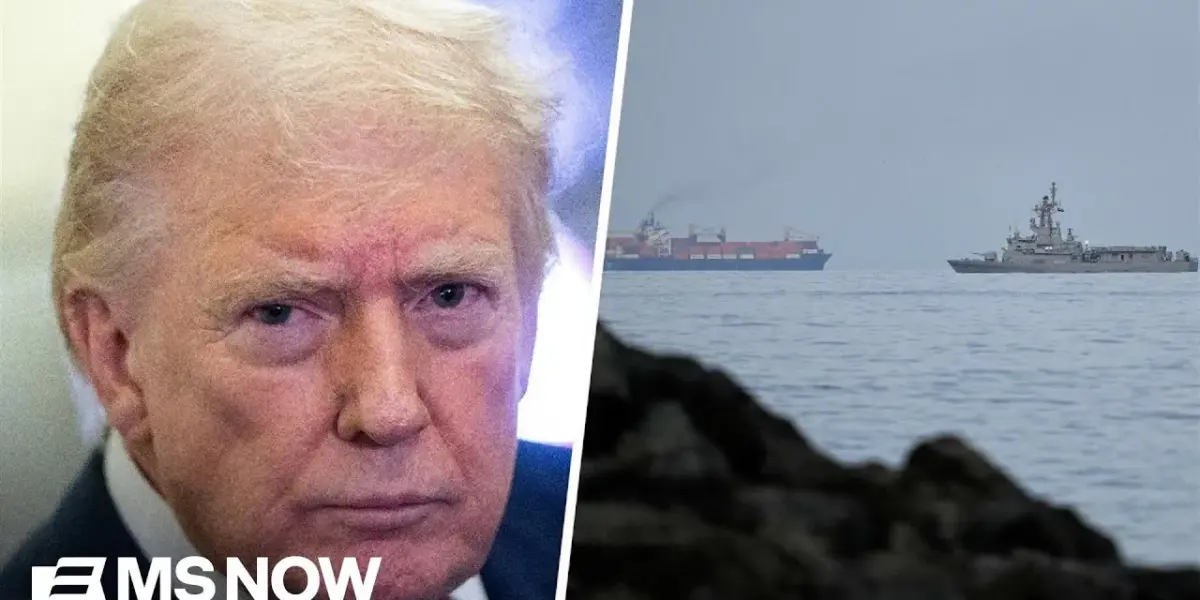
Trump Claims Iran Leaderless Amid Stalled Talks
President Trump told reporters this morning that Iran is in disarray, claiming the country lacks clear leadership following recent actions. He stated that Iran “has no idea who their leader is at this moment,” suggesting that the removal of key figures has left them struggling to identify who can negotiate.
These comments came as the second round of talks, aimed at securing a longer-term deal, were postponed earlier this week. The president indicated that the return of negotiators to Islamabad remained undecided.
The White House has recently shifted its tone regarding Iran, expressing more patience and offering an indefinite ceasefire. This change in posture appears to coincide with intense political pressure on President Trump.
New polling released today shows his approval ratings have reached an all-time low. Meanwhile, energy experts warn of the world facing its greatest security threat in modern history due to disruptions in oil flow through the Strait of Hormuz.
Experts Dispute Trump’s Claims on Iran’s Military and Leadership
However, experts and journalists are challenging the president’s assertions about Iran’s capabilities and internal structure. Videos show the Iranian Navy and Revolutionary Guards actively seizing tankers, directly contradicting claims that their navy has been decimated and every boat sunk. These actions, including the seizure of three tankers recently, demonstrate Iran’s continued naval presence and control over the Strait of Hormuz.
Regarding leadership, reporting from The New York Times, based on interviews with 23 individuals inside Iran, indicates a different situation. While the supreme leader was reportedly killed and his son named as a successor, a group of Iranian Revolutionary Guard generals are said to be in firm control. Experts suggest this is not a new or divided government but rather a more hard-line faction that was already influential and is now making negotiation decisions.
US Blockade and Iran’s Response Create Economic Jeopardy
The United States has maintained its blockade on Iranian shipping, a move Iran argues would encourage them to return to negotiations. President Trump has reiterated threats to target Iran’s fast attack boats and potential underwater mines, despite previously downplaying their threat. This tactic of threatening escalation, experts suggest, is an attempt to force Iran to moderate its behavior.
However, analysts believe Iran has called the president’s bluff, recognizing his reluctance to escalate further. Iran’s stance is that they will only return to the table if the U.S. lifts its blockade. Forcing the president to lift the blockade, according to analysts, would be a “tremendous humiliation and setback” for him.
Proposed Solution: An Open-for-Open Deal
Max Boot, a columnist for The Washington Post, proposes a strategy to move negotiations forward by simplifying the agenda. He suggests using the U.S. blockade as a bargaining chip to pressure Iran into lifting its own blockade on non-Iranian shipping. Boot calls this an “open for open deal” that would remove the immediate threat to the global and Iranian economies.
This exchange would provide crucial time for lengthier negotiations on the nuclear issue, which are unlikely to be resolved quickly. Without such an agreement, both blockades remain in place, creating a “ticking time bomb” that could push the global economy into recession. Boot expresses doubt that the current hard-line generals in charge of Iran would concede on what they consider their non-negotiable points.
Economic Pressure: A Test of Wills
The situation is framed as a test of wills, with President Trump risking his party’s success in upcoming mid-term elections due to rising gas prices. Iran, meanwhile, risks significant trade losses, estimated at half a billion dollars daily due to the U.S. blockade.
However, most experts believe Iran can endure more economic pain. As a country not reliant on democracy, its government is less accountable to its population.
Having faced sanctions since the 1980s, Iran has learned to manage shortages and limit imports, even if it means being short on cash and unable to sell oil. Conversely, if the current situation continues through April, the U.S. and other parts of the world could face fuel shortages, not just high prices, impacting summer travel and the broader economy.
Iran’s Resilience and Missile Capabilities Questioned
Recent reports from CBS and NBC News suggest that Iran’s missile capabilities have not been as significantly degraded as the president and the Pentagon have claimed. This raises questions about how Iran has maintained its military resilience despite U.S. actions.
Analysts describe Iran as successfully waging asymmetric warfare. Similar to tactics used in Iraq and Afghanistan, Iran targets U.S. weak points with methods like improvised explosive devices and guerrilla attacks.
In the Persian Gulf, Iran has effectively targeted energy infrastructure using missiles and drones. Despite U.S. strikes, the threat of an attack on a single ship can paralyze 20 percent of global energy flows, a weapon of mass economic destruction for which President Trump has yet to find a counter.
Source: Would be 'tremendous humiliation' for Trump if he were forced to lift blockade: Analyst (YouTube)

Related Articles

US Navy Readies Lethal Force Against Iran in Hormuz Strait
President Trump has ordered the US Navy to use lethal force against Iranian mine-laying boats in the Strait of Hormuz, escalating tensions. Meanwhile, the White House accuses China of stealing AI technology, adding another layer to global competition. These actions, coupled with economic sanctions on Iran, aim to reshape regional dynamics and prevent nuclear proliferation.
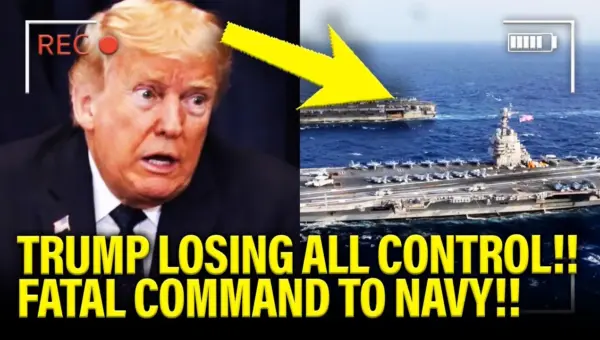
Trump’s Navy Orders Spark Global Firestorm
President Trump's directive for the U.S. Navy to fire on Iranian boats in the Strait of Hormuz, based on a disputed claim of mine-laying, has sparked significant controversy. The author criticizes the order as delusional and highlights concerns about the appointed acting Navy chief's past remarks.


Trump Orders Navy to Shoot Iran Boats in Strait of Hormuz
President Trump has ordered the U.S. Navy to "shoot and kill" any Iranian boats attempting to place mines in the Strait of Hormuz, escalating regional tensions. Meanwhile, exiled Iranian Crown Prince Reza Pahlavi was attacked in Berlin after criticizing U.S.-Iran talks. Geopolitical experts highlight the strait's critical role in global trade and the complex diplomatic and military dynamics at play.