Trump Escalates Iran Conflict, Threatens Blockade
Former President Donald Trump has escalated tensions with Iran by threatening to blockade the Strait of Hormuz following failed negotiations led by Senator JD Vance. This move is marked by significant contradictions and raises concerns about global economic stability and the risk of wider conflict.

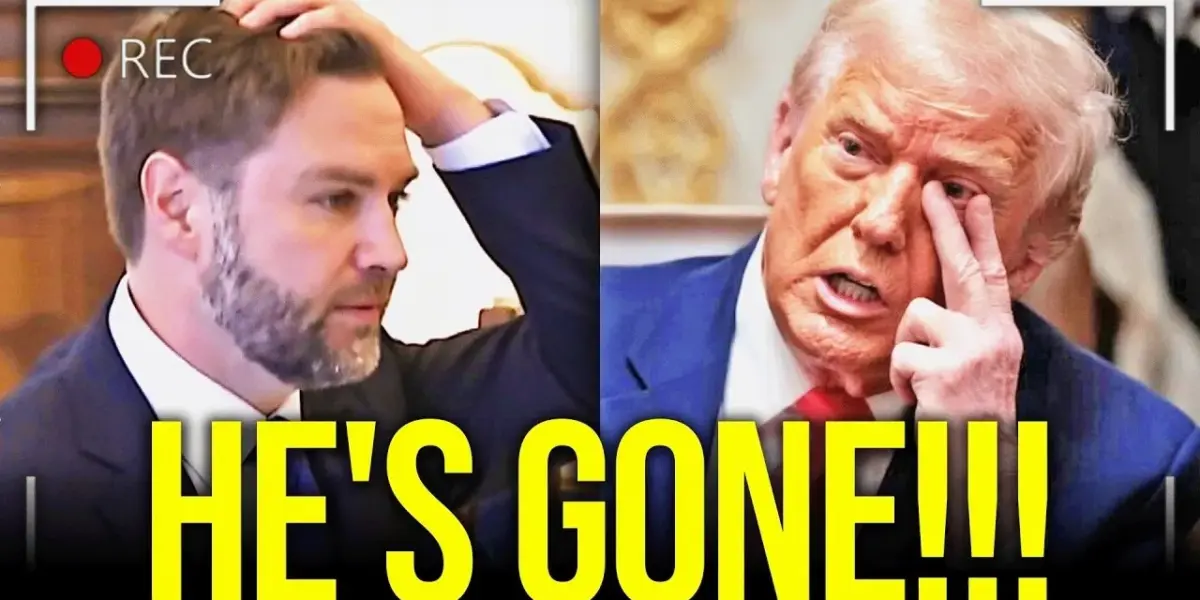
Trump Escalates Iran Conflict, Threatens Blockade
In a dramatic turn of events, former President Donald Trump has plunged the United States back into the heart of the Iran conflict. This escalation follows what appears to be a failed negotiation led by Senator JD Vance in Islamabad. Vance admitted that after 21 hours of talks, no progress was made and no agreements were reached with Iran. This outcome seems to have deeply frustrated Trump, leading him to issue strong threats regarding the Strait of Hormuz.
Vance’s Failed Negotiations and Trump’s Reaction
Senator JD Vance, acting as a negotiator, reported that despite being flexible and accommodating, Iran was unwilling to accept U.S. terms. Vance stated, “We just could not get to a situation where the Iranians were willing to accept our terms.” He also mentioned that he spoke with Donald Trump multiple times during the 21-hour negotiation, indicating a lack of full authority to make decisions on the spot. This reliance on Trump for every decision, as described by Vance, has been criticized as a sign of weakness.
In response to the failed talks, Trump took to Fox News and Truth Social to announce a new, aggressive policy. He declared that the U.S. Navy would begin blockading the Strait of Hormuz, a vital waterway for global oil transport. This move directly contradicts his previous stance, where he had demanded the strait be kept open and suggested the U.S. did not need it.
Contradictory Statements and Shifting Policies
Trump’s pronouncements are marked by significant contradictions. He claimed that “most points were agreed to” in the negotiations, despite Vance’s clear admission of no progress. Furthermore, Trump’s threat to blockade the Strait of Hormuz directly opposes his earlier statements that the U.S. does not use or need it and that it would reopen automatically. He also asserted that U.S. oil production is sufficient, ignoring the reality of globalized oil prices.
His new policy includes blockading any ships trying to enter or leave the Strait of Hormuz and instructing the Navy to intercept vessels that pay a toll to Iran. Trump stated, “At some point, we will reach an ‘all being allowed to go in, all being allowed to go out’ basis.” He also vowed to destroy mines laid by Iran and threatened severe consequences for any Iranian forces that fire on U.S. or peaceful vessels.
Analysis of Trump’s Strategy
Critics argue that Trump’s actions are a desperate attempt to regain leverage after a perceived humiliation in the negotiations. His threats of blockading a critical global chokepoint and even attacking ships paying tolls are seen as extreme and potentially escalatory. This approach is compared to his past posturing towards NATO while being perceived as soft on Russia, suggesting a pattern of making bold threats that are not always followed through.
“This is mission [expletive]… This is when the original mission is [expletive] up so badly… you have to have a new mission to fix the original [expletive].”
The analysis suggests that Trump’s strategy has inadvertently given Iran new ways to profit and control the region. By legitimizing Iran’s ability to control the strait, Trump has created a mechanism for Iran to demand concessions whenever it chooses. The goal now, it seems, is not to achieve major victories but to return to the status quo that existed before the recent conflict escalated.
Iran’s Negotiating Tactics and U.S. Weakness
The transcript points out that Iran’s negotiators have significant autonomy, unlike JD Vance, who repeatedly contacted Trump during the talks. This lack of independent decision-making power for Vance is seen as a major weakness. Iran’s ability to negotiate effectively, coupled with Trump’s apparent lack of negotiation skills, has put the U.S. in a difficult position.
Trump’s claims that Iran has “no cards” are questioned, especially given the failure of Vance’s negotiations. The argument is that while Vance may be ineffective, Iran does possess leverage due to Trump’s own strategic errors in managing the conflict and regional control.
Implications and Future Outlook
The escalation raises concerns about a wider conflict. Analysts predict that Iran may retaliate by targeting U.S. naval assets and disrupting shipping, which would likely cause a sharp increase in global oil prices. This could have significant negative effects, particularly on Asian economies dependent on energy from the Persian Gulf.
The situation highlights a dangerous pattern where a regime can use the threat of controlling a vital waterway to extort concessions. This tactic, if successful, could be replicated in other critical maritime choke points around the world. The current scenario offers no clear winners, only varying degrees of loss for all parties involved.
Historical Context
The Strait of Hormuz has long been a strategic and sensitive waterway. Its control is crucial for global energy security, as a significant portion of the world’s oil supply passes through it. Historically, tensions in the Persian Gulf have often involved threats to shipping and the strait itself, making any disruption a matter of international concern. The U.S. Navy has a long-standing presence in the region to ensure freedom of navigation and deter aggression.
Why This Matters
This situation is critical because it directly impacts global stability and economic security. The Strait of Hormuz is a critical artery for international trade, and any disruption can lead to severe economic consequences worldwide. Furthermore, the rhetoric and actions surrounding this conflict have the potential to escalate into a larger war, with devastating human and economic costs. The contradictions and perceived missteps in U.S. foreign policy under Trump’s leadership raise questions about the effectiveness and coherence of American strategy in a volatile region.
Conclusion
The events surrounding the failed negotiations and Trump’s subsequent threats paint a picture of a deeply troubled foreign policy situation. The contradictory statements, the reliance on bluster over substance, and the potential for disastrous escalation all point to a precarious state of affairs. The world watches nervously as the U.S. finds itself in a spiraling conflict, with the threat of wider war and economic instability looming large.
Source: Trump THREATENS WAR over JD Vance Humiliation (YouTube)

Related Articles
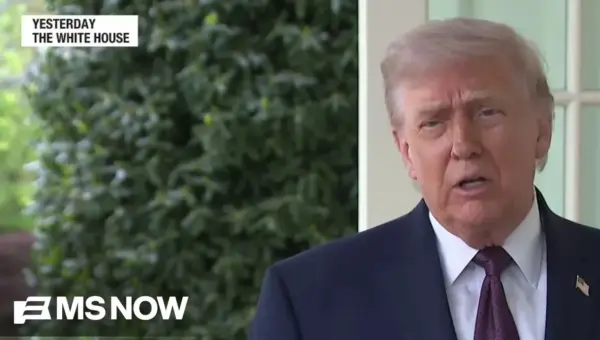
US Blockades Iranian Ports Amid Tensions, Risks Global Fallout
The U.S. military has begun blockading Iranian ports in an effort to pressure Tehran into a deal, risking higher global energy prices and wider conflict. Despite President Trump's warnings and Iran's retaliatory threats, diplomatic talks are reportedly being considered, with potential in-person negotiations on the horizon.

Iran Blockade Shifts Global Oil Flow to U.S.
A blockade in the Strait of Hormuz has triggered a major shift in global oil supply routes, with supertankers now heading to the U.S. Gulf Coast. Despite geopolitical tensions, markets remain resilient, and corporate profits are projected to rise.
Trump’s Tariff Threat: China’s Iran Arms Deal Sparks Crisis
President Trump has warned China against supplying weapons to Iran, threatening a "staggering" 50% tariff if they do. U.S. intelligence reports suggest China may be preparing to send air defense systems, including missiles, to Iran. This development significantly heightens tensions ahead of a crucial summit between President Trump and Chinese President Xi Jinping.