Pope and President Ease Tensions After Public Spat
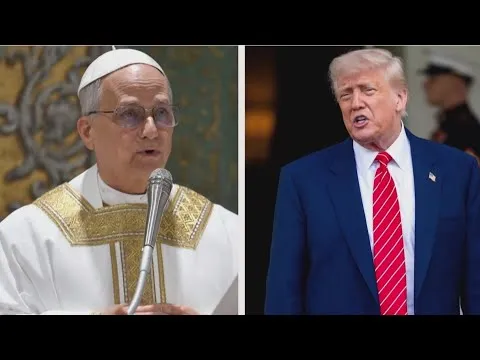
President Trump and Pope Leo have seemingly stepped back from a public disagreement concerning foreign policy. Following sharp words, both leaders are now signaling a desire to de-escalate tensions. Vice President Vance expressed gratitude for the Pope's efforts to lower the temperature.

Pope and President Ease Tensions After Public Spat
President Trump and Pope Leo appear to be stepping back from a public disagreement that grabbed headlines recently. This comes after a period of sharp words between the two leaders, particularly concerning foreign policy and the ongoing conflict in Iran. Both men seem to be signaling a desire to lower the temperature of their public exchanges.
The tension began shortly after the war in Iran started and grew more intense over time. Pope Leo recently clarified comments made during a trip to Africa, suggesting they were not intended as a direct debate with President Trump. He stated that a speech about spending billions on foreign wars was written before the President spoke about him.
Speaking to reporters, Pope Leo explained his position. “As it happens, it was looked at as if I was trying to debate again the President, which is not in my interest at all,” he said. He added that he has no disagreement with the President being able to say what he wants, but he also wants to say what he wants.
President Trump also responded, indicating he had no issues with the Pope speaking his mind. “The Pope can say what he wants. And I wanted to say what he wants.
What I can disagree,” he stated. This suggests a mutual, albeit perhaps temporary, truce in their public criticisms.
Background of the Dispute
The recent exchange marked a significant shift from earlier comments. Pope Leo had previously expressed hope that President Trump was seeking a way to end the violence in Iran. He also criticized the President’s remarks about potentially destroying Iranian civilization.
For his part, President Trump had called Pope Leo “weak on crime and terrible on foreign policy.” He essentially advised the Pope to focus solely on religious matters. This public back-and-forth surprised many observers.
Historical Precedents of Presidential-Papal Clashes
This is not the first time an American President and a Pope have clashed over political views. A notable example is the disagreement between Pope Francis and President Obama regarding contraception coverage under the Affordable Care Act, specifically concerning religious employers.
Going back further, Pope John Paul II led diplomatic efforts to prevent the war in Iraq over two decades ago. While disagreements between the White House and the Vatican on policy issues are not new, the very public nature of the recent dispute between Pope Leo and President Trump caught many people’s attention.
Vice President Vance’s Perspective
Vice President Vance, a prominent Catholic, weighed in on the situation. He expressed gratitude for Pope Leo’s recent statement, which he felt helped to lower the temperature of the discussion. Vance posted on X, “I’m grateful to Pope Leo for saying this.”
Vance acknowledged that real disagreements will happen and continue to occur. He emphasized that Pope Leo preaches the Gospel, which naturally leads him to offer opinions on the moral issues of the day. He also stated that the administration strives to apply those moral principles in a complex world.
This stance from Vice President Vance is a contrast to comments he made just a few days prior. He had previously suggested that the Pope should be careful when discussing theology and matters of war. His recent post offered a more conciliatory tone.
Why This Matters
The public disagreements between a sitting U.S. President and the Pope highlight the intersection of faith, politics, and international relations. While Popes have historically commented on moral aspects of global events, direct public criticism of a U.S. President, and vice versa, draws significant attention.
These exchanges can influence public opinion, both domestically and internationally. They also reveal differing perspectives on complex issues like war and foreign policy, even when leaders are trying to find common ground. The involvement of Vice President Vance, a devout Catholic, further emphasizes the internal discussions within political circles about these moral and policy questions.
Implications and Future Outlook
The apparent de-escalation of rhetoric between President Trump and Pope Leo suggests a recognition of the potential downsides of prolonged public conflict. It may indicate a strategic decision to handle future differences through more private channels.
However, the underlying policy and moral disagreements are likely to persist. Future papal statements on global conflicts or social issues may continue to draw reactions from U.S. political leaders, especially during election cycles or times of international tension.
The role of religious leaders in commenting on political affairs remains a sensitive topic. The reactions to these exchanges will likely shape how future political figures engage with, or respond to, papal pronouncements on matters of global concern.
President Trump is scheduled to participate in a Bible reading from the Oval Office as part of a week-long event called “America Reads the Bible.”
Source: Vance ‘grateful’ for Pope Leo’s statement on not wanting public debate | Morning in America (YouTube)

Related Articles
Trump’s Iran Stance Sparks Outrage, Splits US Politics
President Trump's handling of Iran has sparked impeachment calls and highlighted how Donald Trump himself has become the central focus in American politics. This 'Trump Metric' means foreign policy is often viewed through a partisan lens, complicating national discourse and potentially hindering effective diplomacy.
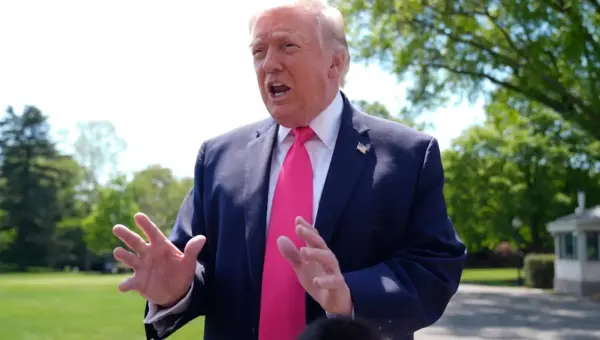
GOP’s Trump Loyalty Now Fuels Their Own Election Woes
Republicans' decision to back Donald Trump on a controversial war has backfired, hurting their own election chances. Their fear of Trump leads them to sacrifice their independence and electoral prospects. This strategy risks alienating voters who are experiencing real economic pain and moral concerns.
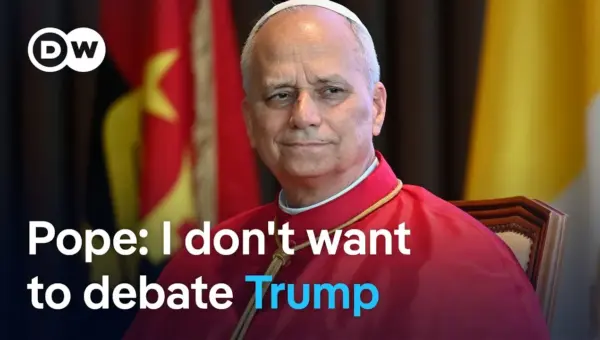
Pope Seeks to Cool Trump Tensions, Focuses on Peace Message
Pope Leo is seeking to de-escalate tensions with US President Donald Trump, stating his message is about peace and the gospel, not political debate. Vatican correspondent Colleen Daly believes the Pope views Trump's commentary as a distraction. The dispute arose after the Pope criticized the war in Iran, leading to sharp responses from Trump and his administration.