Iran Seeks Strait of Hormuz Control in US Talks
As US and Iran prepare for critical talks in Pakistan, Iran is demanding control over the Strait of Hormuz. The vital waterway, now seeing drastically reduced traffic, is seen by experts as Iran's key economic leverage. Iran also seeks sanctions relief and reconstruction aid, facing deep divisions with US demands on its nuclear program.

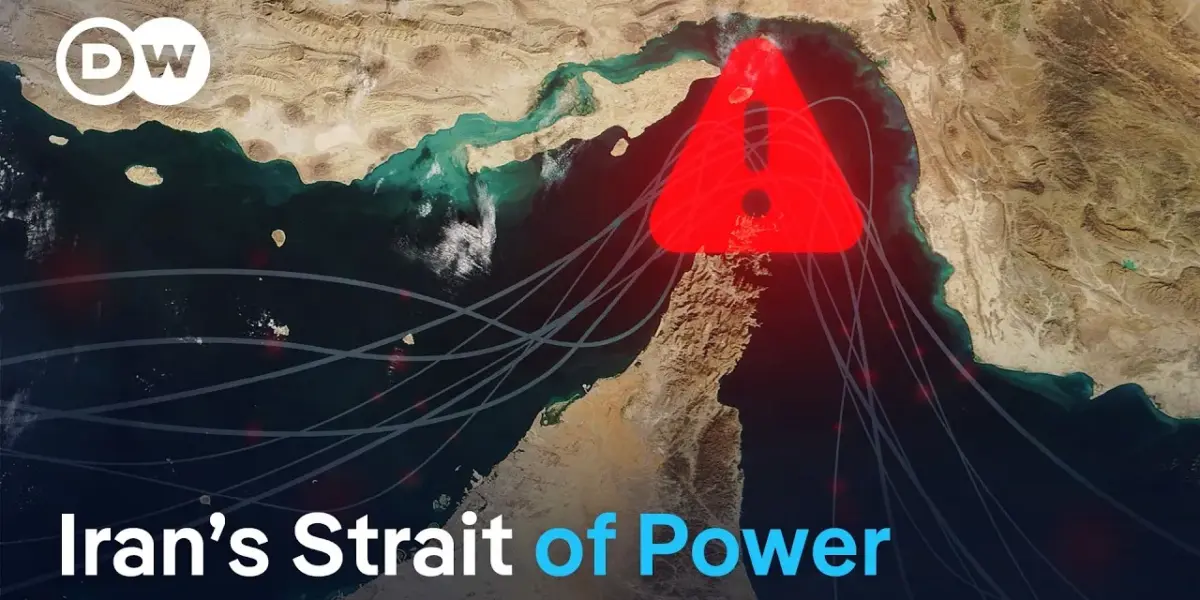
Iran Seeks Strait of Hormuz Control in US Talks
Negotiations between the United States and Iran are set to begin this Saturday in Islamabad, Pakistan. Ahead of these crucial talks, security in the Pakistani capital has been significantly increased. Hundreds of additional police officers are on duty, and authorities have established a three-kilometer security zone around the luxury hotel where the US and Iranian delegations are expected to stay. Both nations enter the discussions with deeply contrasting demands and positions.
Iran’s Demands and Strait of Hormuz Leverage
Iran has presented a 10-point plan that includes the lifting of all sanctions, both primary and secondary, and the release of its frozen assets. A key demand from Tehran is the withdrawal of US military forces from the Middle East. Iran also insists on a halt to attacks against itself and its allies. Furthermore, Iran seeks direct control over the Strait of Hormuz, a vital global shipping lane.
Traffic through the Strait of Hormuz has reportedly slowed to a near standstill. Under a recent ceasefire agreement, Iran is said to be allowing only about 15 vessels per day. This is a dramatic decrease from the approximately 140 vessels that typically pass through daily before February 28th. Iran has also proposed implementing a toll for ships using the waterway, claiming the funds would be used for reconstruction efforts.
However, the European Union and other international voices have strongly condemned this idea. They are calling for unrestricted and toll-free passage through the strait, emphasizing that international law guarantees freedom of navigation. As Cena Azodi, an assistant professor of Middle East politics at George Washington University, explained, international law means “no payment or toll whatsoever.”
Expert Analysis: Iran’s Economic Power and Strait Strategy
Professor Azodi highlighted Iran’s realization of its significant economic leverage through control of the Strait of Hormuz. “Iran has just realized that they have a very strong economic power that can threaten the global economy and coerce adversaries into submission,” she stated. Azodi believes that in future conflicts, Iran could effectively “put a chokehold on the strait.”
She elaborated that Iran doesn’t need to completely block the waterway. Simply attacking one or two ships could cause insurance prices to skyrocket and create widespread instability in global markets, which would serve Iran’s interests. This potential disruption makes Iran’s control over the strait a powerful bargaining chip in negotiations.
Ceasefire Importance and Economic Reconstruction
The current ceasefire, though fragile and reportedly broken almost immediately by both sides, is critically important to Iran. Professor Azodi described the conflict as turning into a “war of attrition” for Iran, with the economic cost estimated to be around $1 trillion. Sanctions have severely impacted Iran’s economy, and the nation needs sanctions relief to rebuild its infrastructure.
“All the facilities, the civilian infrastructure that was attacked by the Americans and the Israelis, those need to be reconstructed. And what do you need for that? Money,” Azodi explained. Therefore, the ongoing ceasefire and the upcoming negotiations are vital for Iran’s economic future and reconstruction efforts.
Regional Stability and Conflicting Interests
Iran’s insistence on a ceasefire in Lebanon is also tied to its desire for regional stability. From Iran’s perspective, a conflict in Lebanon could easily spread and draw Iran into another war. They are pushing for a “clean sheet for the entire region,” ensuring that wars in Lebanon do not force them into further conflict and attacks.
There are differing views on Israel’s role in intensifying attacks on Lebanon. While some suggest it’s an attempt to create a rift between Iran and Hezbollah, Azodi does not fully subscribe to this. She believes Israel has strong interests in continuing the conflict, as its political objectives, including regime change in Lebanon, were not achieved. Conversely, she sees the US and Iran as having shared interests in ceasing the fighting.
This divergence highlights potential friction between the US and Israel. Azodi noted that the US does not benefit from destabilizing Iran, a large country with significant natural resources. Fragmentation of Iran is not in US interests, but it could be in Israel’s. She expressed concern that Israel might again mislead the US into another conflict with Iran, which she believes is not in America’s best interest.
Nuclear Enrichment and IAEA’s Role
Looking ahead to the US-Iran talks, a key US objective is to remove Iran’s stockpile of heavily enriched uranium. However, Professor Azodi doubts that the current Iranian leadership will agree to this directly with the US. She believes Iran will not give up the principle of enrichment.
Azodi suggested that any deal regarding highly enriched uranium could be part of a broader settlement involving the International Atomic Energy Agency (IAEA). She emphasized that the IAEA is the only international body monitoring non-proliferation and that such issues should be resolved with the agency, not directly with the US. From Iran’s perspective, allowing the US to directly take its enriched uranium would be politically damaging and could lead to sabotage by hardliners.
Leadership Changes and Foreign Policy Direction
Recent Israeli actions have led to the deaths of several senior Iranian leaders, prompting questions about who is now in charge. Professor Azodi stated that she doesn’t necessarily see the remaining leaders as more reasonable, noting that some of those killed, like Ali Larijani, were pragmatic hardliners with statesmanlike qualities.
Larijani, who had a PhD in Western philosophy and was a seasoned politician, has been replaced by an IRGC general. Azodi believes this new generation of leaders, often with military backgrounds, brings a more rigid approach to Iran’s foreign policy. While figures like Ali Larijani might have been considered pragmatic, the current trend points towards more hardline individuals with military experience, potentially making future negotiations more challenging.
Looking Ahead
The upcoming talks in Islamabad represent a critical juncture. The US aims to curb Iran’s nuclear program, while Iran seeks sanctions relief and greater regional influence, potentially using its control over the Strait of Hormuz as leverage. The diverging interests of the US and its ally Israel, coupled with shifts in Iran’s leadership, add further complexity to an already tense geopolitical situation. Observers will be watching closely to see if a breakthrough can be achieved or if the deep-seated differences will lead to further escalation.
Source: Can Iran use the Strait of Hormuz as leverage in talks with the US? | DW News (YouTube)

Related Articles

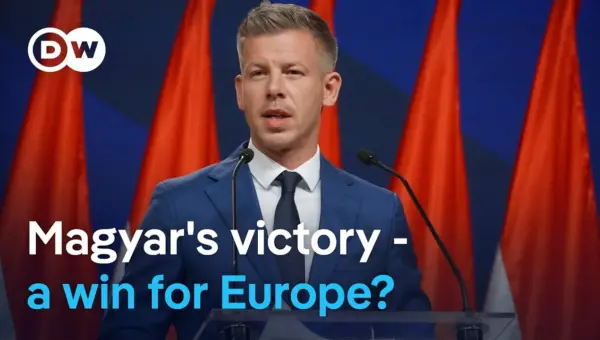
Hungary Rejects Orban, Embraces Pro-EU Path
Hungary has elected Peter Magyar as its new leader, signaling a significant shift away from Viktor Orban's nationalist policies and a renewed commitment to the European Union. Magyar's government prioritizes securing frozen EU funds and improving relations with the bloc, though challenges remain in addressing migration and past ties to Russia.

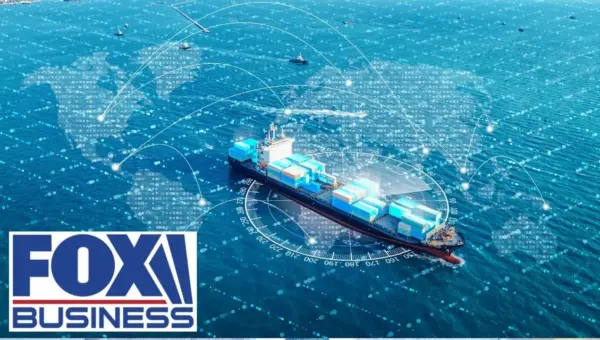
Iran Blockade Shifts Global Oil Flow to U.S.
A blockade in the Strait of Hormuz has triggered a major shift in global oil supply routes, with supertankers now heading to the U.S. Gulf Coast. Despite geopolitical tensions, markets remain resilient, and corporate profits are projected to rise.
Trump’s Tariff Threat: China’s Iran Arms Deal Sparks Crisis
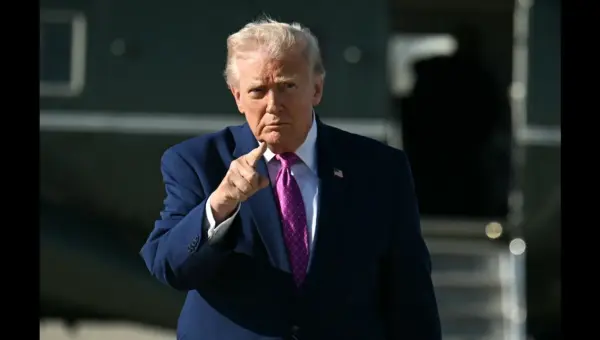
President Trump has warned China against supplying weapons to Iran, threatening a "staggering" 50% tariff if they do. U.S. intelligence reports suggest China may be preparing to send air defense systems, including missiles, to Iran. This development significantly heightens tensions ahead of a crucial summit between President Trump and Chinese President Xi Jinping.