China’s Deep Reach Threatens South Korea’s Stability
South Korea faces growing concerns over deep Chinese Communist Party influence, impacting its real estate, media, and politics. Demographic shifts and targeted investments are raising alarms about potential threats to its sovereignty and its role as a US ally.

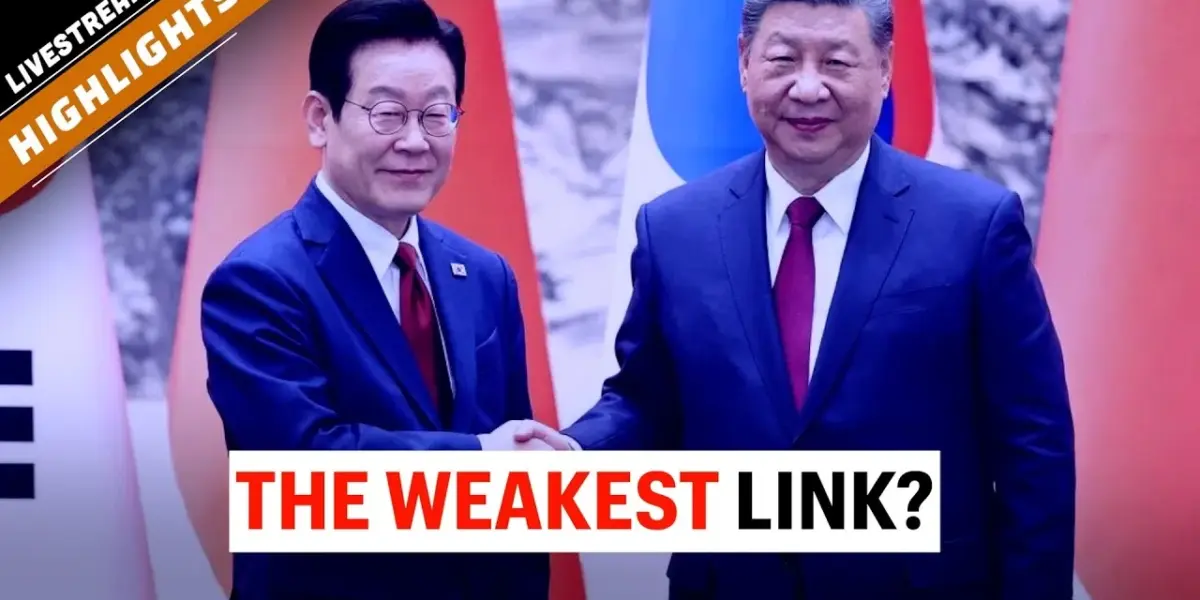
East Asia’s Shifting Power Dynamics
East Asia can be seen as two major blocks of influence. One triangle includes the United States, Japan, and South Korea. The opposing triangle features China, Russia, and North Korea.
The Korean Peninsula sits directly between these two spheres, making its stability crucial for the entire region. What happens in South Korea carries more weight than many people realize.
South Korea: A Target for Influence
Among democratic Asian nations, South Korea is geographically closest to China. It also appears to be deeply affected by Chinese Communist Party (CCP) influence.
This situation might be more concerning than in Japan or Taiwan. Taiwan has faced decades of direct threats from Beijing, which has built public awareness and a form of defense.
South Koreans, however, may not fully grasp the extent of CCP presence in their own country. This presence is described as potentially deeper, broader, and more effective than commonly understood. The CCP has actively worked to build influence networks by embedding itself at a very detailed level.
Demographic Shifts and Growing Influence
A significant flow of people from China to South Korea has contributed to this. Many ethnic Koreans from China have moved to South Korea to study and then stayed. The CCP has used this movement to build influence networks.
South Korea has a population of about 51 million people. Among them, around 172,000 are Chinese nationals, according to a 2025 report.
This means roughly two out of every 100 people in South Korea are Chinese nationals. This number is not small, especially considering the potential for organized political and social influence.
Real Estate and Residency Trends
The trend of increasing Chinese presence is accelerating. Since 2006, the number of Chinese citizens with permanent residency and voting rights has grown quickly. This has had a noticeable impact on South Korea’s real estate market.
Fifteen years ago, foreigners owned about 72,000 housing units in South Korea. By 2020, this number had more than doubled to 157,000.
Chinese buyers accounted for the fastest growth among all foreign purchasers. Over the last decade, the number of Chinese buyers has increased by roughly 16 times.
Property purchases by Chinese nationals, including homes and commercial buildings, rose from 648 units in 2011 to around 16,000 in recent years. This represents an increase of nearly 25 times in less than a decade.
Policy and Political Implications
South Korea’s own policies have played a role in these trends. In 2010, the government introduced a real estate investment immigration program.
This program allows foreigners who invest in specific properties to get permanent residency. More than 90% of those who gained residency through this program are Chinese nationals.
The political implications are significant. In the 2022 presidential election, the winning margin was very narrow, about a quarter of a million votes.
At the same time, around 100,000 Chinese nationals held voting rights. In some areas, election margins were extremely close.
If current trends continue, China could eventually gain meaningful influence over election results in South Korea. There are proposals to further expand this, such as allowing foreign students, who are mostly Chinese, to vote and join political parties. Such developments could pose a long-term challenge to South Korea’s political independence.
Media Manipulation and Narrative Warfare
South Korean intelligence services have uncovered efforts to shape public opinion. Before the November 2023 parliamentary elections, authorities found two Chinese media-linked companies. These companies created 38 fake websites disguised as South Korean media outlets.
These fake sites reposted Korean news content mixed with messages promoting pro-CCP narratives. They also pushed anti-US sentiment, aiming to divide public opinion and weaken the US-South Korea alliance. This pattern of impersonating Korean media and operating fake news websites had been reported multiple times.
Cultural Influence and Investment
Influence attempts extend beyond news to the cultural sphere. There are concerns about controlling the creative process in South Korea’s entertainment industry. This can affect what people watch and what they believe.
For instance, Tencent, the company behind WeChat, invested 100 billion Korean won (about $700 million USD) into a company linked to the Korean broadcaster JTBC. While presented as an investment, Tencent has close ties to the Chinese state. This raises questions about whether capital flow into media also brings influence, and how that influence is used.
Controversies arose around two JTBC dramas. One was adapted from a Chinese novel intended to soften the CCP’s image.
Another was accused of romanticizing North Korean spies. When Tencent’s investment became public, many connected the financial access to potential narrative warfare.
Intelligence Challenges and Political Landscape
South Korean intelligence agencies acknowledge extensive CCP infiltration. However, there is a lack of hard evidence needed for arrests. Legal barriers in South Korea make securing convictions difficult.
The political landscape has also seen shifts. Following the impeachment and imprisonment of a pro-US president, a new leader came to power. This change has caused concern in Washington and Tokyo.
The current prime minister’s brother allegedly posted on social media that the US military presence is South Korea’s greatest security threat. He also called US strikes on Iran an act of aggression and a sign of American decline. The current leader has also expressed respect for North Korea’s system and appears more accommodating toward China while being more critical of the United States.
South Korea’s Strategic Position
For countries like South Korea, Japan, and Taiwan, the relationship with the US is vital and cannot be easily abandoned. South Korea’s location is extremely sensitive, situated between China, Japan, and Russia, and bordering North Korea.
This makes South Korea a critical point in regional security and global strategic competition. It is not just another country making foreign policy choices; it is a central node in a complex geopolitical network. The country’s current direction is therefore very important.
Societal Division and Future Outlook
Politically, South Korea appears to be becoming more centralized, with the ruling party holding significant power. Society is increasingly divided into two camps: one supporting the US and a hard stance on China, and another leaning towards engagement with Beijing. This division is becoming more visible on the global stage.
The question arises: is South Korea quietly becoming the weakest link in East Asia? The answer depends on how it addresses these internal and external pressures. The nation’s ability to maintain its sovereignty and strategic independence will be tested.
Why This Matters
South Korea’s situation is a critical indicator of broader trends in East Asia. The CCP’s sophisticated methods of influence, from demographic shifts and real estate investment to media control and political maneuvering, pose a significant challenge. If South Korea, a key US ally, cannot effectively counter these efforts, it could embolden Beijing and destabilize the region.
The health of the US-South Korea alliance is crucial for maintaining peace and security in a strategically vital part of the world. Any weakening of this alliance or erosion of South Korea’s autonomy could have far-reaching consequences for global politics and economics.
Looking Ahead
The coming years will be crucial for South Korea. Its government and citizens face the challenge of identifying and mitigating foreign influence while navigating complex geopolitical relationships. The nation’s response will shape its future and significantly impact the balance of power in East Asia.
The upcoming parliamentary elections and potential policy changes will be key indicators of South Korea’s direction. How it manages its relationship with China, North Korea, and the United States will determine its role and strength in the region.
Source: Is South Korea Becoming the Weakest Link in East Asia? (YouTube)

Related Articles
US Demands UN Return to Roots, Fight China’s Grip
The US is pushing for significant reforms at the United Nations, aiming to refocus the organization on peace and security. Key goals include countering Chinese influence and ending the abuse of UN systems, such as China's developing nation status.


Russia Eyes China as Energy Lifeline Amid Global Shifts
Russia is signaling an increase in energy exports to China ahead of President Putin's visit, highlighting deepening ties amidst global market disruptions. This strategic pivot east is a direct response to Western sanctions and Europe's phasing out of Russian imports.

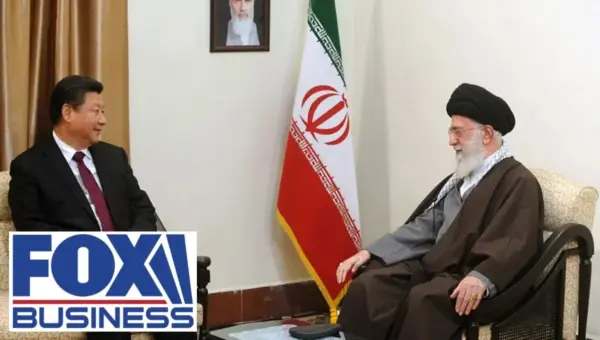
China Aids Iran, Trump to Confront Xi on Trade
President Trump plans to discuss China's alleged support for Iran with President Xi Jinping at an upcoming summit. Reports indicate Iran has used Chinese spy satellites, and concerns exist over dual-use technology transfers. U.S. actions to limit Iran's oil exports aim to pressure China, a key energy partner.