AI Won’t Replace These 5 High-Paying Jobs by 2030
AI is set to transform the job market, impacting white-collar roles significantly. However, five high-paying job sectors—skilled trades, sales and relationship experts, AI implementation specialists, entrepreneurs, and healthcare professionals—are expected to remain largely resistant to full automation by 2030 due to their reliance on human touch, trust, and complex problem-solving.

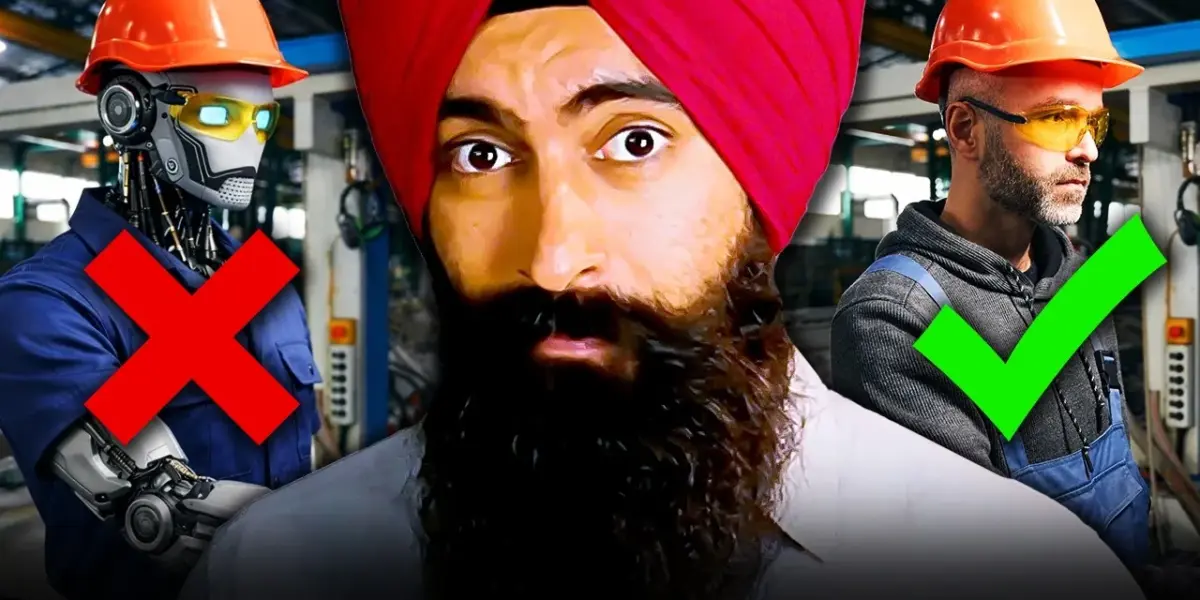
AI Poised to Reshape Workforce, But Key Jobs Remain Human-Centric
Artificial intelligence is rapidly changing the job market, a shift that experts predict will impact white-collar professions significantly by 2030. Unlike past technological advancements that primarily affected manual labor, AI is now poised to automate tasks previously performed by professionals in fields like law, accounting, and even medicine. This presents a critical juncture for workers, offering three main paths: ignore the changes, resist them, or adapt and learn to use AI to their advantage.
The rapid advancement of AI is undeniable. For instance, ChatGPT, a leading AI language model, did not exist just four years ago.
Now, leaders in the AI field, including those at Nvidia, suggest that traditional coding skills may become less critical. They envision a future where human language itself becomes the primary programming tool, making AI accessible to everyone.
Skilled Trades See Renewed Demand Amidst AI Revolution
Skilled trades, such as plumbing, HVAC, and electrical work, are emerging as surprisingly resilient careers in the face of AI. A shortage of these professionals already exists in the United States, partly because younger generations have shown less interest in these fields. However, the growing demand for AI infrastructure, like data centers, requires significant expansion of electrical systems, boosting the need for electricians.
This increased demand is leading to highly competitive, six-figure salaries for construction and skilled trades workers involved in building these energy systems. Even major investment firms like BlackRock are recognizing this trend, investing $100 million to train more plumbers, HVAC technicians, and electricians, seeing it as a significant future investment opportunity.
Sales and Relationship Experts Build on Trust, Not Data
While AI can automate many sales tasks, high-end sales roles focused on building trust and relationships are expected to remain strong. These positions involve complex B2B interactions where human connection and tailored solutions are paramount. This contrasts sharply with transactional sales, which are more susceptible to automation.
Companies that rely on deep client relationships for selling specialized services, like financial research, find that human interaction is crucial. Automating these sales could harm business, as clients prefer to connect with a person rather than a bot. The key differentiator is that these valuable sales are built on trust, something data-driven automation cannot replicate.
AI Implementation Experts Bridge the Gap for Businesses
As businesses increasingly adopt AI, there will be a growing need for AI implementation experts. These professionals will help companies integrate AI tools effectively, train employees, and stay at the forefront of technological advancements. This role offers significant job security, especially since many current AI users only employ basic functions, like drafting emails.
Many companies are realizing their competitors are gaining an edge through AI efficiency. This realization will drive investment in AI expertise, creating opportunities for those who can guide businesses in adopting and maximizing AI. The rapid evolution of AI means that traditional university courses may struggle to keep pace, making hands-on experience and continuous learning vital.
Entrepreneurship and Business Ownership Offer AI Advantages
Entrepreneurship presents a unique opportunity in the age of AI. The rise of AI tools allows individuals to achieve more with fewer resources, potentially leading to the growth of one-person companies valued at billions of dollars. Owning a business means employing AI, rather than being replaced by it.
For example, a dentist owning their practice can utilize robotic tools for procedures. Similarly, businesses may opt to use AI services for functions like Chief Financial Officer or Chief Technology Officer roles, rather than hiring multiple high-level executives. This shift empowers business owners to scale operations efficiently.
Healthcare’s Human Touch Remains Indispensable
Despite advancements in AI and robotics, the healthcare sector will continue to require human expertise. While AI might assist in diagnostics or procedures, the elements of physical touch, empathy, and genuine human connection are vital for patient care and healing.
With an aging population, the demand for healthcare services is set to increase. Many patients will continue to prefer human interaction for comfort and trust, even if AI offers efficiency. This blend of growing demand and the irreplaceable human element ensures healthcare remains a critical field.
Investing in the AI Future: Beyond Individual Stocks
For those looking to invest in the AI revolution, diversifying beyond individual stock picks is a prudent strategy. While the tech sector, particularly the NASDAQ 100 (represented by ETFs like QQQ), can offer broad exposure, it also comes with higher volatility.
More targeted investments can be made through AI-focused ETFs like AIQ, or those combining AI with robotics, such as BOTZ. The infrastructure supporting AI, including semiconductors (e.g., SMH ETF), data centers (e.g., DTCR ETF), and energy (e.g., GRIT ETF for the power grid, or NUKE ETF for nuclear energy), also presents significant investment opportunities. These areas are crucial for powering the AI advancements of the future.
The coming years will see significant economic changes driven by AI. While the potential for an AI bubble exists, similar to the dot-com bubble, the underlying technology is likely to persist and grow. Understanding asset cycles and diversifying investments will be key for navigating this evolving landscape.
Source: There Only 5 High Paying Jobs AI Can't Replace By 2030 (YouTube)

Related Articles


White House Briefs Amid Outcry Over Trump’s AI Jesus Image
The White House held a press briefing addressing public backlash over a controversial AI-generated image of Donald Trump as Jesus Christ. The incident highlights growing concerns about the use of artificial intelligence in political messaging and the spread of misinformation. Officials reiterated the administration's commitment to combating AI misuse and promoting transparency.


Bernie Sanders Slams Trump Over AI Jesus Image
Senator Bernie Sanders has strongly condemned former President Donald Trump for sharing an AI-generated image of Jesus Christ, calling him "mentally unstable." The incident highlights growing concerns about the misuse of artificial intelligence in political discourse and the spread of misinformation.


Trump’s AI Post Sparks Meme Frenzy, Faces Legal Scrutiny
Former President Donald Trump's recent AI-generated images, depicting him in a Christ-like manner, have sparked a wave of online memes and drawn scrutiny from legal experts. This use of artificial intelligence in political messaging raises significant questions about its impact on public perception and the potential for misinformation.