US Escalates War: Legality Questioned, Troops Obligated to Fight
The legality of recent US military actions in the Middle East is questioned, with the transcript arguing that presidential war powers, particularly concerning "preventative self-defense," allow for conflict initiation. It details how troops are obligated to follow orders under the UCMJ, facing severe consequences for refusal. The analysis also explores the extensive global economic fallout and potential refugee crises stemming from the conflict.

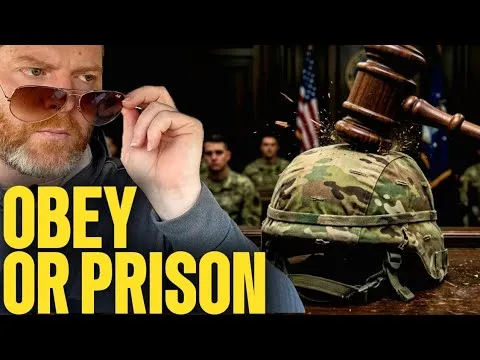
US Escalates War: Legality Questioned, Troops Obligated to Fight
The recent escalation of conflict in the Middle East, particularly concerning Iran, has ignited widespread debate about the legality of military actions and the obligations of service members. While many harbor hopes that political intervention might de-escalate the situation, the reality on the ground suggests a more entrenched and complex scenario. This analysis delves into the legal justifications for presidential war powers, the ethical and legal quandaries faced by troops, and the far-reaching global consequences of such conflicts.
The President’s War Powers and Legal Justifications
The transcript highlights a critical aspect of American foreign policy: the broad authority vested in the President to initiate military conflict. The concept of “preventative self-defense” is presented as a key justification, allowing for strikes against perceived imminent threats. This broad interpretation of presidential power means that as long as an action can be framed as a response to an immediate danger, the president can authorize military engagement.
The specific case mentioned, where the US and Israel conducted strikes after the president claimed the Supreme Leader of Iran posed an “immediate nuclear threat,” exemplifies this. This justification, however, comes after diplomatic channels, such as the recently concluded negotiations in Vienna, were seemingly bypassed. The legality of such actions, especially when conducted unilaterally and with potentially ambiguous justifications, raises significant questions about international law and the spirit of diplomatic engagement.
The 90-Day Clause: A Loopholes for Perpetual Conflict?
A common perception is that the president has a limited window, often cited as 90 days (comprising 60 days of engagement and a 30-day withdrawal period), to conduct military operations. However, the transcript argues that this timeline is far from a guaranteed de-escalation mechanism. The 90-day clock is contingent on “hostilities” being conducted. If military actions are framed as “defensive measures in the interest of national security,” such as launching drones or cruise missiles, the government can argue that formal hostilities have not commenced, thereby circumventing the timeline.
Furthermore, even if the initial 90-day period concludes, the precedent exists for governments to “dig into the archives of the authorized use of military force” to justify continued military engagement. This suggests a potential for prolonged or indefinite military presence, where the definition of “war” itself becomes a malleable concept, used to justify actions that may not align with public or international understanding.
Troops’ Dilemma: Duty vs. Conscience
One of the most poignant aspects discussed is the obligation of US troops to follow orders, even if those orders lead to actions they might deem questionable or morally compromising. The Uniform Code of Military Justice (UCMJ) is presented as clear: any order from the Commander-in-Chief is presumed lawful. While individual soldiers have the right to refuse an order based on their conscience, doing so carries severe consequences, including court-martial.
The transcript argues that the burden of the “moral burden of the empire” falls disproportionately on enlisted personnel. These individuals, often from less privileged backgrounds, are depicted as being used and abused by a system that benefits politicians and corporations. The powerful propaganda machine within the military, coupled with the threat of severe punishment for insubordination, ensures a high rate of compliance. The availability of VA services for psychological trauma is cynically presented as a way to manage the long-term consequences for soldiers, while the system itself remains insulated from accountability.
Global Ramifications: Economic Instability and Refugee Crises
The conflict’s impact extends far beyond the immediate theater of operations. The Strait of Hormuz, a critical chokepoint for global oil supply, is effectively closed, with reports of tankers being struck. This disruption to a third of the world’s oil supply is predicted to have severe economic consequences globally, impacting fuel prices and the cost of living everywhere, from California to Europe.
The destabilization of the region is also expected to trigger a new wave of refugees. As people flee the violence and instability, they will seek refuge in other nations, particularly in Europe. This influx is anticipated to exacerbate existing populist sentiments and political challenges in countries already grappling with migration, potentially playing into the hands of certain political agendas.
The Illusion of Control and the Call for European Action
The transcript questions the efficacy of current responses from European nations, suggesting that defensive patrols may not be sufficient. It poses a direct challenge: should European nations actively refuse to support American military actions, even to the point of canceling trade deals? The argument is that relying on the US Congress to intervene is unrealistic, given the current political polarization and the requirement for a supermajority to force a withdrawal.
The core message is one of disillusionment with the established political processes and a call for independent action. The idea that the war is illegal and that troops are obligated to fight, coupled with the immense global fallout, paints a grim picture. The analysis suggests that the current trajectory is one of escalating conflict, with little hope for a swift or peaceful resolution through conventional political means.
Why This Matters
This analysis underscores the critical importance of understanding the mechanisms by which modern conflicts are initiated and sustained. It highlights the tension between presidential war powers and democratic accountability, the ethical considerations for military personnel, and the interconnectedness of global security and economic stability. The potential for prolonged conflict, driven by justifications that bypass traditional legal and diplomatic norms, carries profound implications for international relations and the well-being of populations worldwide. The stark reality presented is that the consequences of such actions are not confined to the battlefield but are felt globally, demanding a re-evaluation of how international crises are managed and who bears the true cost.
Historical Context and Future Outlook
Throughout history, the executive branch of the United States has wielded significant power in matters of foreign policy and military engagement. The War Powers Resolution of 1973 was an attempt by Congress to reassert its authority, limiting the president’s ability to commit US forces to armed conflict without congressional consent. However, as the transcript suggests, the interpretation and application of these checks and balances have often been circumvented, particularly through the framing of military actions as defensive or preventative.
The current situation echoes past instances where prolonged military engagements have been justified under evolving legal interpretations and national security imperatives. The future outlook, as painted by the transcript, is one of continued instability. The reliance on asymmetrical warfare by adversaries, the potential for escalating regional conflict, and the far-reaching economic repercussions suggest a challenging period ahead. The call for European nations to consider more assertive stances against US-led military actions, while potentially disruptive to alliances, reflects a growing sentiment of frustration with the perceived unilateralism and the global consequences of American foreign policy decisions.
Source: Yes, The War is Illegal. No, You Can't Stop It. (YouTube)

Related Articles
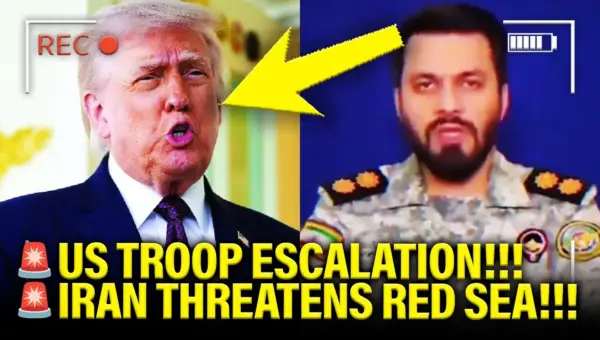
Trump’s Middle East Gambit: Escalation or Empty Threat?
The US is sending troops and imposing a blockade in the Middle East, signaling escalation. Yet, conflicting messages from Donald Trump suggest peace is near. This analysis explores the contradictory actions, Iran's defiant response, and the potential global economic and political fallout.
Iran Ceasefire Risks Spiraling Out of Control Amid Talks
A fragile ceasefire between Iran and the US, expiring in two weeks, faces major risks of collapse. Ongoing back-channel talks are attempting to bridge gaps, but experts warn that even minor incidents could easily escalate. The US naval blockade adds another layer of tension, with China watching closely but appearing hesitant to intervene.

Oil Prices Surge to $91 Amid Geopolitical Tensions
Oil prices have surged to $91 a barrel, driven by disruptions in the Strait of Hormuz. This is leading to higher gas prices across the U.S., with California facing particularly steep costs. The situation is fueling debate on energy policy, exports, and the transition to renewable fuels.