US Details ‘Epic Fury’ Operation Against Iran Threats
U.S. Defense Secretary Pete Hegseth and General Dan Caine detailed 'Operation Epic Fury,' a new military initiative designed to counter threats from Iran. The operation aims to deter aggression through an enhanced U.S. military presence and coordinated exercises with regional partners.


Hegseth Unveils Operation Epic Fury Amidst Escalating Iran Tensions
In a significant address on Monday, U.S. Defense Secretary Pete Hegseth, alongside General Dan Caine, Chairman of the Joint Chiefs of Staff, provided crucial details regarding ‘Operation Epic Fury,’ a new military initiative aimed at countering escalating threats emanating from Iran. The press briefing, held at the Pentagon, underscored the administration’s commitment to safeguarding American interests and allies in a volatile region.
Operation Epic Fury: A Defensive Stance
Defense Secretary Hegseth articulated the strategic objectives behind Operation Epic Fury, emphasizing its primarily defensive nature. “This operation is designed to deter aggression and to ensure that our allies and our forces in the region know that we stand with them,” Hegseth stated. He elaborated that the operation involves a heightened U.S. military presence, enhanced intelligence-gathering capabilities, and coordinated exercises with regional partners. The goal is to present a credible deterrent against any potential Iranian adventurism, particularly concerning maritime security in critical waterways and the protection of critical infrastructure.
General Caine, offering insights from a military operational perspective, highlighted the sophistication and readiness of the deployed forces. “Our forces are postured and prepared to respond decisively to any threat,” Caine affirmed. “Operation Epic Fury integrates multi-domain capabilities to provide a comprehensive shield against malign influence and direct aggression.” He stressed that the operation is not an escalation but a calibrated response to observable threat patterns and intelligence assessments.
Context: Rising Regional Tensions
The announcement of Operation Epic Fury comes at a time of heightened geopolitical friction in the Middle East. Iran’s continued development of its ballistic missile program, its support for proxy groups, and recent maritime incidents have all contributed to a climate of instability. The U.S. has repeatedly voiced concerns over Iran’s destabilizing activities, which threaten international shipping lanes and regional security.
Previous U.S. administrations have engaged in various forms of deterrence and diplomatic pressure against Iran. However, the current administration’s approach, as exemplified by Operation Epic Fury, appears to prioritize a more visible and robust military posture as a primary tool of de-escalation. This strategy aims to leave no ambiguity regarding the U.S. resolve to protect its interests and those of its allies.
Key Components of the Operation
While specific operational details remain classified for security reasons, Secretary Hegseth alluded to several key components of Operation Epic Fury:
- Enhanced Naval Presence: Increased deployment of U.S. naval assets, including aircraft carrier strike groups and amphibious ready groups, in strategic maritime areas.
- Air and Missile Defense: Reinforcement of air and missile defense systems to protect U.S. forces and allied nations from potential Iranian aerial or ballistic missile attacks.
- Intelligence, Surveillance, and Reconnaissance (ISR): Expanded ISR operations to provide real-time threat assessment and early warning.
- Joint Exercises: Conduct of joint military exercises with key regional partners to improve interoperability and demonstrate collective security commitments.
General Caine added that the operation leverages advanced technological capabilities, including cyber and electronic warfare assets, to create a multi-layered defense network. “We are operating in a complex information environment, and our response must be equally sophisticated,” he noted.
Diplomatic Efforts Alongside Military Action
Secretary Hegseth also emphasized that military actions are being conducted in parallel with ongoing diplomatic efforts. “Our goal is not conflict, but stability,” Hegseth reiterated. “We remain open to dialogue and de-escalation, but that requires a reciprocal commitment from Iran to cease its provocative actions.” He indicated that diplomatic channels remain open, and the U.S. is working with international partners to encourage Iran to adopt a more constructive role in regional security.
The administration’s dual-track approach—combining military deterrence with diplomatic engagement—is intended to signal a firm but measured response. The success of this strategy will likely depend on Iran’s reaction and the broader geopolitical dynamics in the Middle East.
Broader Implications and Future Outlook
Operation Epic Fury signals a significant shift in the U.S. posture towards Iran, moving from a reactive stance to a more proactive and visible deterrent. The operation’s effectiveness will be closely watched by regional actors, global powers, and international markets, all of whom have a vested interest in stability in the Persian Gulf and beyond.
The coming weeks and months will be critical in assessing Iran’s response to this increased U.S. military presence and diplomatic signaling. The administration faces the challenge of deterring aggression without inadvertently provoking a wider conflict. The success of Operation Epic Fury will ultimately be measured not only by its ability to prevent attacks but also by its contribution to a more stable and secure Middle East.
Source: LIVE: Hegseth delivers remarks on Operation Epic Fury in Iran | NBC News (YouTube)

Related Articles
Iran Blockade Sparks War Concerns, Backfires on US, Expert Warns
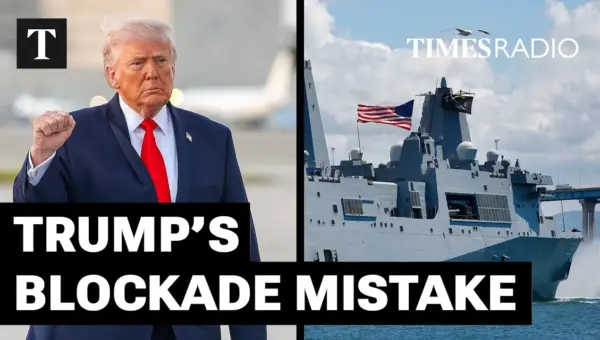
The U.S. blockade on Iranian ports, aimed at crippling its economy, is sparking concerns of an "act of war" and may backfire, according to former diplomat Barbara Leaf. While the U.S. and Iran prepare for potential peace talks, hardline rhetoric and the blockade's global economic impact complicate diplomatic efforts. A key concern is a potential confrontation with China if U.S. forces intercept Chinese vessels.
US Markets Surge as Iran Tensions Ease, Oil Prices Steady
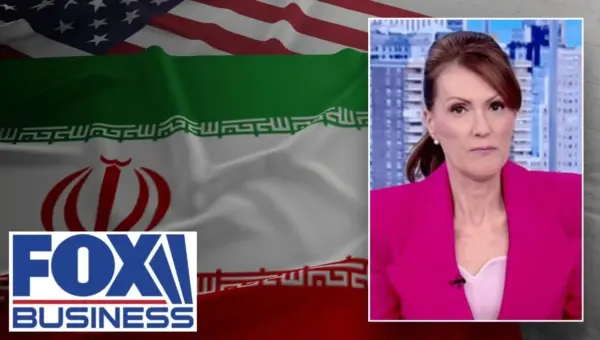
U.S. stock markets are hitting new highs as tensions with Iran ease, with the S&P 500 reaching record levels. Despite persistent oil prices around $92 a barrel, the U.S. economy shows resilience, boosted by record oil exports. The focus is shifting to the economic confrontation with Iran, including the non-renewal of oil sales waivers, and long-term strategies to bypass the Strait of Hormuz.

Trump’s Blockade Fails, Allies Shun Mission: A Pattern?
A reported failure of Donald Trump's blockade of the Strait of Hormuz, with ships passing through unimpeded, raises questions about policy effectiveness. This incident, coupled with allies' reluctance to join the mission, suggests a pattern of unintended consequences and strained international relations.