Iran Rejects Talks, Escalating Mideast Chaos: What’s Next?
Iran has flatly rejected U.S. negotiation claims, escalating regional tensions. Amidst reports of potential U.S. casualties and a volatile Middle East, diplomatic channels appear fractured, with accusations of "delusional fantasies" hurled by Iranian officials.

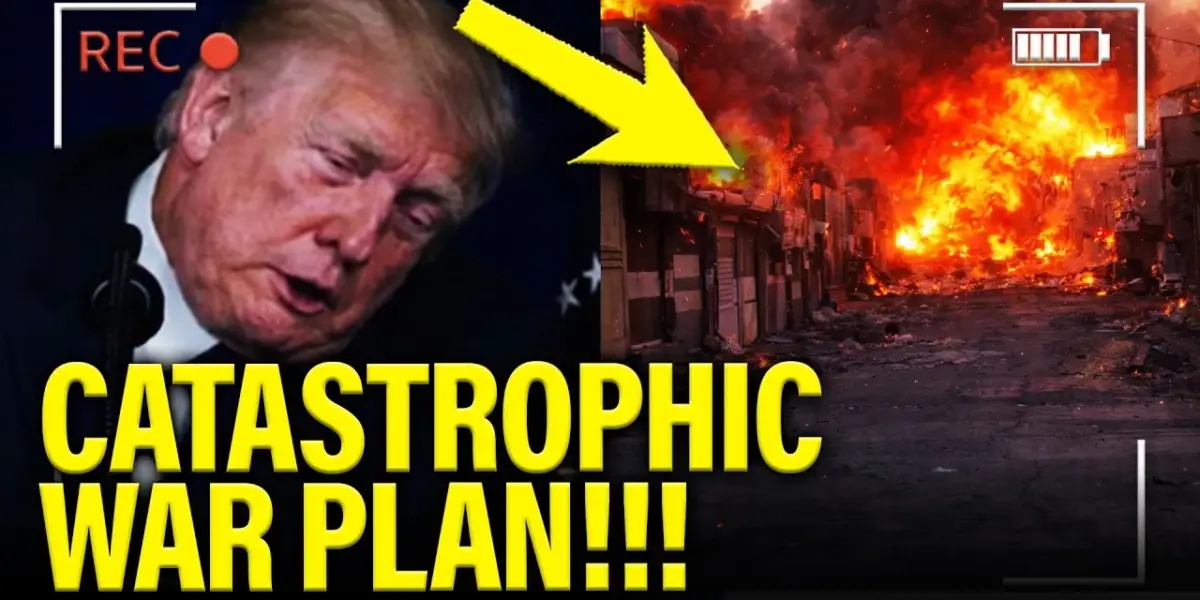
Iran Rejects Talks, Escalating Mideast Chaos: What’s Next?
Amidst escalating tensions in the Middle East, a stark divergence has emerged between the rhetoric of the Trump administration and the reality on the ground, particularly concerning Iran. While President Trump has publicly stated that negotiations with Iranian leadership are underway and yielding productive results, a high-ranking Iranian official has unequivocally refuted these claims, labeling them as “delusional fantasies.” This direct contradiction, coupled with a surge in regional hostilities, paints a grim picture of escalating conflict and diplomatic deadlock.
Diplomatic Deadlock and Accusations of Delusion
Donald Trump has been quoted as expecting “a lot more service member deaths” and a protracted conflict lasting “many, many weeks” in Iran. He has also alluded to a “Venezuela model” for managing the situation, suggesting a willingness to maintain existing leadership as long as it aligns with U.S. interests. However, Ali Larajani, Secretary of Iran’s National Security Council and a key negotiator, has publicly stated via social media, “We will not negotiate with the United States. Period. Full stop.” Larajani further characterized Trump’s assertions as stemming from “delusional fantasies,” accusing the U.S. president of plunging the region into chaos and sacrificing American soldiers for “Israel’s power-hungry ambitions.” He asserted that Iran is “defending itself” and that its armed forces did not initiate the aggression.
Regional Instability and Unintended Consequences
The diplomatic impasse is occurring against a backdrop of heightened military activity. The transcript mentions an F-15 crashing over Kuwait due to a friendly fire incident, with both crew members reportedly surviving. Simultaneously, Iran has continued its retaliatory strikes against U.S. targets and allies in the region, including bases in Dubai, Doha, and Manama, as well as strikes within Israel. Some of these ballistic missiles have reportedly penetrated Israel’s Iron Dome defense system.
Adding to the complexity, France has clarified that it will not be lending its aircraft carrier, the Charles de Gaulle, to support the U.S. mission in the region, despite Iran striking a location where France has a military base. France stated it would defend its own interests but would not engage in offensive actions to aid the U.S. This suggests a growing reluctance among allies to be drawn into a wider conflict.
The situation is described as a “full-fledged cauldron on fire,” with reports of U.S. embassies being stormed by pro-Iranian militia groups. Strikes have also targeted U.S. interests in Iraq, highlighting the widespread reach of Iran’s proxy network.
Shifting Geopolitical Alliances and Trade-offs
The conflict in the Middle East appears to be having ripple effects on global alliances. China is reportedly condemning the U.S. “invasion” of Iran and is noted as a supporter of both Iran and Russia. The transcript suggests that the Trump administration is prioritizing relations with China, evidenced by the delay of a $13 billion arms sale to Taiwan, ostensibly to ensure a “smooth summit” with Xi Jinping. This move is framed as a betrayal of Taiwan and a capitulation to Chinese pressure, echoing past instances where Trump allegedly bowed to Xi Jinping’s demands regarding Taiwan.
The financial markets are also reflecting the instability, with Dow futures dropping significantly and U.S. crude oil prices surging, indicating investor concern over the escalating conflict and its potential impact on global energy supplies.
Historical Context and Shifting Narratives
The current events are framed against a backdrop of escalating rhetoric from figures like Lindsey Graham, who calls for military action against Cuba and expresses strong support for Trump’s foreign policy, likening him to Ronald Reagan and predicting the collapse of the Iranian regime and the weakening of Hezbollah. Graham urges Trump to “unleash the American military with Israel on Hezbollah tonight,” citing past attacks on U.S. service members.
The transcript also touches upon the controversial Jeffrey Epstein case, with Iranian officials reportedly suggesting that the current conflict is being used to cover up the Epstein files and that it is a war initiated by the “Epstein class.” This adds a layer of conspiracy and intrigue to the unfolding events.
The narrative presented suggests a significant disconnect between the administration’s pronouncements of control and diplomatic progress, and the on-the-ground reality of escalating conflict, shattered diplomatic channels, and growing regional instability. The refusal of Iran to negotiate, coupled with the administration’s acknowledgment of potential American casualties, points towards a dangerous escalation with uncertain outcomes.
Why This Matters
The situation in the Middle East, particularly the direct confrontation between the U.S. and Iran, carries profound implications. The rejection of diplomatic overtures by a key Iranian official, juxtaposed with U.S. claims of ongoing talks, highlights a critical breakdown in communication and a potential misreading of the situation by the Trump administration. This can lead to miscalculation, further escalation, and increased risk to American service members and regional stability.
Furthermore, the potential for a wider regional conflict involving proxies and allied nations poses a significant threat to global security and economic stability. The surge in oil prices and the dip in financial markets are early indicators of the economic consequences. The alleged shift in U.S. foreign policy priorities, potentially sacrificing long-standing alliances like that with Taiwan for perceived short-term diplomatic gains with China, raises serious questions about the long-term strategic interests of the United States.
Implications, Trends, and Future Outlook
The trend points towards an increasingly volatile Middle East, with a higher risk of direct military engagement and prolonged regional instability. The reliance on proxy forces by Iran and the potential for misinterpretation of actions by either side could lead to unintended escalation. The credibility of diplomatic channels appears to be severely undermined, making de-escalation a formidable challenge.
The future outlook suggests a continuation of hostilities, with the potential for increased casualties on all sides. The effectiveness of U.S. military actions and the resilience of Iran’s defense and proxy networks will be critical factors. The role of international actors, such as China and European allies, will also be crucial in either mitigating or exacerbating the conflict. The possibility of a protracted conflict, rather than a swift resolution, seems increasingly likely.
The narrative also raises concerns about the transparency and motivations behind U.S. foreign policy decisions, particularly in light of the accusations linking the conflict to the Epstein case and the alleged trade-offs made with China. The long-term consequences of such decisions on U.S. global standing and security alliances remain to be seen.
Source: Trump PANICS as IRAN REJECTS NEGOTIATIONS!! (YouTube)

Related Articles
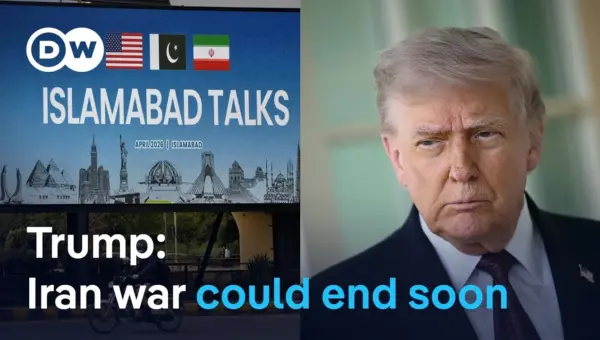
Trump Sees Iran War Ending Soon Amidst Escalating Threats
U.S. President Donald Trump expressed optimism that the conflict with Iran could end soon, despite ongoing threats between the two nations. A senior Iranian official warned of regional trade blockades if U.S. naval blockades are not lifted. Experts caution that any deal must address core issues, not just short-term military gains, to achieve lasting strategic success.

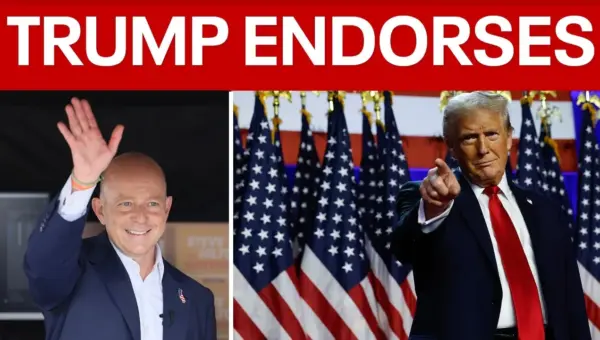
Trump Backs Hilton for CA Governor Amidst Chaotic Race
The California governor's race is in turmoil as Eric Swalwell withdraws, leaving Democrats scrambling. Meanwhile, Republican Steve Hilton secures a major endorsement from former President Trump. Billionaire Tom Steyer gains traction with the CTA's backing, while Katie Porter faces name recognition hurdles.
US-Iran Peace Talks Stall; Gap ‘Wider Than Strait of Hormuz’
Peace talks between the U.S. and Iran remain stalled, with a significant gap described as 'wider than the Strait of Hormuz.' Despite White House optimism about ending the conflict and lowering gas prices, public opinion shows weariness and concern over the war's economic toll. International diplomatic efforts continue, but major hurdles persist in resolving key issues.