Rep. Luna Argues “Strategic Strikes” Aren’t War
Representative Luna has differentiated "strategic strikes" from "war," arguing they are fundamentally different types of military actions. This distinction carries significant weight in how military engagements are perceived and responded to internationally.

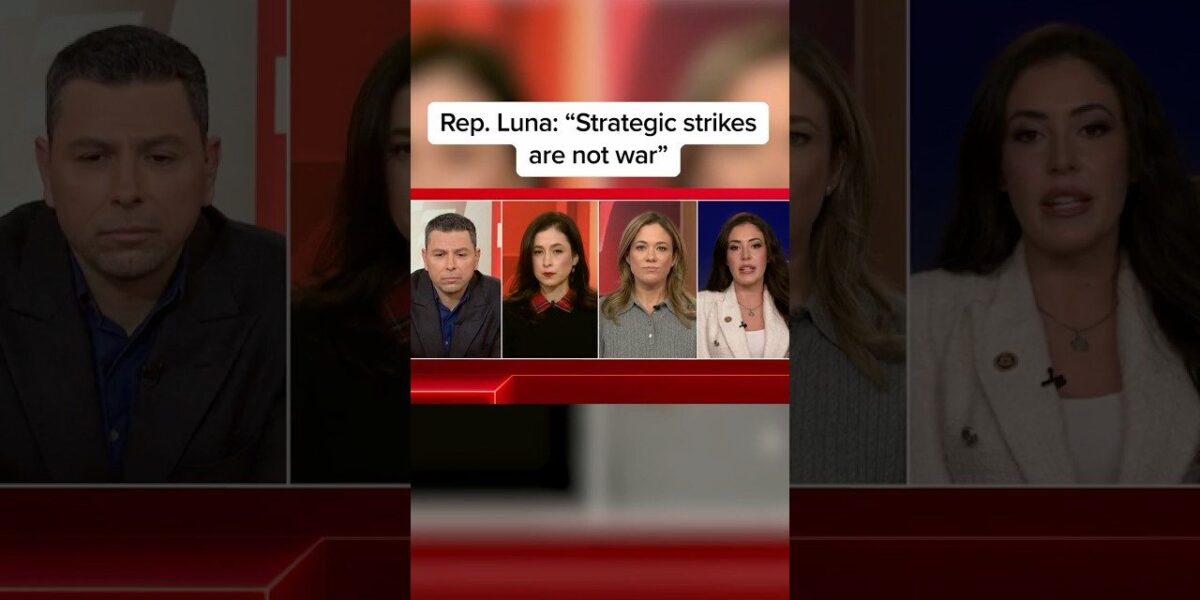
Rep. Luna Distinguishes “Strategic Strikes” from “War”
In a recent exchange, U.S. Representative Luna asserted that “strategic strikes” should not be equated with “war,” a distinction that has drawn attention amid escalating global tensions. The comment came during a discussion where the President had referred to a recent event as a “war.” Luna’s clarification emphasizes a nuanced perspective on military actions, differentiating between targeted operations and full-scale conflict.
Defining the Terms: Strategic Strikes vs. Invasion
“Targeting strategic military strikes and invasions are two totally different things,” Representative Luna stated, highlighting a critical difference in the nature and scale of military engagements. This assertion suggests a framework where limited, precise military actions are distinct from broader, more encompassing acts of aggression like invasions.
When pressed by an interviewer who noted, “The President has called it a war!” Luna remained firm in her distinction. “Strategic strikes are not war,” she reiterated. This direct response underscores her belief that the terminology used to describe military actions carries significant weight and can shape public perception and policy responses.
The exchange, captured in a brief video clip, also included a moment of surprise from another participant, “Really?” This reaction indicates that Luna’s perspective may diverge from common understanding or official pronouncements, suggesting a potentially contentious debate over the definition and implications of military terminology.
Context and Implications of Military Terminology
The debate over what constitutes “war” versus “strategic strikes” is more than semantic. The classification of a military action can have profound implications for international law, domestic policy, and public opinion. Using the term “war” can invoke specific legal obligations, treaty commitments, and public expectations regarding the duration, scope, and objectives of a conflict. Conversely, labeling an action as a “strategic strike” might be intended to convey a more limited, controlled, and potentially less escalatory engagement.
Representative Luna’s emphasis on this distinction could reflect a broader strategic approach to foreign policy. By differentiating between types of military actions, policymakers may seek to maintain flexibility in their responses to international incidents. This approach could allow for the use of force in a targeted manner without necessarily triggering the full legal and political ramifications associated with a declared war.
However, such distinctions can also be viewed critically. Critics might argue that downplaying the severity of military actions by using less alarming terminology can obscure the reality of violence and its consequences. The use of terms like “strategic strikes” could be seen as an attempt to sanitize conflict or to avoid the political accountability that comes with a formal declaration of war. The perception of such actions often depends on the perspective of those involved and the impact on the ground.
The Role of Media in Shaping Perceptions
The dissemination of these remarks through platforms like MS NOW highlights the role of media in shaping public understanding of complex geopolitical events. The way military actions are reported and framed can significantly influence how the public perceives threats, justifications for force, and the overall international landscape. The brief, impactful nature of the exchange suggests that precise language is crucial in these discussions.
As global events continue to unfold, the precise language used by political leaders and military officials will remain under scrutiny. The distinction drawn by Representative Luna invites further discussion on the criteria that define different levels of military engagement and the potential consequences of these definitions.
Looking Ahead
The ongoing dialogue surrounding military terminology underscores the importance of clarity and consistency in geopolitical discourse. As international relations evolve, the way nations describe and conduct military operations will continue to be a critical area of focus for policymakers, legal experts, and the public alike. The debate initiated by Representative Luna’s comments serves as a reminder that words matter, particularly when discussing the use of force.
Source: Rep. Luna: "Strategic strikes are not war" (YouTube)

Related Articles
US Markets Surge as Iran Tensions Ease, Oil Prices Steady
U.S. stock markets are hitting new highs as tensions with Iran ease, with the S&P 500 reaching record levels. Despite persistent oil prices around $92 a barrel, the U.S. economy shows resilience, boosted by record oil exports. The focus is shifting to the economic confrontation with Iran, including the non-renewal of oil sales waivers, and long-term strategies to bypass the Strait of Hormuz.
Trump’s Blockade Fails, Allies Shun Mission: A Pattern?
A reported failure of Donald Trump's blockade of the Strait of Hormuz, with ships passing through unimpeded, raises questions about policy effectiveness. This incident, coupled with allies' reluctance to join the mission, suggests a pattern of unintended consequences and strained international relations.

Russia’s War Costs Strain Putin’s Elite Bargain
Russia's prolonged war in Ukraine is straining President Putin's grip on power. Declining oil revenues and escalating military costs are forcing internal power shifts, with intelligence services reportedly gaining influence. This financial pressure is creating significant discontent among the elite and risking broader instability within the Kremlin.