US Launches War on Iran: Supreme Leader Killed
The United States and Israel have launched major military operations against Iran, reportedly killing Supreme Leader Ayatollah Ali Khamenei and a significant portion of the nation's leadership. While proponents hail the action as a necessary blow against terrorism, critics raise concerns about the lack of a clear strategy and the potential for a wider conflict.

US Launches Major Military Operations Against Iran, Supreme Leader Dead
In a dramatic escalation of regional tensions, the United States, in coordination with Israel, launched significant military operations targeting Iran on Saturday, continuing into Sunday morning. The strikes, aimed at military and nuclear sites across the country, have reportedly resulted in the death of Iran’s Supreme Leader, Ayatollah Ali Khamenei, and a substantial portion of the nation’s leadership. President Trump confirmed the development in a phone call on Saturday, stating that a large number of Iranian leadership had been killed.
Escalation and Regional Impact
Following the initial strikes, Israel reported that at least 40 military commanders were killed. Iran’s response was swift and widespread, with attacks reported across the region. Targets included a high-rise building in Bahrain and an iconic hotel in Dubai. Civilian areas in Qatar, which hosts U.S. military bases, also experienced incoming missile threats, forcing residents to flee.
President Trump issued a stern warning on Sunday, posting on social media that any further strikes by Iran would be met with “a force that has never been seen before.” This declaration signals a potential for a wider conflict, with U.S. military assets and personnel in the region facing heightened risk.
“The mothership of terrorism is sinking. The captain is dead. The largest state sponsor of terrorism, Iran, is close to collapsing.”
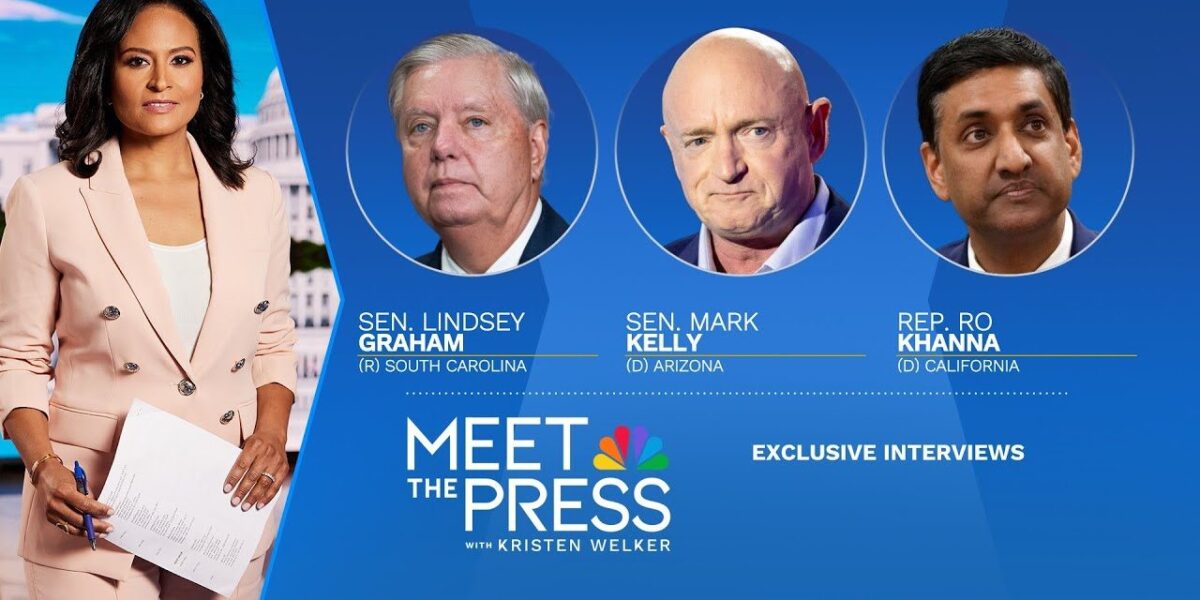
Senator Lindsey Graham
Senator Graham’s Perspective: ‘Mothership of Terrorism is Sinking’
Republican Senator Lindsey Graham of South Carolina, appearing on “Meet the Press,” characterized the operation as the “sinking” of the “mothership of terrorism.” He asserted that the death of the Supreme Leader and key members of his inner circle signifies a critical blow to Iran’s ability to sponsor terrorism globally.
“When this operation is over, no matter who takes over in Iran, they will not have ballistic missiles to hurt us, Israel, or the region. They will not have the capability to be the largest state sponsor of terrorism,” Senator Graham stated. He emphasized that the primary goal of the operation is to alter Iran’s threat capacity, not necessarily to dictate regime change, though he expressed hope for the Iranian people to chart their own destiny.
Graham also highlighted the potential for historic diplomatic advancements, suggesting that the fall of the current regime could pave the way for normalization between Saudi Arabia and Israel, a deal he described as “historic.” He praised President Trump for taking decisive action against a regime that has long been a source of instability and terror in the region.
Senator Kelly’s Concerns: ‘Hope is Not a Strategy’
Democratic Senator Mark Kelly of Arizona, a former combat pilot, acknowledged the positive development of the Supreme Leader’s removal but voiced significant concerns about the lack of a clear strategy moving forward. “Hope is not a strategy,” Senator Kelly remarked, emphasizing the need for a concrete plan to achieve strategic goals and prevent further risk to American service members.
Senator Kelly drew parallels to the complexities of regime change operations, citing the aftermath of the Iraq War. He questioned the administration’s assertion that U.S. boots would not be required on the ground, calling such a scenario “incredibly challenging” for fully dismantling an adversary’s capabilities. He also expressed apprehension about the potential for a prolonged military engagement and the risk of Iran disrupting global trade through the Strait of Hormuz.
He further criticized the administration’s approach to Iran’s nuclear program, noting that the previous administration’s withdrawal from the Iran deal had reportedly led to Iran advancing its capabilities. Kelly stressed the importance of congressional oversight and a unified strategy, questioning the conflicting messages from the President and Vice President regarding the potential duration of the conflict.
Congressman Khanna: ‘Americans Are Not Safer Today’
Democratic Congressman Ro Khanna of California offered a starkly different assessment, arguing that “Americans are not safer today.” He criticized Senator Graham’s past support for interventions in Iraq and Libya, labeling them as failures. Khanna pointed out that the Islamic Revolutionary Guard Corps (IRGC) remains in power and that Iran’s Assembly of Experts was already in the process of selecting a new leader prior to the strikes.
Khanna is co-sponsoring a bill with Congressman Massey to force a vote on the War Powers Resolution, aiming to prevent further U.S. involvement in what he described as “Donald Trump’s war in the Middle East.” He believes this action betrays a significant portion of the MAGA base that campaigned against foreign wars. Khanna acknowledged that the vote would be close but stressed the importance of Congress asserting its authority over matters of war.
He argued that the War Powers Resolution, if passed, would send a strong message to the President and could restrict his future actions, even after the initial offensive has begun. Khanna also touched upon the ongoing fallout from the Jeffrey Epstein files, advocating for transparency and accountability from all individuals connected to the case, including former President Bill Clinton and potentially former President Donald Trump.
Richard Engel Reports from Israel
NBC News Chief Foreign Correspondent Richard Engel provided a ground report from Israel, detailing the immediate aftermath of an Iranian ballistic missile strike. He described a scene of significant damage where at least nine people were killed. Engel noted that Israeli defense officials have announced achieving “air superiority over Iran,” suggesting a continued capacity for offensive operations by Israeli and potentially U.S. forces.
Broader Implications and Future Outlook
The coordinated strikes against Iran mark a significant turning point in Middle Eastern geopolitics, potentially ushering in a new era of conflict or a renewed push for regional stability. The coming days and weeks will be critical in determining whether the operation achieves its stated goals of neutralizing Iran’s threat capabilities or spirals into a wider, protracted war. Key questions remain about Iran’s next moves, the consolidation of power within Iran, and the international community’s response. The administration’s strategic plan, congressional oversight, and the potential for diplomatic breakthroughs will be closely watched as the situation unfolds.
Source: Meet the Press Full Episode — March 1 (YouTube)

Related Articles
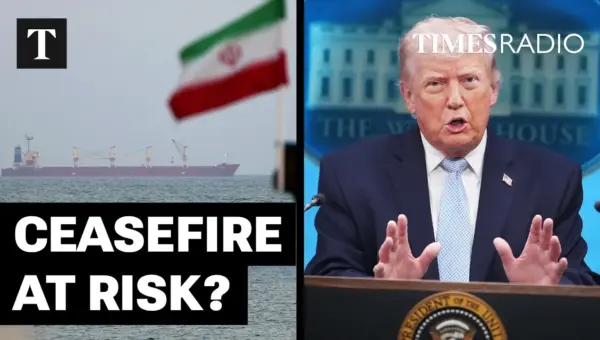
Iran Ceasefire Risks Spiraling Out of Control Amid Talks
A fragile ceasefire between Iran and the US, expiring in two weeks, faces major risks of collapse. Ongoing back-channel talks are attempting to bridge gaps, but experts warn that even minor incidents could easily escalate. The US naval blockade adds another layer of tension, with China watching closely but appearing hesitant to intervene.
Trump Claims Iran War Nearing End Amid Conflicting Reports
President Trump has declared the conflict with Iran is nearing its end, but conflicting reports highlight the complexities of the U.S. naval blockade. Experts question the administration's optimism, citing Iran's historical resilience and the significant resources required to maintain the blockade. Geopolitical shifts, including potential U.S. withdrawal from NATO and China's growing assertiveness, add further layers of uncertainty to the evolving situation.


Trump Supporters Upset by ‘AI Jesus’ Post, Iran War
Young conservative attendees at a Turning Point USA event in Georgia voiced strong disapproval over Donald Trump's AI-generated 'Jesus' post, with many finding it offensive. They also expressed frustration regarding the ongoing war in Iran and its economic impact, questioning campaign promises of non-intervention.