Middle East on Edge: Iran Retaliates Amid Regional Instability
Iran has launched retaliatory strikes against Israel and US bases in the Gulf following the reported assassination of Supreme Leader Ayatollah Ali Khamenei. The attacks have resulted in US casualties and heightened regional anxiety, with neighboring countries bracing for potential spillover effects. The escalating crisis has exposed divisions within Iran and prompted diplomatic efforts to prevent a wider conflict.

Middle East on Edge: Iran Retaliates Amid Regional Instability
TEHRAN, IRAN – The Middle East is grappling with a rapidly escalating conflict following the reported assassination of Iran’s Supreme Leader Ayatollah Ali Khamenei, an act attributed to a joint US-Israeli operation. In retaliation, Iran has launched significant strikes against Israel and US military installations across several Gulf states, resulting in casualties among American forces and heightened regional anxiety. The unfolding crisis has plunged the region into a state of profound uncertainty, with neighboring countries and international actors closely monitoring Iran’s response and its potential to ignite a wider conflagration.
Iran Vows Revenge and Mourns Supreme Leader
The Iranian regime has declared 40 days of national mourning for the death of Supreme Leader Ayatollah Ali Khamenei. President Masoud Peskan, speaking on state television, vowed retribution, stating, “The interim leadership council has started its work and with the help of God, we will continue the path of Imam [Khomeini], the path of the dear leader, and the path of all justice seekers in the world with strength.” He further asserted that the Iranian armed forces are acting with resolve to “destroy the enemy’s bases and they will continue to take action and disappoint the enemies as always.”
Adding to the turmoil, state media reported the death of former Iranian President Mahmoud Ahmadinejad in an air strike at his Tehran residence. Ahmadinejad, who served as president from 2005 to 2013, had a complex political career, initially enjoying support from the ruling clergy but later facing international criticism for his nuclear policies, which led to sanctions and economic hardship, as well as his controversial anti-Semitic remarks.
Retaliatory Strikes and US Casualties
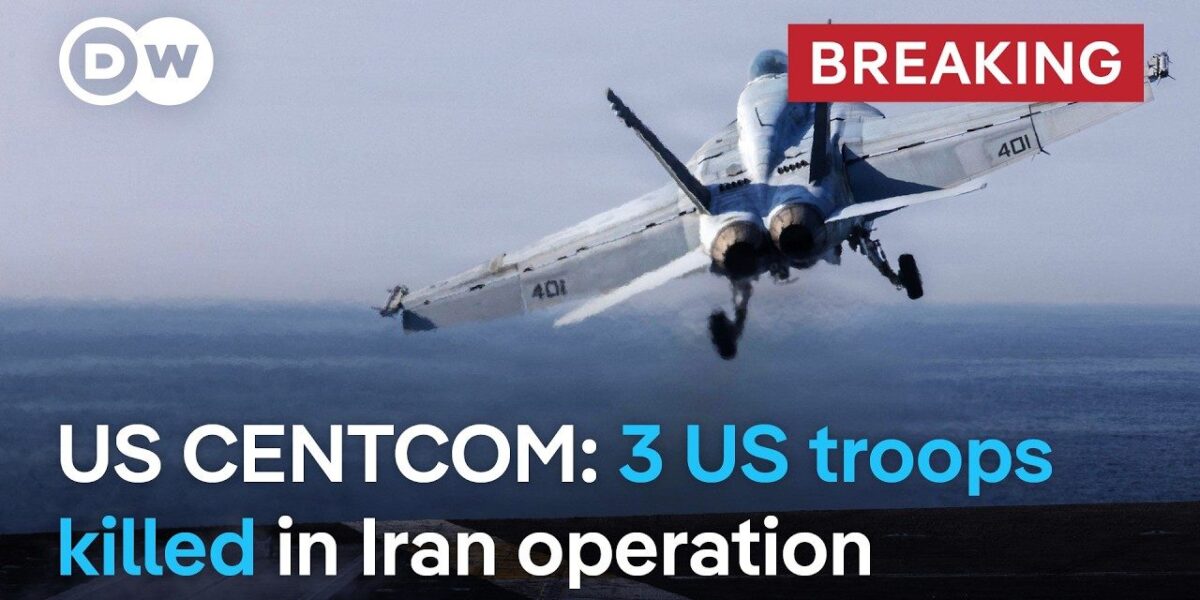
In its immediate response to the perceived assassination of Khamenei, Iran launched retaliatory attacks targeting Israel and US bases in the Gulf. The Iranian Revolutionary Guard claimed to have fired four ballistic missiles at the aircraft carrier USS Abraham Lincoln, though the US military stated the missiles did not approach the vessel. In a separate incident, the US Central Command reported that three American soldiers were killed and five others seriously wounded in attacks on Gulf states.
The Pentagon confirmed the casualties, marking a significant escalation in the ongoing tensions. Sirens wailed over Jerusalem and Tel Aviv as air defense systems reportedly intercepted incoming threats. Explosions were also reported in Dubai and Doha following Iranian missile strikes on Gulf states.
Divided Sentiments Within Iran
The reported death of Ayatollah Khamenei has exposed a stark division among Iranians. While state television and public gatherings in Tehran showed widespread mourning, with thousands gathering to express grief and anger, footage circulating on social media depicted scenes of celebration in other parts of the capital. Videos showed people dancing, singing, and toppling symbols of the regime, indicating a deep well of dissent alongside official expressions of sorrow. Satellite imagery revealed damage to Ayatollah Khamenei’s compound in Tehran, with smoke rising from the heavily damaged building.
Regional Neighbors Brace for Impact
Political analysts and regional observers express significant concern about the potential fallout for Iran’s neighbors. Cornelius Adebahr, a political analyst at the German Council on Foreign Relations, noted that Arab states had anticipated such scenarios and had warned Washington of potential Iranian attacks on regional territories. “They have in fact warned Washington of this kind of attack because they feared precisely what has happened so far,” Adebahr stated. He added that the incapacitation of the Iranian regime raises questions about who will take over and whether the ensuing power vacuum could lead to further conflict or a potential compromise with the US and Israel.
“The regime is of the Islamic Republic was hostile to many of its neighbors, but at least it was something that they could reckon with. Now there is uncertainty to be expected.”
Cornelius Adebahr, Political Analyst
The calls for regime change in Iran from both the US and Israel are viewed with apprehension by regional leaders. Adebahr cautioned that regime change is “easier said or demanded than being done,” and that neighbors would “watch with dismay if this simply led to chaos.” The uncertainty surrounding a potential transition, including the possibility of regional fragmentation or a military takeover by the IRGC, presents a complex challenge for neighboring states that had at least been able to engage with the existing, albeit hostile, Islamic Republic.
Hezbollah and Proxies Assess Their Stance
In Lebanon, Hezbollah and allied Shia religious leaders have condemned the death of Ayatollah Khamenei. Hezbollah leader Naim Qasim issued a statement vowing to “continue its path,” though the exact implications remain vague. While Hezbollah is Iran’s most significant regional proxy, its capacity to respond is reportedly diminished due to recent conflicts and declining domestic support. DW correspondent Stella Menner reported from Beirut, “Hezbollah has lost a lot of its military capacity in the last two and a half years of war. So it is much more weakened now than it was before.”
The potential for Hezbollah to join retaliatory actions carries significant risks for Lebanon, including the possibility of extensive Israeli retaliation targeting civilian infrastructure. Lebanese authorities have convened crisis committees to address the escalating regional tensions and ensure the continuity of essential supplies, such as food, amid fears of wider conflict.
Turkey’s Diplomatic Balancing Act
Turkey, a key regional player, has so far not been targeted by Iranian strikes. President Recep Tayyip Erdoğan has condemned both the Israeli-American attacks on Iran and Iran’s retaliatory actions, calling for de-escalation and mediation. DW correspondent Julia Han reported from Istanbul that “Turkey being a NATO member… any sort of Iranian attack on Turkey could of course turn this into a whole different war overnight.”
Ankara is keen to avoid being drawn into the conflict, despite its strategic location and its role as a NATO member. Turkey shares a long border with Iran and is concerned about potential instability, energy supply disruptions, and the possibility of increased activity by Kurdish groups. President Erdoğan has engaged in diplomatic phone calls with both US President Trump and Iranian President Peskan, signaling Turkey’s desire to play a mediating role and exert greater influence over any future negotiations.
Uncertain Future for the Region
The events of the past weekend have created a volatile and unpredictable landscape in the Middle East. The potential outcomes range from the desired regime change envisioned by the US and Israel, leading to a more pliable government in Tehran, to prolonged chaos and conflict. Analysts warn of the possibility of Iran resisting further attacks and perpetuating a cycle of retaliation, making it difficult for the US and Israel to find a face-saving exit. A more extreme, albeit less likely, scenario discussed involves the potential disintegration of Iran as a nation-state if the Islamic Republic collapses.
As the region holds its breath, the coming days and weeks will be critical in determining whether de-escalation efforts can prevail or if the current trajectory leads to a wider, more devastating conflict. The response of regional proxies, the internal dynamics within Iran, and the diplomatic efforts of international actors will all play crucial roles in shaping the future of the Middle East.
Source: How Middle East leaders are reacting to the destabilizing impact of the US-Israel-Iran conflict (YouTube)

Related Articles


Beirut Airport Stays Open Amid Nearby Strikes
Beirut's international airport remains open and operational despite nearby Israeli airstrikes targeting the city's southern suburbs. Passengers arriving at the airport reported hearing and seeing the effects of attacks close to the grounds, though many expressed they are "used to it." The airport's continued function highlights its critical role as Lebanon's main gateway.
Carrier Power Hits Iran’s Strait of Hormuz Tactics
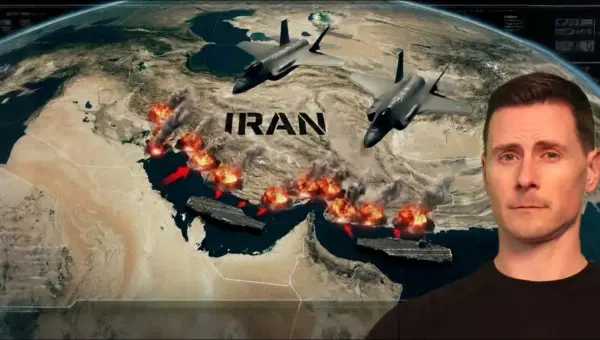
The U.S. Navy's USS Abraham Lincoln is launching relentless fighter jet waves against Iran's Strait of Hormuz tactics. Aircraft are targeting drone sites and coastal facilities to counter Iran's disruption of global shipping lanes. This operation aims to secure vital maritime trade routes.

China Backs US Blockade, Squeezing Iran’s Oil Lifeline
China's backing of a U.S. naval blockade is effectively cutting off Iran's oil exports. This move aims to pressure Iran into negotiations but carries significant political risks for the U.S. president, especially with high gas prices impacting voters.