Iran Confirms Supreme Leader Ayatollah Khamenei Is Dead
Iranian state media has confirmed the death of Supreme Leader Ayatollah Ali Khamenei, a development that has sent shockwaves across the region and is reported to have ignited a wider conflict. The confirmation follows unconfirmed reports from international sources and marks a monumental shift for Iran after decades under Khamenei's leadership.

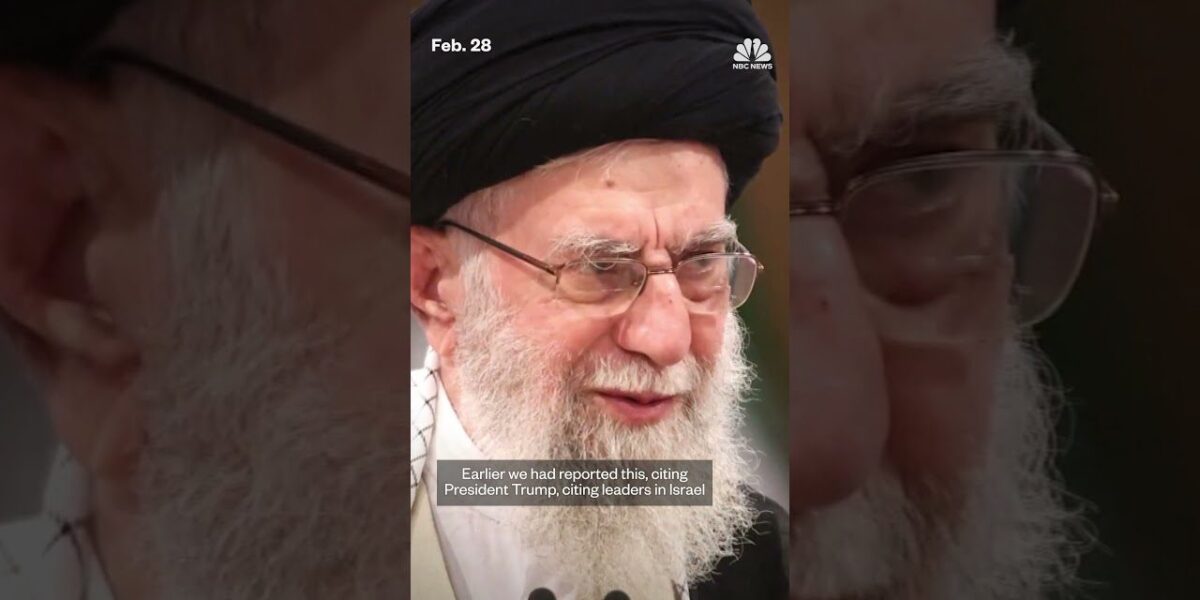
Iran Confirms Supreme Leader Ayatollah Khamenei Is Dead
Iranian state media has officially confirmed the death of Supreme Leader Ayatollah Ali Khamenei, a seismic development that threatens to reshape Iran and ignite a wider regional conflict. The confirmation, issued by Iranian state-run outlets, follows earlier unconfirmed reports citing President Trump and Israeli leadership, including Prime Minister Benjamin Netanyahu. Ayatollah Khamenei, who had held the country’s highest office since 1989, was reportedly killed in a targeted strike, the nature and perpetrators of which remain unclear. This event marks a pivotal moment for Iran, potentially altering its domestic political landscape and its foreign policy, with immediate concerns about escalating regional tensions.
A Monumental Shift for Iran and the Region
The death of Ayatollah Khamenei represents a profound turning point for the Islamic Republic, which he has led for over three decades. His tenure was characterized by a hardline stance on foreign policy, particularly concerning relations with the United States and Israel, and a firm grip on domestic affairs. His absence leaves a significant void in Iran’s leadership structure, raising immediate questions about succession and the future direction of the country’s political and religious establishment. The process of selecting a new Supreme Leader could be fraught with internal power struggles, potentially destabilizing the regime.
Ayatollah Khamenei, born Ruhollah Mousavi Khamenei in 1939, assumed the role of Supreme Leader in 1989, succeeding Ayatollah Ruhollah Khomeini. As the ultimate authority in Iran, he had the final say on all major state policies, including the country’s nuclear program, its involvement in regional conflicts, and its stance on international diplomacy. His death is not merely the end of an era but a catalyst for uncertainty, both domestically and internationally.
Regional War Erupts Amidst Uncertainty
Initial reports suggest that the killing of Ayatollah Khamenei has triggered a regional war, though the full extent and participants of this conflict remain to be seen. The transcript indicates a grave concern that the situation is rapidly escalating, with unknown consequences for the wider Middle East. Iran’s strategic position and its complex network of alliances and proxy groups mean that any instability within its borders or a shift in its leadership could have far-reaching implications. The region has long been a tinderbox of geopolitical tensions, and the death of such a significant figure could provide the spark for widespread conflict.
“This strike and this killing of the Ayatollah has now started a regional war. Where it ends, we don’t know. How much further it goes from tonight and into the morning over there, we don’t know.”
The implications for Iran’s regional proxies, such as Hezbollah in Lebanon, Hamas in Gaza, and various militias in Iraq and Syria, are also significant. A weakened or internally preoccupied Iran might be less able to support these groups, or conversely, might use external conflicts to rally domestic support and consolidate power in the post-Khamenei era. The potential for miscalculation and escalation by regional and international powers is exceptionally high.
Succession and Future Implications
The immediate focus will be on the process of succession. Iran’s constitution outlines a framework for the Assembly of Experts, a body of clerics, to elect a new Supreme Leader. However, this process is rarely transparent and is often influenced by political maneuvering within the ruling elite. Potential candidates are likely to emerge from the ranks of senior clerics and political figures who have demonstrated loyalty to the principles of the Islamic Revolution. The choice of the next Supreme Leader will signal the direction Iran intends to take – whether it will pursue a more moderate path or double down on its revolutionary ideology.
Beyond succession, the international community will be closely watching Iran’s reaction and its implications for global security. The country’s nuclear capabilities, its ballistic missile program, and its role in international energy markets are all factors that will be scrutinized. The potential for a power vacuum or a destabilized Iran could lead to increased geopolitical maneuvering by global powers, further complicating an already volatile region.
What to Watch Next
The coming hours and days will be critical in understanding the full scope of this unfolding crisis. The primary concerns are the trajectory of the regional conflict, the stability of Iran’s internal political situation, and the process of leadership succession. International observers will be seeking clarity on who was responsible for the strike that killed Ayatollah Khamenei and what Iran’s response will be. The world watches with bated breath as a new, uncertain chapter begins for Iran and the Middle East.
Source: Iranian media confirms death of Ayatollah Ali Khamenei (YouTube)

Related Articles

US Loses Global Grip as Trump Allies Defy Peace Calls
The U.S. faces a critical juncture as it appears to lose control on the global stage, marked by prolonged international conflicts and domestic economic challenges. Allies seem to defy peace calls, while political figures clash with the Pope over the morality of war.
US-Iran Peace Talks Stall; Gap ‘Wider Than Strait of Hormuz’
Peace talks between the U.S. and Iran remain stalled, with a significant gap described as 'wider than the Strait of Hormuz.' Despite White House optimism about ending the conflict and lowering gas prices, public opinion shows weariness and concern over the war's economic toll. International diplomatic efforts continue, but major hurdles persist in resolving key issues.

Iran’s Jets Take Flight: Are Hardliners Steering Nuclear Talks?
Iran's fighter jets have been seen flying during a ceasefire, challenging claims of a destroyed air force. This comes as hardliners appear to gain influence, complicating nuclear negotiations. The U.S. and Israel remain on alert.