Iran War Escalates: Region Plunged into Conflict
The Middle East is engulfed in a widening conflict as Iran launches retaliatory strikes across multiple neighboring nations following US and Israeli preemptive actions. Critical infrastructure and civilian areas have been targeted, with reports of a girls' elementary school being hit and the Strait of Hormuz potentially closed. The situation is marked by conflicting statements, disrupted communications, and growing regional instability.

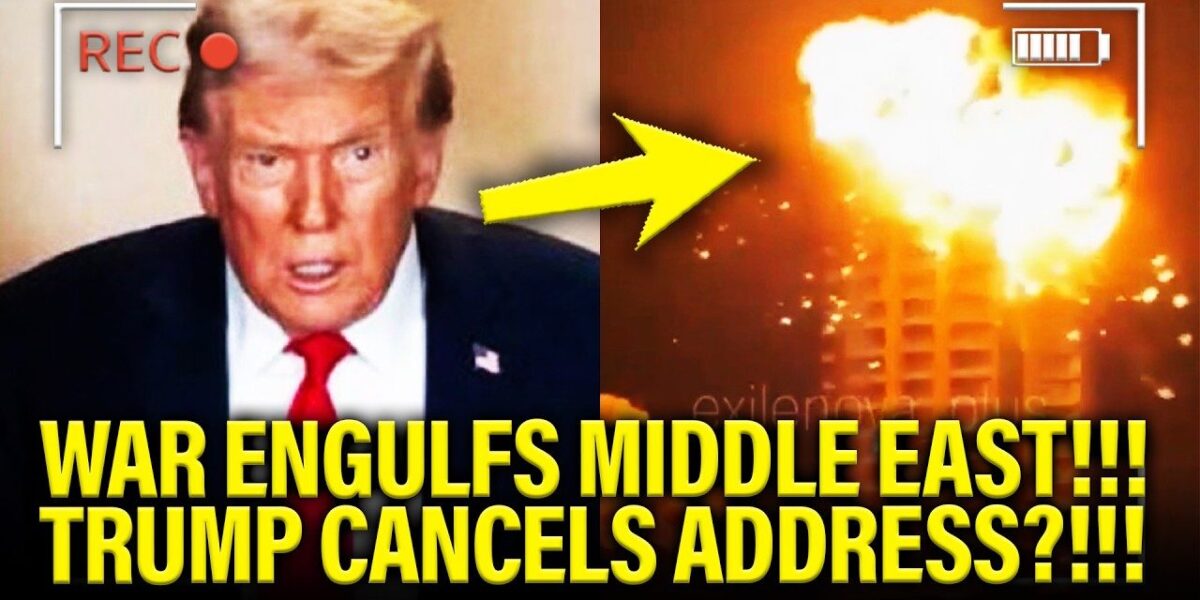
Region Engulfed as Iran War Spreads Beyond Preemptive Strikes
A widening conflict in the Middle East has seen Iran launch retaliatory strikes across multiple neighboring countries, following preemptive actions by the United States and Israel. The escalating hostilities have resulted in significant regional disruption, with critical infrastructure and civilian areas becoming targets. The situation remains volatile, with conflicting reports and a notable absence of clear communication from key political figures.
Nationwide Retaliation and Regional Instability
Iran has reportedly engaged in retaliatory strikes against several neighboring nations, including Kuwait, Bahrain, Qatar, the United Arab Emirates, Saudi Arabia, and Iraq. These attacks have involved ballistic missiles and Shahed drones. While some of these nations have managed to intercept some of the incoming threats, the widespread nature of the strikes underscores the escalating regional instability. The conflict has also seen an independent war erupt between Afghanistan and Pakistan, with Pakistan declaring war and alleging Afghanistan is an Indian colony.
Disputed Objectives and Leadership Uncertainty
The stated objectives for the initial strikes against Iran have shifted, adding to the confusion surrounding the conflict. While initially framed as a measure to halt Iran’s uranium enrichment program, subsequent statements from the United States and Israel have indicated a focus on regime change, aiming to remove the current Ayatollah. Adding to the uncertainty, the status of Iran’s Ayatollah has been the subject of conflicting reports, with suspicions of his demise circulating from the Israeli side, while Iranian officials maintain he is unharmed. Intelligence assessments suggest that even if the Ayatollah were removed, a more hardline successor would likely take his place, potentially leading to an even more extremist regime.
Disrupted Communications and Contradictory Statements
Amidst the escalating crisis, a scheduled address by former President Donald Trump to the nation was reportedly canceled. The White House has since denied any plans for such an address, labeling reports of it as “fake news.” This stands in contrast to expectations that a president would address the nation during a period of active warfare. Trump’s public commentary on the situation has been limited to a social media video where he acknowledged the potential loss of American soldiers, stating, “in wars people die.” He also appeared to address the Iranian people directly, suggesting their actions would prove a point they allegedly wished to make.
Economic Ramifications: Strait of Hormuz Closure Feared
A critical development with potentially catastrophic economic consequences is the reported closure of the Strait of Hormuz by Iran. This vital waterway accounts for approximately 20% of the global oil and gas supply and is a crucial route for major exporting nations like Saudi Arabia, Iraq, the UAE, and Qatar. Audio recordings have reportedly emerged of the Iranian Revolutionary Guard warning ships against passage. If confirmed and maintained, this closure could have severe impacts on global markets when they reopen. This action aligns with fears that Iran might attempt to economically strangle the United States and its allies.
Tragic Civilian Casualties and International Law Concerns
The conflict has already resulted in horrific civilian casualties. Reports indicate that US and Israeli airstrikes hit a girls’ elementary school in Minab, Iran, resulting in a death toll of 85, predominantly young girls and potentially some teachers. Images from the scene depict the devastating aftermath. Additionally, the Palm Jumeirah area in Dubai, a major tourist hub, has been targeted by Iranian Shahed drones. The US naval facility in Bahrain also sustained a direct strike on a radar facility, reportedly destroying multi-million dollar radar systems.
Protests and Diplomatic Failures
While the conflict unfolds, Iranian demonstrators have been observed protesting against the US-Israeli strikes. Images from Al Jazeera show anti-US and anti-Israel sentiment in the Iranian capital. Senator Mark Warner, a leading Democrat on the Senate Intelligence Committee, has stated there is no evidence Iran posed an imminent threat to the United States, warning that the recent strikes could initiate an open-ended conflict. This contradicts the rationale provided by Donald Trump, who cited long-term missile risks, while experts suggest any direct threat was years away. The situation is particularly poignant given that diplomatic efforts were reportedly underway, facilitated by the Foreign Minister of Oman, who stated Iran had agreed to halt its enrichment program and that further talks were scheduled for Monday. The US and Israeli strikes occurred in the midst of this diplomatic process.
Conflicting Narratives and the Role of Leadership
Iran’s Foreign Minister, reportedly identified as Arachi, has claimed that all high-ranking Iranian officials, including the Ayatollah, the President, the head of the judiciary, the speaker of parliament, and the secretary of the national security council, are alive and managing the situation. However, he acknowledged that such statements should be viewed with an understanding of the propaganda regimes project. The narrative surrounding the conflict is further complicated by past statements from Donald Trump, who in 2012 and 2013 predicted that then-President Obama would attack Iran to appear strong. More recently, campaign materials for Trump and JD Vance promoted a “pro-peace ticket,” while Marjorie Taylor Greene reportedly referred to Trump and Vance as “sick [ __ ] liars.”
Looking Ahead: A Precarious Future
The ongoing conflict in the Middle East presents a deeply concerning scenario with far-reaching implications. The immediate focus will be on whether the Strait of Hormuz remains closed, the potential for further escalation of strikes, and the humanitarian cost of the ongoing hostilities. The lack of clear communication and the conflicting narratives from various actors underscore the precariousness of the situation. The international community will be watching closely to see if diplomatic channels can be re-established amidst the escalating violence and the uncertain political landscape.
Source: Trump GOES MIA as IRAN WAR SPIRALS!! (YouTube)

Related Articles
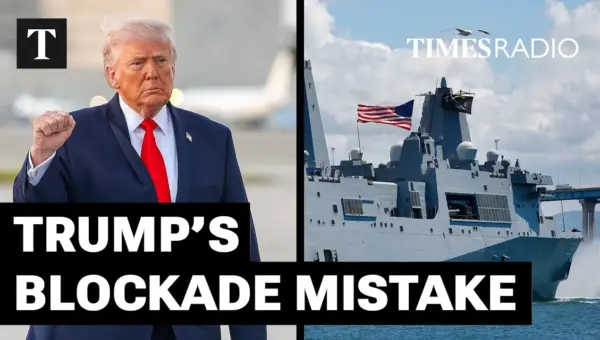
Iran Blockade Sparks War Concerns, Backfires on US, Expert Warns
The U.S. blockade on Iranian ports, aimed at crippling its economy, is sparking concerns of an "act of war" and may backfire, according to former diplomat Barbara Leaf. While the U.S. and Iran prepare for potential peace talks, hardline rhetoric and the blockade's global economic impact complicate diplomatic efforts. A key concern is a potential confrontation with China if U.S. forces intercept Chinese vessels.
US Markets Surge as Iran Tensions Ease, Oil Prices Steady
U.S. stock markets are hitting new highs as tensions with Iran ease, with the S&P 500 reaching record levels. Despite persistent oil prices around $92 a barrel, the U.S. economy shows resilience, boosted by record oil exports. The focus is shifting to the economic confrontation with Iran, including the non-renewal of oil sales waivers, and long-term strategies to bypass the Strait of Hormuz.
Iran War Disliked, But Public Outrage Muted: Analysts Weigh In
Despite widespread disapproval of the Iran war, public protests remain muted in the US. Analysts cite fear of reprisal, the prolonged nature of anti-war movements, and America's energy independence as key factors. The conflict's economic impact and the lack of clear objectives continue to fuel public skepticism, though widespread suffering is not yet felt domestically.