Russia Floods Key Routes, Escalates Nuclear Rhetoric
Russian forces have destroyed a dam in eastern Ukraine, flooding key supply routes to Konstantinovka in an apparent effort to disrupt Ukrainian logistics. Amidst battlefield shifts, Russia has also escalated its nuclear rhetoric, threatening NATO allies. Meanwhile, Ukraine reports progress in Zaporizhzhia and has demonstrated new long-range missile capabilities.


Russia Destroys Dam to Disrupt Ukrainian Logistics
In a significant escalation of tactics in eastern Ukraine, Russian forces have reportedly destroyed a dam near the settlement of Osakov, located south of Konstantinovka. The strike, reportedly carried out using a FAB-3000 guided aerial bomb, has led to the flooding of key access routes, including the Dzhusko-Konstantinovka road, rendering it a “solid swamp.” Ukrainian sources indicate this action is intended to severely hamper the resupply efforts to Konstantinovka, a critical Ukrainian defensive hub in the Donbas region. Deep State, a military analysis group, noted that Russian forces are intensifying their activity in the battles for Konstantinovka, aiming to disrupt the city’s logistics. Previously, Russian forces had destroyed a bridge on the northwestern outskirts, but Ukraine had managed to establish alternate routes. The dam’s destruction represents a more drastic measure to isolate the city.
Broader Russian Offensive in Eastern Ukraine
The flooding incident is part of a larger Russian effort to exert pressure on Ukrainian defensive lines in the east. While attention has often focused on fighting in Zaporizhzhia and Bakhmut, Konstantinovka and the broader Slavyansk-Kramatorsk agglomeration remain vital strategic objectives for Russia. Deep State maps indicate a recent increase in Russian activity pushing north into the southwestern parts of this area. The disruption of logistics to Konstantinovka is seen by analysts as a potential precursor to more decisive Russian actions, including concentrated assaults aimed at probing Ukrainian defenses for weak points.
Further north, near Kramatorsk, the situation is also described as worsening. Ukrainian military bloggers report that Russian forces, having advanced from Soledar towards Nikiforovka, are now dangerously close to the outskirts of Kramatorsk. This proximity, approximately 10-16 kilometers from Slavyansk and Kramatorsk respectively, could place these key Ukrainian cities within artillery range. Such a development would significantly alter the front lines and compromise the use of the Slavyansk-Kramatorsk area as a primary logistical hub, potentially making railway transport and evacuation efforts extremely difficult.
“The result was the flooding of the area where the water reached the uh the Duska Constantine road turning a section into a solid swamp and passage through it currently impossible according to the soldiers themselves. It cannot be said that the logistics to the city will be completely stopped because there are other routes through which supplies, movement, etc. will be organized. However, the Russians have definitely managed to worsen it at least for a certain period of time.”
New Russian Nuclear Threats Emerge
Amidst these battlefield developments, Russia has issued new nuclear threats, a tactic often employed when military operations do not align with expectations. The Russian Foreign Intelligence Service (SVR) claimed that Britain and France are preparing to supply Ukraine with nuclear weapons, allegedly disguised as Ukrainian-developed technology. Dmitry Medvedev, a prominent Russian hawk, amplified these claims, stating that such a transfer would “radically change the situation” and that Russia would be compelled to use “any, including non-strategic nuclear weapons” against targets in Ukraine and potentially against the supplier countries.
Analysts view these pronouncements with skepticism, noting the reluctance of Western nations to provide even advanced conventional weaponry due to escalation concerns. The suggestion that France and Britain would covertly transfer nuclear weapons, a far more sensitive escalation, is considered highly improbable by many observers. Nevertheless, the rhetoric signals a heightened level of nuclear saber-rattling directed not only at Ukraine but also at NATO allies.
Ukrainian Counterattacks in Zaporizhzhia
In the Zaporizhzhia direction, Ukrainian forces have reportedly launched counterattacks, with official announcements beginning to emerge. A Ukrainian soldier described the actions of the “Artan” unit as causing “havoc” and turning Russian infantry into “mincemeat” near Stepnogorsk. The Ukrainian Airborne Assault Forces provided an official assessment, characterizing the situation as “very dynamic” and noting that Russian forces are fiercely defending captured territory. Despite this resistance, Ukrainian units are reportedly fulfilling their tasks, reclaiming control over more than 300 square kilometers and an additional eight populated areas.
These operations are described not as deep counteroffensive thrusts, but rather as tactical improvements and force build-ups aimed at exhausting Russian resources and preventing them from deploying reserves to other sectors. The objective appears to be disrupting Russian offensive plans and forcing them to reallocate forces, thereby setting back their broader strategic objectives. In the western Zaporizhzhia region, near the Dnipro River, the “Artan” unit reportedly regained control of important positions and cut off key Russian logistical arteries, thereby hindering Russian advances in that specific sector.
Long-Range Strikes and New Ukrainian Missile Capabilities
The conflict continues to feature significant long-range strikes from both sides. Overnight, Russia launched a large-scale attack involving over 400 munitions, including drones and missiles, targeting critical infrastructure and residential buildings across eight regions of Ukraine. President Zelenskyy reported damage to numerous buildings and injuries, including children. Ukrainian air defenses reported intercepting a significant portion of the incoming munitions, but seven missiles and 46 drones reportedly reached their targets.
In response, Ukraine has reportedly utilized its new “Flamingo” long-range cruise missiles, identified as the FP5. Footage suggests these missiles were used in strikes against an Iskander ballistic missile production site in Voronezh and a gas processing plant in Neftegorsk, targets located approximately 1,300 kilometers from the front lines. The successful deployment of these missiles, capable of carrying substantial payloads over long distances, signifies a significant advancement in Ukraine’s strike capabilities. The ability to penetrate Russian air defenses at such ranges raises questions about production numbers and the effectiveness of Russian interception, and potentially strengthens the case for Western allies, such as the US providing Tomahawk cruise missiles.
Fundraising Efforts Continue
Meanwhile, ongoing fundraising efforts for Ukrainian military support continue. A recent delivery of a vehicle to the Third Assault Brigade was funded through a campaign that initially focused on drones. The “Car for Ukraine” initiative, part of a larger campaign to supply the 104th Territorial Defense Brigade with vehicles throughout the year, remains open. Donations allow for the purchase and refurbishment of vehicles, with opportunities for donors to have their names placed on the vehicles. The first truck from a recent batch was scheduled to deploy on February 27th.
Looking Ahead
The coming weeks will be crucial in observing whether Russia can capitalize on the logistical disruptions in eastern Ukraine and if the new nuclear rhetoric signals any genuine shift in escalation dynamics. Simultaneously, the effectiveness of Ukraine’s long-range strike capabilities and the continued success of counterattacks in Zaporizhzhia will be closely monitored. The ongoing need for military aid and the resilience of Ukrainian defense efforts remain central to the conflict’s trajectory.
Source: Russia Floods Key Routes in Eastern Ukraine (YouTube)

Related Articles
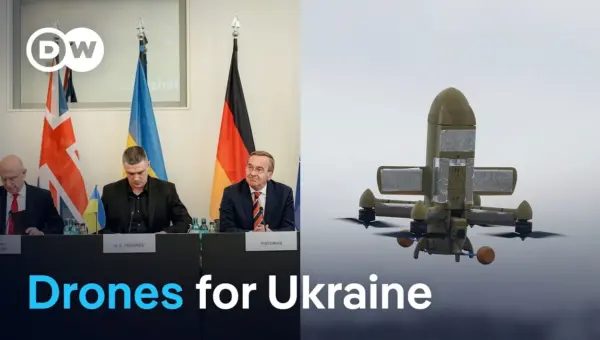
UK Pledges 120,000 Drones to Ukraine in Major Aid Package
Britain has pledged 120,000 drones to Ukraine, marking its largest aid package of its kind, during a meeting of the Ukraine Defense Contact Group in Berlin. The meeting highlighted both strong international solidarity and ongoing challenges in aid delivery, as Germany also boosts its own defense capabilities.


Russia’s War Costs Strain Putin’s Elite Bargain
Russia's prolonged war in Ukraine is straining President Putin's grip on power. Declining oil revenues and escalating military costs are forcing internal power shifts, with intelligence services reportedly gaining influence. This financial pressure is creating significant discontent among the elite and risking broader instability within the Kremlin.


Ukraine Strikes Russian Oil, Army Pushes Westward
Ukraine's spring offensive is underway, with Ukrainian forces making gains and forcing difficult choices for the Russian army. Meanwhile, Ukraine has intensified drone strikes on Russian oil infrastructure, aiming to cut off war funding. International interest in Ukraine's drone technology is growing, potentially reshaping global defense markets.