Germany Approves Controversial Drone Deal Backed by Peter Thiel
Germany has approved a multi-billion euro defense deal for advanced drone technology, despite controversy surrounding billionaire investor Peter Thiel's involvement. Lawmakers cited assurances that Thiel's minimal stake grants no operational control.

Germany Approves Controversial Drone Deal Backed by Peter Thiel
Berlin, Germany – German lawmakers have approved a significant and controversial defense deal that includes advanced drone technology, a move raising eyebrows due to the involvement of billionaire investor Peter Thiel. The decision, finalized recently, greenlights the acquisition of new weaponry that critics argue is problematic given Thiel’s known anti-democratic sentiments and support for far-right movements.
Concerns Over Investor’s Stance
The deal, valued in the billions, has faced scrutiny primarily because of Peter Thiel’s association with the technology. Thiel, a prominent venture capitalist and co-founder of PayPal, has publicly expressed views that many find alarming. “He himself has declared that he wants to overcome, possibly destroy, democracy,” stated one critic, highlighting concerns about his influence on defense procurement. Thiel’s significant backing of the ‘Maga’ movement in the United States has further fueled these apprehensions, leading some to question the ethical implications of awarding lucrative defense contracts to entities linked with him.
“It seems to me that the goal of this movement is not to bring more peace to the world, and therefore we consider this investor highly problematic.”
This sentiment underscores a core objection: that aligning with investors holding such views could inadvertently support agendas that undermine democratic principles globally.
Details of the Defense Acquisition
The newly approved deal involves the procurement of advanced drone systems. These are described as a hybrid technology, combining characteristics of drones, cruise missiles, and potentially large artillery. Their intended purpose is to strike targets situated behind front lines, suggesting a significant upgrade in Germany’s long-range strike capabilities. The specifics of the technology and its operational deployment are expected to undergo rigorous testing and evaluation by the German armed forces.
Following the approval, military personnel will engage in intensive training with the new equipment. “The troops will first practice intensively with this new equipment,” explained a source familiar with the process. “They will then draw conclusions from this, which technology is more purposeful.” This hands-on approach aims to ensure the effective integration and utilization of the new systems, while also informing future procurement decisions by comparing different technological options.
Government Reassurances on Investor Influence
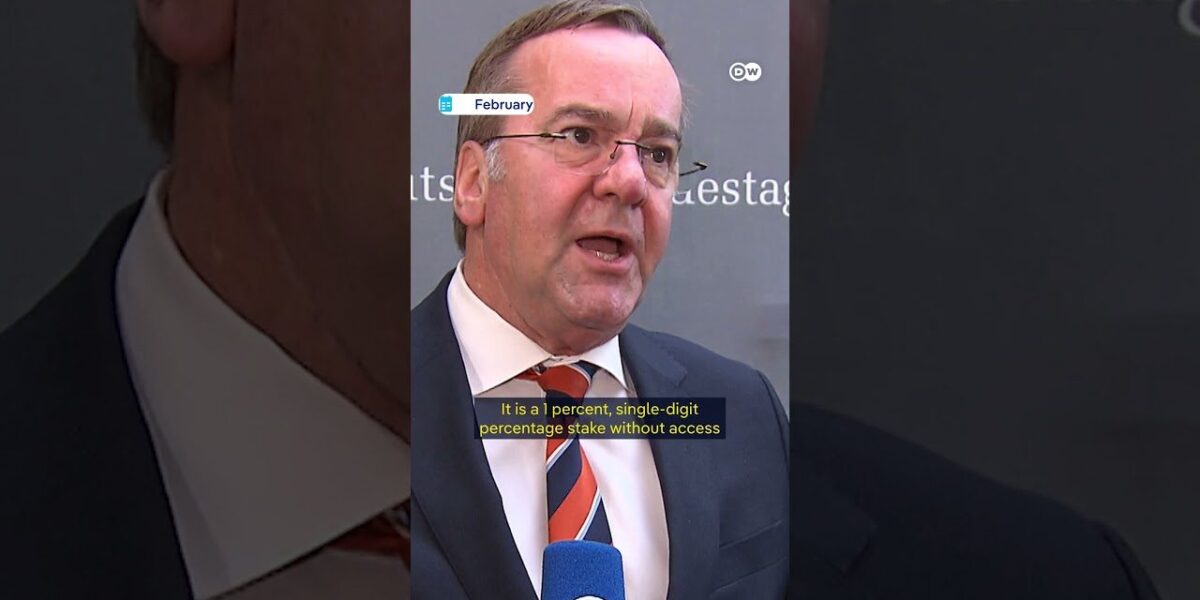
In response to the concerns regarding Peter Thiel’s involvement, the German Defense Ministry has sought to reassure the public and lawmakers. Defense Minister stated that the investor’s stake is a minimal, single-digit percentage, and crucially, comes without any operational control or insight into operative matters. “This is something we have been assured in writing by the contractor, by the company, that there is absolutely no access or insight into operational matters,” the Minister said.
This assurance aims to decouple the financial investment from the strategic and operational control of the defense technology. The ministry’s stance is that the current structure of the deal prevents any undue influence from problematic investors on how the equipment is used or developed. However, the effectiveness and long-term implications of such ‘firewall’ measures in defense contracts remain a subject of debate.
Broader Implications and Future Outlook
The approval of this drone deal highlights a complex interplay between national security needs, technological advancement, and ethical considerations in defense procurement. Germany, like many European nations, is navigating the challenges of modernizing its military capabilities in an increasingly volatile geopolitical landscape. The acquisition of advanced drone systems reflects a broader trend towards leveraging unmanned and autonomous technologies for defense purposes.
The controversy surrounding Peter Thiel’s involvement, however, serves as a potent reminder of the scrutiny defense contractors and their investors face. As governments increasingly rely on private sector innovation for military hardware, the ethical vetting of all stakeholders becomes paramount. Future defense deals may see more stringent requirements regarding investor backgrounds and corporate governance to mitigate potential reputational and ethical risks.
Looking ahead, the focus will be on the operational performance of the newly acquired drone systems and the extent to which the German armed forces can effectively integrate them into their existing capabilities. Furthermore, the debate over ethical investment in defense industries is likely to persist, potentially influencing future policy decisions and procurement strategies in Germany and beyond.
Source: Germany greenlights controversial Peter Thiel backed drone deal | DW News (YouTube)

Related Articles
UK Pledges 120,000 Drones to Ukraine in Major Aid Package
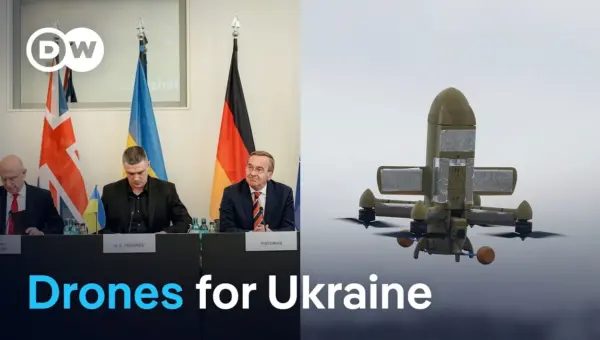
Britain has pledged 120,000 drones to Ukraine, marking its largest aid package of its kind, during a meeting of the Ukraine Defense Contact Group in Berlin. The meeting highlighted both strong international solidarity and ongoing challenges in aid delivery, as Germany also boosts its own defense capabilities.


Ukraine Strikes Russian Oil, Army Pushes Westward
Ukraine's spring offensive is underway, with Ukrainian forces making gains and forcing difficult choices for the Russian army. Meanwhile, Ukraine has intensified drone strikes on Russian oil infrastructure, aiming to cut off war funding. International interest in Ukraine's drone technology is growing, potentially reshaping global defense markets.


Bradley Armor Adapts to FPV Drone Warfare
Ukrainian Bradley fighting vehicles are now equipped with added netting to counter the growing threat of FPV drones. This adaptation aims to detonate drone explosives further from the vehicle's armor, allowing its protection to withstand the impact. The modifications reflect the ongoing evolution of armored warfare tactics.