Iran Talks Collapse Amidst Trump’s Aggressive Stance
Negotiations between the U.S. and Iran have collapsed due to Donald Trump's continued blockade of the Persian Gulf and threats. Iran refused to attend talks, citing a lack of trust and demanding an end to aggression. The breakdown highlights a critical juncture, forcing a choice between continued conflict or a genuine diplomatic path.

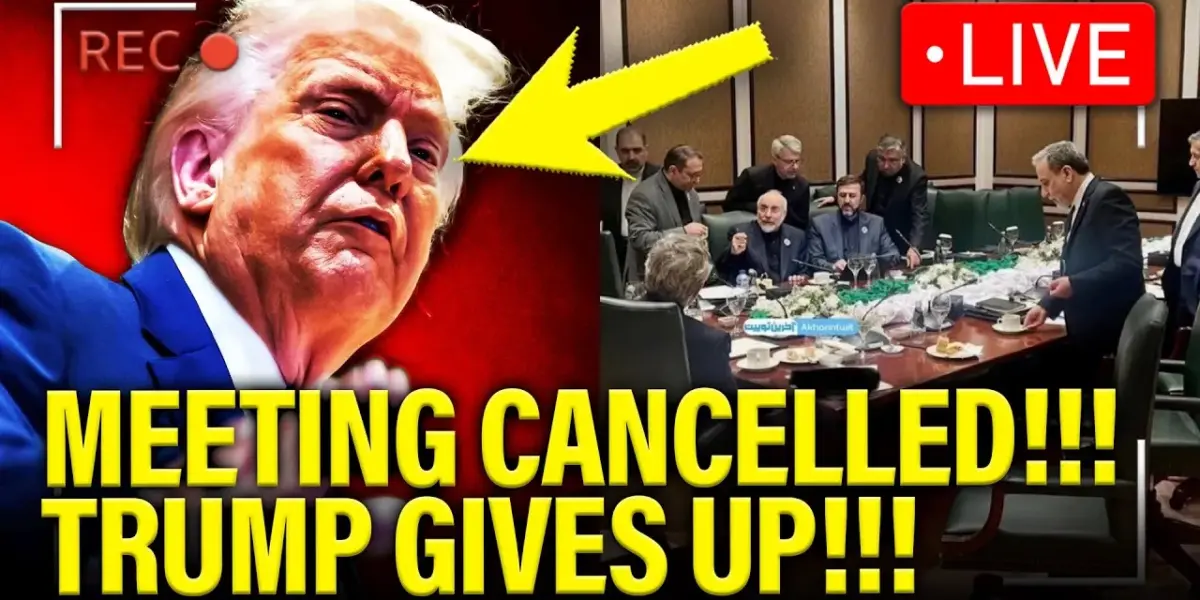
Iran Talks Collapse Amidst Trump’s Aggressive Stance
Negotiations between the United States and Iran, set to take place in Islamabad, Pakistan, have been abruptly canceled. The breakdown occurred because Donald Trump continued to blockade the Persian Gulf and issue threats against Iran. Iran had clearly stated its non-negotiable points and a 10-point framework that Trump had previously agreed to.
Iran refused to attend, stating they would not be present simply to have their position misrepresented. They do not trust the United States to engage in good faith negotiations.
Iran’s stance is clear: they will not participate unless the U.S. naval blockade of the Persian Gulf ends. They also demand an end to the interdiction of Iranian ships and a halt to threatening social media posts.
Iran believes their presence would be used to distort the truth about the negotiations. They feel the U.S. is using talks as a way to achieve what it couldn’t on the battlefield during the war.
Two Paths Forward: War or Diplomacy
The situation presents two distinct paths, according to analysts. One path leads to continued military conflict, which U.S. military leaders have warned could cost tens of thousands of American lives. This path, it is argued, would likely involve further war crimes.
The other path is diplomacy and negotiation. Iran insists that if the U.S. chooses the negotiation path, it must show respect.
If respect is not shown, Iran suggests the U.S. should instead choose the path of war. Iran is calling for an end to threats of destroying infrastructure and killing their people.
They want appropriate negotiation or no negotiation at all. This firm stance led to Iran’s refusal to appear in Islamabad for talks with U.S. representatives.
Market Reaction and Trump’s Response
Following the cancellation of the talks, financial markets began to decline sharply. This reaction highlights the global economic implications of such diplomatic failures. Observers noted that countries witnessing Donald Trump’s behavior might perceive him as weak and unreliable, citing his history of bankruptcies and business failures.
In response to the collapsed talks, Donald Trump issued a statement. This statement was widely criticized as pathetic and embarrassing, reflecting a perceived humiliation ritual for the United States. The speaker contrasted this approach with past presidencies, like that of Barack Obama, who were seen as using clear, carefully chosen words that carried significant weight.
Historical Context and Presidential Communication Styles
Historically, U.S. presidents have often projected strength through quiet confidence, allowing their actions and words to speak for themselves. This approach, sometimes referred to as ‘walking softly and carrying a big stick,’ meant their pronouncements held authority without needing overt threats. The contrast is drawn with Trump’s style, which is characterized by public boasts of power and threats of destruction.
The speaker recalled how during the Obama administration, minor controversies received extensive media coverage, while more significant geopolitical developments, like North Korea’s nuclear advancements under Kim Jong-un, were sometimes downplayed. This is contrasted with the current situation where North Korea, now a nuclear power, conducts missile tests with little headline attention, a situation the speaker attributes to Trump’s perceived weakness and the media’s focus on his actions.
Critique of Trump’s Leadership and Decision-Making
The core criticism leveled against Trump is a lack of competence and a tendency to exacerbate problems through poor decision-making. His business failures are cited as evidence of a consistent pattern of poor judgment. The analogy is made to his controversial suggestion during the COVID-19 pandemic to inject disinfectant, comparing it to his foreign policy approach, which is seen as self-destructive and counterproductive.
The speaker argues that Trump’s strategy in Iran, involving a naval blockade during ceasefire talks, interdicting ships, and issuing threats, is akin to a nonsensical and harmful action. Iran’s refusal to participate is seen as a rejection of this erratic behavior, with Iran stating they cannot even dignify being in a room with such conduct.
Pakistan’s Role and Diplomatic Overtures
Pakistan has been serving as a mediator in these delicate negotiations, a role in which they have invested significant effort. The country’s attempts to broker a deal are acknowledged, with credit given for trying to facilitate a process. Pakistan’s position, supported by their people, has been to urge the U.S. to end the naval blockade, questioning the logic of a ceasefire alongside ongoing blockades.
A week prior, Iran’s Foreign Minister, Araghchi, made a diplomatic overture by partially opening the Strait of Hormuz as a gesture of goodwill, linked to a ceasefire agreement in Lebanon. This was seen as an attempt to de-escalate tensions and encourage reciprocal action from the U.S. The expectation was that this would bring the parties to the table to discuss the agreed-upon 10-point framework.
Misinterpretation of Diplomatic Gestures
The speaker suggests that Iran, through Araghchi, genuinely intended to send a positive message and facilitate progress. Araghchi reportedly invested significant political capital within Iran to make this gesture, aware of potential backlash from hardline elements like the Islamic Revolutionary Guard. He trusted Pakistan to use this overture to bring the U.S. to serious negotiations.
However, Donald Trump’s reaction was perceived as the opposite of reciprocation. Instead of acknowledging the gesture, Trump claimed victory, stating Iran had surrendered and agreed to everything. This misrepresentation and public boasting embarrassed Iran and undermined the civilian leadership involved in the diplomatic effort, leading to their withdrawal from the scheduled talks.
The Two Paths Revisited: Obliteration or Negotiation
The speaker reiterates the two paths: obliteration or negotiation. The path of obliteration, involving control of the Strait of Hormuz and regime change, is acknowledged as having a military plan, though one with immense human cost. This path is strongly opposed by the speaker due to the potential for war crimes and genocide.
The alternative is negotiation. If the U.S. wishes to negotiate, it must allow Iran to save face, especially after Trump’s mischaracterization of events.
The speaker proposes a constructive approach: acknowledging Iran’s gesture, removing the blockade, and setting a clear timeline for negotiations. This would involve agreeing to allow a specific number of ships through and de-escalating tensions.
Crafting a Path to Resolution
A potential path forward could involve a weaker version of the Joint Comprehensive Plan of Action (JCPOA), the Iran nuclear deal. Even a modified agreement could be seen as a success if it establishes an open line of communication after 47 years. This could be the start of building trust, with figures like JD Vance engaging in dialogue with Iranian representatives.
If Iran is deemed a terrorist regime, the speaker suggests pursuing the war option. However, if not, then diplomatic channels should be respected. The speaker criticizes the current approach, arguing that Trump’s actions have destroyed previous opportunities for stronger deals and have led to the current impasse.
Expertise and Effective Diplomacy
The speaker advocates for bringing in actual technical experts, including nuclear specialists and representatives from the International Atomic Energy Agency (IAEA), to handle negotiations. This contrasts with involving individuals like Jared Kushner or Jason Whitlock, who are seen as unqualified. Including moderate Republican senators and members of the Armed Services Committee could also be beneficial.
A proposed timeline involves scheduling talks for mid-May, establishing an interim agreement, and ensuring oil flows and the Strait of Hormuz opens slightly. This would require acknowledging a new reality and potentially working with Iran on solutions, even if it’s not an ideal scenario. Holding an international conference with NATO allies, European nations, and Middle Eastern countries could help address the situation collectively.
Ineffectiveness of Blockades and Perceived Weakness
Despite U.S. actions, the blockade has proven ineffective, with numerous Iranian tankers and cargo ships bypassing it. The interdiction of just two ships is mocked by Iran, who liken the U.S. Navy’s actions to those of pirates. This contrasts sharply with the U.S. Navy’s historical image and capabilities.
Simultaneously, the Trump administration has, paradoxically, released sanctions on Iran, allowing them to transact and survive. This, along with extended sanctions relief for Russia, is seen as further evidence of a confused and ineffective strategy. The speaker concludes that the international community perceives these actions as utter weakness.
The Cycle of Broken Promises and Misinformation
The speaker criticizes Trump’s tendency to make grand pronouncements about policy achievements, such as healthcare reforms or drug price reductions, which often fail to materialize or are misrepresented. The example of the ‘Door Dash grandma’ highlights how proposed savings were minimal and did not address significant medical costs.
The current situation with Iran is characterized by a prolonged ‘two-week loop’ of extended ceasefires that Iran never requested. This indefinite extension, driven by Trump’s desire to avoid direct confrontation while maintaining a facade of strength, is seen as a tactic that benefits no one and only prolongs uncertainty.
A Call for Authentic Negotiation
If Trump wished to de-escalate, the speaker suggests a more honest approach. Instead of vague extensions, he could have stated that progress was being made, that technical details required further discussion, and that unnecessary escalation would be avoided while exploring a deal. This would have maintained a credible diplomatic posture.
The speaker emphasizes that the current strategy, driven by incompetence and a lack of understanding of negotiation principles, is deeply flawed. The goal should be to find a resolution, not to engage in self-defeating rhetoric and actions that alienate potential partners and destabilize the region.
Source: LIVE: Ben Meiselas RESPONDS to BREAKING NEWS!! 4/21/2026 (YouTube)

Related Articles


Trump’s Iran Standoff Exposes Weakness, Kash Patel Lawsuit Falters
President Trump's foreign policy in Iran faces scrutiny amidst claims of unpredictable actions and hindered diplomacy. Meanwhile, Kash Patel's defamation lawsuit against The Atlantic encounters significant legal hurdles, raising questions about public figures and the media.
Trump’s Iran Standoff: Talks Collapse Amidst Threats
U.S.-Iran talks have collapsed amid a continued naval blockade, with Iran refusing to negotiate under threat. President Trump expects renewed conflict, while Iran warns of retaliation. Conflicting reports and aggressive rhetoric create a volatile situation with global implications.
Trump’s PACs Are Empty: Millions Raised, Millions Spent on Lawyers
Donald Trump's Super PACs are facing a severe cash shortage despite raising over $312 million this year. The money is primarily going towards legal bills, leaving the PACs with little cash on hand and significant debts.