Iran Deal: Trump’s ‘Lipstick on a Pig’ Threatens Global Stability
Former diplomat Alan warns that any Iran deal brokered by Donald Trump could be a 'lipstick on a pig' scenario, potentially worse than past agreements. The conflict has disrupted global systems, creating a new, less stable reality with no easy military solutions. Both sides face internal pressures, complicating negotiations and increasing the risk of further escalation.

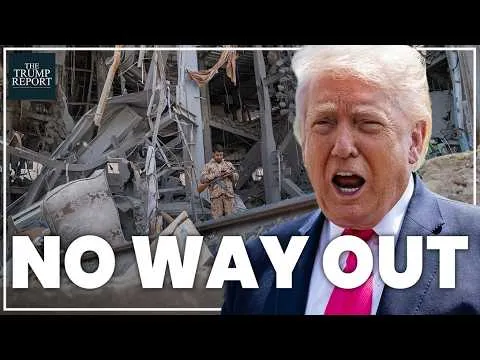
Trump’s Iran Deal: A Risky Gamble?
Former US diplomat Alan suggests that any new deal Donald Trump might strike with Iran could be worse than previous agreements, calling it ‘lipstick on a pig.’ This assessment comes amid ongoing uncertainty surrounding a potential ceasefire extension and future negotiations between the US and Iran. The situation is complex, with both sides issuing conflicting statements, making it difficult to discern the true intentions or progress.
The core issue is that the global economy and a significant part of the world have been disrupted. Alan argues that this disruption cannot be easily fixed or returned to its previous state. There is no simple military answer to the current conflict, and the US administration appears unwilling or unable to engage in serious, sustained peace talks.
Uncertainty Surrounds Ceasefire Talks
Donald Trump recently expressed doubt about the extension of a ceasefire set to expire, suggesting Iran might threaten new actions if fighting continues. However, Alan advises caution, noting that statements from both sides are often designed to project strength rather than reflect reality. He points out that even without an official extension, neither side is legally bound to resume hostilities.
The expert believes that, despite public threats, neither the US nor Iran truly wants to restart fighting. The primary entity pushing for renewed conflict appears to be Israel, which Alan identifies as a separate, complicating factor. Both major parties seem hesitant to escalate further, even though they enjoy threatening to do so.
Trusting the Words of Negotiators
A recurring theme on the show is the difficulty in trusting official statements from either side. Reports emerged that Iranian negotiators had not yet traveled to Islamabad for scheduled talks. Alan emphasizes that until concrete actions are observed, such as diplomats being present in negotiation rooms, these reports should be treated with skepticism.
He explains the practicalities: a flight from the US to Pakistan takes much longer than one from Iran. This means Iran could potentially decide at the last minute whether to attend, while the US might commit to traveling without a firm Iranian commitment. There is likely a significant gap between public pronouncements and private diplomatic communications.
The Stalemate: Why Talks Are Difficult
Alan highlights that successful negotiations require both parties to be present and willing to talk. If Iran does not send representatives, any meeting would essentially be a one-sided monologue, achieving nothing. While it’s theoretically possible for US officials to travel and wait in vain, Alan considers this unlikely.
He suggests Iran might be overplaying its hand. Strategically, Iran holds a strong position, not due to military strength, but because of its leverage over the Strait of Hormuz.
While blockades on Iranian ports are effective in the long run, control of the Strait offers more immediate power. If Iran acts wisely, it should at least listen to US proposals, as there is little to lose.
Domestic Politics Complicate Negotiations
Both the US and Iran face internal political pressures that hinder negotiations. The US is approaching midterm elections, making any concessions by Donald Trump vulnerable to criticism from Democrats as a sign of weakness. In Iran, a complex power dynamic is emerging, with the IRGC gaining more overt influence.
Iran currently lacks a clear figure who can definitively settle internal disputes between different factions. While a Supreme Leader exists, he doesn’t possess the same institutional power as his predecessors. These internal power struggles can prolong negotiations, as no group wants to appear weak or pro-American while vying for influence.
A New, More Hardline Iran
The war has fundamentally altered the negotiating landscape. Alan states that the US is now dealing with a vastly different Iran compared to the past.
The conflict has, in his view, ‘decapitated’ the Iranian leadership, leading to a new generation that is more hardline, radical, and militaristic. This new leadership is also less trusting of the United States, making the job of negotiators infinitely harder.
The context of the war itself is crucial. When the JCPOA (Iran nuclear deal) was negotiated in 2015, there was no active war.
While US-Iran relations were poor, both countries’ internal politics allowed for negotiations. That is not the case today, as the current conflict creates significant domestic political constraints.
The JCPOA Negotiations: A Long and Winding Road
Negotiations for the JCPOA were lengthy, taking about 20 months to reach an initial agreement and around five years from start to finish. Alan was involved from 2010, with the first three years proving unproductive. Progress only began in 2013 with the election of President Hassan Rouhani and President Obama’s decision to prioritize the nuclear threat.
This historical context shows that swift resolutions are unlikely. Even with political will, reaching a comprehensive agreement requires sustained effort and patience, a stark contrast to the rapid deal-making sometimes pursued today.
Trump’s Promises vs. Reality
Donald Trump has claimed that any deal he makes with Iran will be superior to the JCPOA, promising safety and security. However, his public statements often lack specific details on critical issues like enriched uranium. Alan believes there is little correlation between Trump’s words and the underlying reality.
He argues that any deal Trump brokers now will likely be worse than what could have been achieved before the recent conflict began. Trump may have to present a flawed agreement as a success, a tactic he has employed before. The fundamental problem is that the conflict has given Iran new strategic deterrence methods, such as control over the Strait of Hormuz, which was not a significant issue previously.
Damage Limitation: The New Goal
The primary objective now, according to Alan, is not to secure a ‘good’ deal, but to minimize the damage already done and prevent further harm. He suggests Trump should declare victory and withdraw, allowing the international community to address the Strait of Hormuz issue separately. The current reality is that Trump cannot secure a favorable deal with Iran.
His best option is to negotiate the ‘least bad’ deal possible. The possibility exists that any new agreement might resemble the JCPOA, the very deal Trump previously abandoned. Alan notes that Trump could have improved the JCPOA instead of discarding it, which would have been a more constructive approach.
Verification: The Key to Nuclear Deals
A crucial element of any nuclear agreement with Iran is verification, primarily through International Atomic Energy Agency (IAEA) monitoring. Without this, the international community is effectively ‘blind’ to Iran’s nuclear program. The JCPOA included provisions for rigorous inspections, including the Additional Protocol, which Iran has been reluctant to fully implement.
Iran, as a signatory to the Non-Proliferation Treaty (NPT), has rights but also responsibilities. While Iran asserts its right to enrich uranium for peaceful purposes, there is no explicit right to enrichment itself under the NPT. Given Iran’s past non-compliance, more intrusive inspections will be necessary for any future agreement to be credible.
Concessions and Demands in Negotiations
Negotiations are a delicate balancing act. The US likely seeks to prevent any indigenous enrichment by Iran and wants Iran’s enriched uranium exported or down-blended. A key US objective is also the swift reopening of the Strait of Hormuz, which has become a critical economic issue that cannot be ignored.
Iran, on the other hand, wants guarantees against future attacks from the US and Israel. While international law might not offer strong protection, Iran has gained de facto leverage through its control of the Strait. Iran seeks financial compensation for economic damages, possibly through unblocking assets, reparations, or sanctions relief.
Iran’s Economy and Resilience
While Iran’s economy is suffering immensely, with significant job losses and destruction, the regime has proven resilient. Alan draws an analogy to boxer Mike Tyson’s quote: ‘Everyone has a plan until they’re punched in the face.’ Iran has endured significant hardship before, including an eight-year war, and has developed strategies to cope with pain.
Despite the economic toll, the regime is unlikely to capitulate if it believes doing so would weaken its hold on power. The seizure of the Iranian flagship MV Tuska by the US is seen as having no significant impact on the negotiations. Other ships are reportedly getting through the blockade, indicating it is not entirely effective.
The War’s Unintended Consequences
Alan dismisses the rationale behind the recent war, calling it ‘stupid.’ He argues that Iran was not an imminent threat and that the war triggered the worst energy supply disruption in history. While the war may have temporarily denied Iran the ability to project power, it has likely increased its desire to do so in the future.
Crucially, the conflict may have significantly increased Iran’s motivation to develop nuclear weapons. Intelligence suggested Iran had halted active efforts in 2003, but the current situation could change that calculus. The example of North Korea, which faces international condemnation but is not attacked, might serve as a model for Iran.
Economic Fallout: A Slow Burn
The full economic impact of the conflict is yet to be felt globally. The slow movement of supply ships creates a time lag, meaning consequences will unfold over months. Fertilizer shortages have already impacted planting seasons in Asia and Africa, and these effects will compound.
The complex, interconnected nature of global systems means that actions have second and third-order consequences. The disruption has broken a complex system, and the multiplication of effects is just beginning. Even if the conflict ends tomorrow, economic recovery will take a considerable time.
A More Militaristic Iran and Unstable Future
The outcome of this conflict will not return the world to its pre-war state. Instead, it is likely to result in a more embittered Iranian population and a more militaristic Iranian government focused on ‘guns over butter.’ The Middle East is expected to become less stable, with Gulf countries hedging their bets due to perceived vulnerabilities in US security guarantees.
Iran has developed new methods of strategic deterrence, including attacks on energy infrastructure and control of the Strait of Hormuz. These are powerful tools that the regime will be reluctant to relinquish. The new status quo will be less stable and more expensive globally.
Limiting Damage: The Only Path Forward
Alan concludes that this problem does not have a simple solution. The global system has been broken, and reconstitution to its previous state is impossible. However, better and worse outcomes are possible.
His advice to both sides is to commit to negotiations, even for limited agreements. He stresses that while not everything can be solved through talks, nothing can be solved without them.
The US administration’s apparent unwillingness to engage in sustained negotiations is a significant obstacle. The goal should be to avoid the worst-case scenarios by working out interim agreements, acknowledging that the new reality will be less stable and more costly.
Source: ‘Lipstick on a pig’ – Trump Iran deal will be worse than what he had already (YouTube)

Related Articles

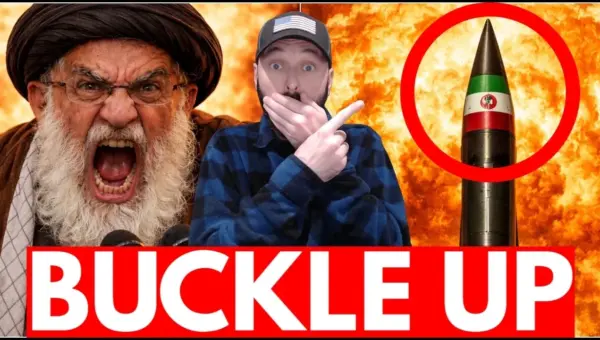
Iran Hides Missiles as War Clouds Gather
As a ceasefire nears its end, Iran is reportedly moving its ballistic missiles to hidden locations, signaling potential preparations for renewed conflict. The U.S. military stands ready to resume bombing campaigns if necessary, while diplomatic efforts face uncertainty with Iran's response to peace talks still pending. China's alleged involvement in supplying missile parts adds another layer of complexity to the volatile situation.


Internet Blackout Tanks Putin’s Approval Ratings
New approval ratings show a significant drop for Vladimir Putin, tied to widespread internet disruptions in Russia. The data indicates public frustration over loss of online access is greater than concerns about the war in Ukraine. This digital blackout presents a unique challenge to the Kremlin.
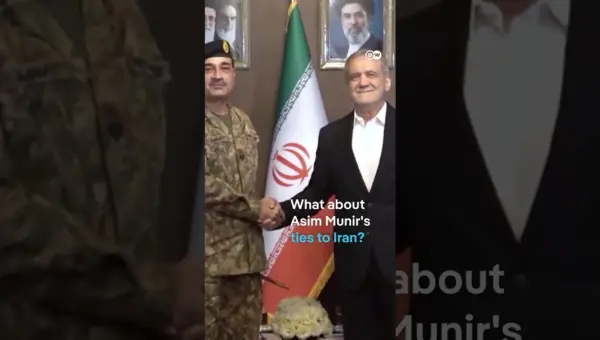
Pakistan Army Chief Acts as Trump’s Secret Diplomat
Pakistan's Army Chief, General Asim Munir, has become an unofficial diplomat, building a personal rapport with Donald Trump and mediating sensitive talks with Iran. This role highlights Pakistan's hybrid governance system, where the military plays a significant part in foreign policy. Munir's actions aim to stabilize the region and enhance Pakistan's global influence.