US Eases Russian Oil Sanctions Amid Drone Strikes
The US has extended a waiver on Russian oil sanctions for 30 days, allowing shipments already at sea to proceed. This comes as Ukraine continues drone strikes on Russian oil refineries, prompting Russia to bolster its air defenses. Meanwhile, Belarus faces increased scrutiny over military activity near Ukraine's border. Former President Trump has also hinted at a new operation targeting Cuba, and the EU is testing its joint defense response mechanisms.

US Extends Russian Oil Sanctions Waiver
The United States has quietly extended a waiver allowing certain transactions involving Russian oil. This decision permits oil already loaded onto tankers and at sea to be shipped for another 30 days. The US Treasury Department confirmed the update.
This waiver was first introduced about a month ago during the conflict with Iran, which caused global energy prices to rise. The waiver was originally set to expire on April 11 but has now been extended until May 16. US officials had previously stated they did not intend to renew these exemptions for Russian oil.
Treasury Secretary Scott Bassant had reiterated this stance, stating, “We will not be renewing the general license on Russian oil.” The exemption specifically covers oil that was on the water prior to March 11. This move comes as Ukraine continues its efforts to reduce Russia’s oil revenues.
Drone Attacks Target Russian Refineries
Ukraine has been conducting strikes on Russian oil refineries. Following a drone attack overnight on Saturday, a fire broke out at an oil storage facility in Toresk, located in Russia’s Kendar region.
Russian authorities reported that 224 people and 56 pieces of equipment were deployed to extinguish the blaze. No casualties or injuries were reported from this incident.
Separately, air raid alerts were issued in Russia’s Leningrad region due to another drone attack. Russian aviation authorities reported temporary restrictions on takeoffs and landings at Pulkovo Airport. Airports in Saratov, Penza, Samara, and Ulyanovsk also activated the “carpet plan,” a procedure for air traffic control during emergencies.
According to reports, a fire also broke out near the port of Vysotsk during a drone attack, but the regional governor stated there were no casualties or damage. Approximately 27 drones were reportedly shot down over the Leningrad region during the night.
Russia Strengthens Defenses Amid Attacks
As attacks on Russian oil refineries continue, Russia is working to strengthen the protection of its critical infrastructure. Authorities in the Leningrad region are reportedly rushing to form new air defense units and mobilize reservists. The independent news outlet reported that regional authorities have launched an emergency call for reservists to defend oil terminals at Ust-Luga and Primorsk.
The governor of the Leningrad region stated that new units would be deployed to industrial sites and critical infrastructure. He did not directly mention Ukraine but noted a decision was made to enhance air defense over the region against drone attacks.
Russian sources claim a sharp increase in drone activity, reporting that 11,211 drones were intercepted in March. This is significantly more than in February. Reserve soldiers are being offered contracts ranging from two months to several years.
Their primary task would be detecting and destroying aerial targets over ports. Contracts are reportedly extended until the end of Russia’s “partial mobilization,” a status not formally lifted by President Putin.
Belarusian Military Activity Raises Concerns
Belarus is increasing tensions along its border with Ukraine. Ukrainian President Zelenskyy, citing intelligence data, stated that Russia may attempt to draw Belarus into the war again.
He reminded the Belarusian leadership of the fate of Nicolas Maduro, implying potential consequences. Intelligence suggests the construction of roads toward Ukrainian territory and the development of artillery positions are underway in Belarusian border areas.
Belarusian leader Alexander Lukashenko signed a decree calling up reserve officers for military service. His press service announced on April 17 that men under 27 from the reserve officer pool will be called up for service in the Belarusian armed forces and border guard units. This applies to those who did not complete compulsory or reserve service and are not eligible for deferment.
The statement says these measures are carried out annually on a planned basis. However, Belarus has repeatedly called up reserve officers since the start of Russia’s full-scale invasion of Ukraine.
Trump Hints at New Operation Targeting Cuba
Former US President Donald Trump announced a potential new US military operation, hinting that Cuba could be the target. During an appearance at a Turning Point USA event, Trump stated that a “new dawn for Cuba” would soon come with the help of the United States.
He also described himself as a peacemaker and claimed that before he took office, the United States was in decline. He suggested this strength would bring about a day 70 years in waiting, calling it a “new dawn for Cuba.”
In March, Trump described Cuba as being in a deep crisis and suggested both friendly and non-friendly takeovers of power were possible. He claimed Cuba would collapse soon and that the United States was actively working toward that outcome.
He mentioned working with Cuban Americans in Miami whose families had suffered. Trump also announced the upcoming release of materials related to UFOs, stating his administration found “very interesting files” during a review.
EU Tests Joint Defense Response
The European Union is set to conduct its first simulation exercises on activating the mutual assistance clause in the event of an armed attack. These drills aim to test how the bloc would respond if one of its member states came under attack.
EU foreign policy chief Josep Borrell is expected to oversee these “tabletop” exercises next month. The goal is to assess the bloc’s political, rather than military, response to such a scenario.
Article 42.7 of the EU treaty states that if a member state faces armed aggression, other member states are obliged to provide aid and assistance by all means in their power. However, it does not specify military action and includes provisions for neutral countries like Austria and Ireland. Most EU member states are also part of NATO, which has Article 5 on collective defense.
Doubts about the reliability of NATO’s Article 5, partly due to remarks by Donald Trump, have renewed interest in EU security mechanisms. Increased risk of attacks on EU states, such as a drone incident targeting Cyprus in March, has also driven this interest.
Poland Bars Russian and Belarusian Athletes
Poland will not allow athletes from Russia and Belarus to compete in the European Aquatics Championships set to take place in the country next year. The Polish Swimming Federation stated they will not permit Russian and Belarusian athletes to participate, despite a decision by World Aquatics to lift sanctions. Poland believes that as long as Russia’s armed aggression against Ukraine continues, neither Russians nor Belarusians should compete under their national flags.
Poland does not plan to boycott other competitions to avoid harming the careers of its own athletes. In February, the European Aquatics Federation allowed Russian and Belarusian athletes to compete in junior events under their national flags and anthems. These restrictions have now also been lifted for senior athletes.
Source: 💥Putin in mourning! Powerful explosions rattle Kremlin. Trump issues war update (YouTube)

Related Articles
US Eases Russian Oil Sanctions, Sparking Outrage in Ukraine
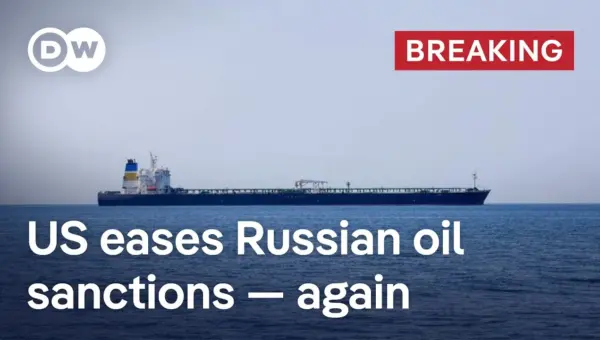
The United States has extended a waiver allowing sanctioned Russian oil to flow, drawing sharp criticism from Ukraine and European allies. Kyiv views the move as a financial boon for Russia, potentially undermining efforts to end the war. The decision comes amid volatile global energy prices and raises questions about the effectiveness of international sanctions.

Ukraine Strikes Deep Inside Russia’s Rear
Ukraine is striking deep inside Russia's industrial heartland, targeting strategic plants and export routes. These drone attacks aim to cripple Moscow's ability to wage war and are forcing Russia to defend its interior, creating significant economic and security challenges.

Russian TV Calls for Kyiv’s Annihilation
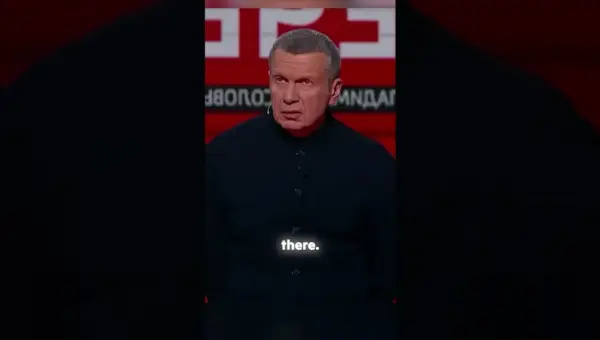
Russian state television has broadcasted extreme rhetoric calling for the complete destruction of Ukraine's capital, Kyiv. Prominent Kremlin mouthpiece Vladimir Solovyov suggested Kyiv should be "wiped off the face of the earth," even proposing Iran as a potential actor for such an act. This escalation in propaganda signals a hardening stance and a disregard for humanitarian norms.