Trump’s Divine Claims Fuel Feud with Pope Francis
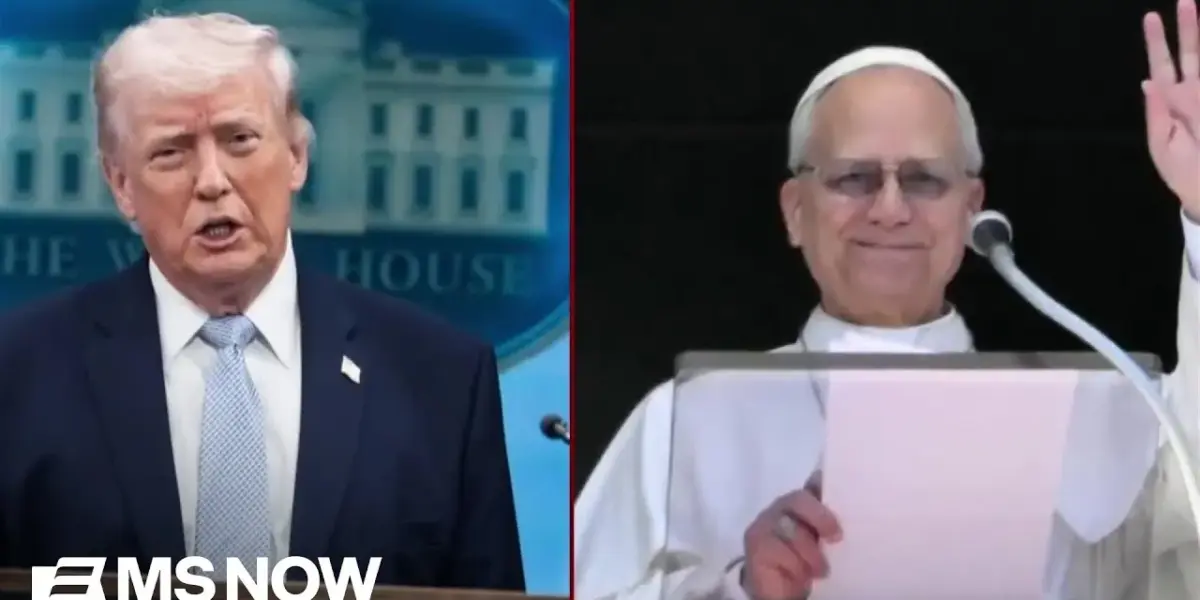
Former President Donald Trump has escalated his feud with Pope Francis by sharing an AI image of himself as a Jesus-like figure and planning a marathon Bible reading. Analysts suggest his actions are fueled by those around him who encourage him to see himself as divinely appointed, a sentiment echoed by some political allies.

Trump’s Bold Claims Spark Controversy
Former President Donald Trump has ignited a firestorm of controversy with his recent actions and statements, leading to a widening rift with Pope Francis. The dispute escalated this week when Trump shared an AI-generated image depicting himself as a Jesus-like figure. This move drew widespread outrage and accusations of blasphemy from many Christians.
Trump later removed the image, explaining that he believed it showed him as a doctor. Following this incident, it was revealed that he plans to participate in a marathon reading of the entire Bible.
He is scheduled to read a passage from the Old Testament book of 2 Chronicles. Engaging in a public disagreement with the Pope requires significant boldness, and Trump appears to be pushing these boundaries further.
Surrounded by Adulation, Trump Sees Himself as God’s Representative
Experts suggest that Trump’s actions and rhetoric are influenced by those close to him. They believe he is surrounded by individuals who encourage him to see himself as a divine figure or God’s direct representative on Earth. This perspective, according to analysts, is why Trump does not view his public statements and image-sharing as risky, especially with his evangelical base.
Instead, he perceives these actions as consistent with the message he receives and reciprocates from his supporters. This symbiotic relationship fuels his confidence and shapes his public persona. The way he speaks about himself has also shifted recently, with him frequently stating, “God is good.” This phrase is common in church settings but has not been part of Trump’s typical speech patterns for decades.
Echoes of Divine Status Among Allies
The sentiment of elevating Trump to a near-divine status is echoed by some of his political allies. For instance, Congressman Troy Nels described Trump as “better than sliced bread” and, in his opinion, “almost a second coming.” Nels went on to say that while the Pope has a difficult job, Trump’s role is the “toughest job in the world.”
These statements, which directly reference the second coming of Christ, are seen by many as deeply blasphemous. However, they highlight a willingness among some close to Trump to adopt a position of extreme deference. This level of admiration and perceived divine connection has been building over time, surprising those not closely following these circles.
A History of Religious Symbolism
This is not the first time Trump has used religious symbolism in a controversial manner. During his first term, he signed Bibles, an act that troubled many who grew up with strict religious traditions. These actions are seen as a departure from traditional religious norms and a way to connect with his base on a spiritual level.
The controversy intensified around Easter Sunday when Trump made comments about “decimating a civilization” on Resurrection Day. Critics argue that these remarks, coupled with the AI image incident, have significantly worsened his public image and made his allies appear misguided.
Critiques from Vance and the Broader Implications
Even allies like J.D. Vance have expressed concern over the intersection of politics and theology.
Vance suggested that just as public officials should be careful discussing policy, the Pope should be cautious when speaking on theological matters. He stated that lecturing the Pope on theology means one has “lost the plot.”
Beyond the theological disputes, the underlying ideology connecting Trump’s base is a significant concern. This brand of Christianity is often intertwined with notions of white nationalism and white supremacy. This ideology aims to exclude and marginalize people, favoring a select group in the United States.
Pope Francis’s Inclusive Message Contrasts Sharply
The Pope’s message stands in stark contrast to this exclusionary ideology. Pope Francis is known for his inclusive approach, traveling through Africa and engaging with people of all faiths. He refers to people of other faiths as “our friends,” emphasizing a message of universal love.
This inclusive stance directly challenges the more exclusive version of Christianity promoted by some in the U.S. The Pope’s message is not one of condemnation for those who do not follow him, but rather an embrace of diversity and understanding across different beliefs.
Looking Ahead
As the disagreement between Donald Trump and Pope Francis continues, the focus remains on the intersection of faith, politics, and national identity. The upcoming Bible reading by Trump and the ongoing dialogue surrounding these controversial statements will likely shape public perception and political discourse.
Source: Trump is ‘surrounded by people who are telling him that he is God’ amid feud with Pope Leo (YouTube)

Related Articles
Mayor Mamdani Delivers on Promises, Tackles Budget Woes
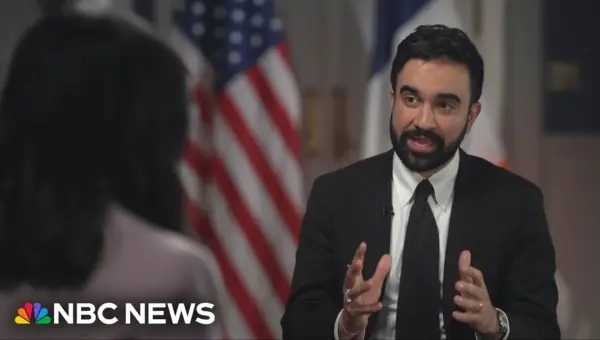
Mayor Zohran Mamdani outlined progress on his campaign promises, including universal childcare and faster buses, during his first 100 days. He is addressing a $5.4 billion budget shortfall through progressive taxation and plans for city-run grocery stores. Mamdani also discussed his productive relationship with President Trump and his commitment to New York City.
GOP Rebels Defy Trump on Surveillance Bill
Twenty Republican lawmakers defied President Trump this week, voting against a renewal of the Foreign Intelligence Surveillance Act (FISA). The dissent forced a short-term extension of the law and signals growing divisions within the GOP, raising questions about Trump's influence. This rebellion highlights internal power struggles and principled stands on surveillance within the party.
Trump Mulls Cuba Action Amid Secret Talks, Pentagon Prep
U.S. officials held secret talks in Cuba while the Pentagon reportedly planned military options, raising questions about future U.S. policy. An expert believes military action is unlikely due to Cuban military loyalty and economic interests, suggesting a focus on economic reforms instead.