Palantir Stock Soars 14x on AI Hype, Faces Short Seller Scrutiny
Palantir's stock has surged 14-fold, reaching a $300 billion market cap, fueled by its successful AI integration. Despite strong revenue growth and profitability, the company faces scrutiny from short sellers like Michael Bur and a very high stock valuation.

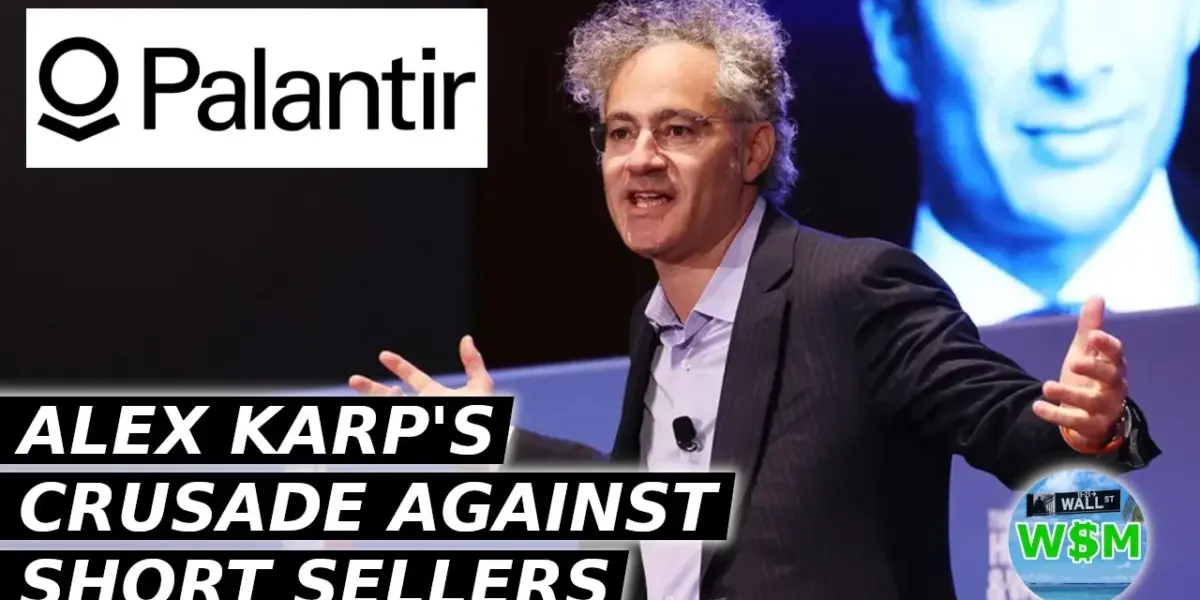
Palantir Stock Skyrockets on AI Integration, Faces Fierce Short Seller Attack
Palantir Technologies, a company known for its controversial work with government agencies, has seen its stock price surge an astonishing 14 times since its initial public offering less than six years ago. This dramatic rise has propelled the software firm’s market capitalization to just over $300 billion.
In 2025, Palantir reported revenues of $4.5 billion, resulting in a price-to-sales ratio of 67. This high valuation has drawn the attention of prominent short sellers, including Michael Bur, famous for his role in “The Big Short.” At the center of this market debate is Palantir’s outspoken CEO, Alex Karp, who frequently defends his company against critics and short sellers on public platforms.
Palantir’s Software: From Government Roots to Commercial AI
Founded in 2003, Palantir’s origins lie in developing specialized software for U.S. military and intelligence agencies. The company’s first product, Gotham, launched in 2008, served as a crucial tool for agencies like the CIA and FBI.
Gotham allowed these organizations to consolidate and analyze vast amounts of data from various sources, aiding in complex operations. This initial focus on government needs laid the groundwork for its expansion into the commercial sector.
In 2015, Palantir introduced Foundry, a similar platform designed for private businesses. Foundry helps companies integrate and analyze their internal data, such as supply chain and inventory information, to improve decision-making. Today, government contracts and commercial clients each contribute roughly half of Palantir’s revenue.
Unlike typical software subscriptions, Palantir’s products require significant customization, often involving on-site engineers. This hands-on approach leads to higher pricing compared to standard enterprise software solutions.
AI Integration Fuels Revenue Growth and Stock Surge
After a period of lackluster stock performance following its direct listing in late 2020, Palantir’s shares began a dramatic ascent in 2024 and 2025. The company’s revenue growth, which had slowed to 17% in 2023, unexpectedly accelerated to 29% in 2024 and an impressive 56% in 2025. This turnaround is largely attributed to the successful integration of artificial intelligence into its offerings.
Palantir launched its AI platform, known as AIP, in 2023. AIP acts as an interface connecting to various large language models, such as ChatGPT and Gemini. Crucially, AIP integrates with Palantir’s existing Gotham and Foundry platforms, allowing the AI to access and analyze a company’s specific data.
This capability transforms AI from a generic tool into a powerful problem-solver. For instance, AIP can provide a logistics manager with a validated, actionable solution to a supply chain disruption, complete with steps to execute the plan.
Short Seller Criticisms and Market Doubts
Despite its recent success, Palantir faces significant skepticism from investors like Michael Bur. Bur’s primary criticism centers on Palantir’s use of “forward-deployed engineers” (FDEs).
These engineers customize the software for each client, a process Bur argues is costly and blurs the line between a high-margin software business and a tech consulting firm. He suggests that costs associated with these engineers are sometimes misclassified as research and development instead of the cost of goods sold, potentially inflating profit margins.
However, data suggests this criticism may not fully hold. While Palantir’s accounting for FDE expenses is not fully transparent, research and development costs as a percentage of revenue have significantly decreased over time, falling from 25% in 2021 to 12% in 2025.
This trend indicates that a larger portion of FDE costs may already be accounted for as cost of goods sold. Palantir reported an operating profit of $1.4 billion in 2025, representing a healthy 32% of revenue, a strong margin for a rapidly growing company.
Another concern raised by short sellers is the increasing competition in the AI software space. Companies like OpenAI and Anthropic have introduced new enterprise products that appear to offer similar capabilities to Palantir’s AIP. While these new offerings could pose a challenge, they have only recently been released, and their long-term impact on Palantir’s market share remains uncertain.
CEO Alex Karp’s Defense and Cult-Like Following
Palantir CEO Alex Karp has become a prominent figure in defending the company, often engaging in public disputes with short sellers like Michael Bur. Karp frames the company’s mission as vital to national security and American innovation. He views short sellers not just as financial speculators but as adversaries seeking to undermine a company that benefits ordinary investors and supports the U.S. military.
Karp’s outspoken nature extends to political commentary. He frequently highlights Palantir’s work with the U.S. military and immigration agencies, positions that have led to protests against the company.
He contrasts Palantir’s stance with other tech companies, framing his company as a defender of national interests against what he describes as a politically captured Silicon Valley. This narrative has resonated with a dedicated base of retail investors who have organized online, often viewing Karp as a visionary leader.
This strong retail following has contributed to the company’s high valuation. While Palantir’s business fundamentals, particularly its AI integration, are strong, its market capitalization of approximately $36 billion (as stated in the transcript, though the article mentions $300 billion earlier, suggesting a potential discrepancy or update) and a price-to-revenue multiple nearing 70 times are considered very high by traditional valuation standards. Alex Karp himself has sold substantial amounts of his personal stock holdings since the company went public, totaling $3 billion, without making any open market purchases.
Market Impact and Investor Considerations
Palantir’s stock performance demonstrates the market’s strong reaction to successful AI integration in enterprise software. The company’s ability to connect AI models to proprietary data sets has created a unique value proposition. However, the high valuation raises questions about future growth expectations and potential stock volatility.
Investors should consider the ongoing debate between Palantir’s growth potential, driven by AI, and the risks associated with its high valuation and the competitive landscape. The company’s unique business model, blending software with significant service components, also warrants careful examination. The strong, often vocal, retail investor base adds another layer of complexity to understanding the stock’s true market value.
The next major catalyst for Palantir will likely be its upcoming quarterly earnings reports, which will provide further insight into its revenue growth and profitability. Investors will be watching closely to see if the company can continue to meet the high expectations set by its current market performance.
Source: Palantir's Crusade Against Short Sellers (YouTube)

Related Articles


Anthropic’s Opus 4.7 Excels in Enterprise Tasks, Not Everyday Use
Anthropic's new Opus 4.7 AI model shows major gains in areas like document analysis and long-term planning, primarily benefiting enterprise users. However, for everyday individuals, the model may not feel like a significant upgrade due to trade-offs and increased effective costs.


Markets Surge as Iran Reopens Strait of Hormuz
Markets surged as Iran announced the reopening of the Strait of Hormuz, leading to a significant drop in oil prices. While President Trump hailed the move as a step towards peace, conflicting reports emerge regarding Iran's commitment to suspending its nuclear program. Shipping companies remain cautious about transiting the Strait, citing unresolved safety and insurance concerns.

Trump’s Iran Deal Sparks Market Rally: Stocks Soar
The stock market is soaring on news of a potential agreement between the U.S. and Iran, driven by hopes of ending a long-standing conflict. Key terms reportedly include Iran's cooperation on enriched uranium removal and halting support for proxy groups. The U.S. plans to maintain a naval blockade until the deal is fully finalized.