China’s Island Dreams Sink in South China Sea
China has restarted its controversial project of building artificial islands in the South China Sea, but past attempts failed due to unstable sandy foundations. These efforts represent a significant waste of resources and a strategic setback for China's regional ambitions.


China’s South China Sea Island Project Fails Again
China has started building a new, larger artificial island in the South China Sea’s Paracel Islands. This is a significant move because the South China Sea is a vital shipping route and a place where several countries have competing claims.
China claims almost all of it, even though there’s no clear historical reason for this. For the last 30 years, China has been building artificial islands and putting military equipment on them.
However, these projects have a history of failure. China stopped building these islands about seven years ago. The main problem was that the islands, made from sand and coral pumped from the seabed, were not stable.
The sandy bottom of the South China Sea caused the islands to sink and crack over time. Structures built on them, like runways and hangers, became useless within a few years.
Why China’s Strategy Collapses
The current push to build larger islands suggests a flawed strategy. In the past, smaller sandy islands failed.
Now, China is trying a bigger version, which will likely face even bigger problems, sinking and cracking more severely. This approach appears to ignore past failures and technical realities.
This renewed effort might be linked to changes in China’s leadership and advice. About seven years ago, Chinese President Xi Jinping removed advisors who might have warned him against costly and ineffective projects. Since then, it’s suggested that Xi has been surrounded by people who agree with him, potentially leading to decisions based on propaganda rather than sound advice.
Geopolitical Context and Interests
The South China Sea is a critical region. It’s not just a dispute over territory; it’s about control of major trade routes.
Billions of dollars in goods pass through these waters annually. Countries like Vietnam, the Philippines, Malaysia, Brunei, and Taiwan also have claims in the area, leading to constant tension.
China’s goal with these artificial islands is to project power and assert its claims. They want to establish military outposts that can support naval and air operations. This helps them control shipping and potentially challenge the presence of other nations, like the United States and its allies, in the region.
Historical Precedents
China’s actions echo past attempts by nations to claim territory through construction. However, the method of creating islands from sand in an unstable environment is a unique and, so far, unsuccessful experiment. Previous island-building efforts in the region, while also controversial, did not rely on such fundamentally unstable foundations.
The history of territorial disputes in the South China Sea is long and complex. International law, particularly the UN Convention on the Law of the Sea (UNCLOS), provides a framework for maritime claims. However, China has largely rejected rulings that challenge its expansive claims, including a 2016 ruling by an international tribunal that invalidated its claims.
Economic and Military Implications
The economic impact of these failed projects is significant. China has invested heavily in dredging, construction, and military equipment for these islands.
The inability of these bases to function as intended represents a substantial waste of resources. This could divert funds from other critical areas of China’s economy or military development.
Militarily, the failure of these islands means China’s ability to establish a permanent, effective military presence in the disputed areas is hampered. While they may still deploy temporary assets, the long-term strategic advantage they sought through permanent bases is undermined. This keeps the balance of power in the region more fluid and dependent on naval and air deployments rather than fixed installations.
Why This Reshapes the World Order
The ongoing failure of China’s artificial island strategy highlights the limits of its power projection in the South China Sea. It suggests that even a large economy and military cannot simply command geography to bend to its will. This provides a degree of reassurance to smaller nations in the region who rely on international law and the presence of external powers, like the U.S., for security.
It demonstrates that technological and engineering challenges can act as significant geopolitical constraints. The region’s natural conditions are proving to be a formidable obstacle to China’s ambitions. This could encourage other nations to continue challenging China’s claims through freedom of navigation operations and diplomatic means.
Future Scenarios
One scenario is that China will continue to pour resources into these unstable islands, hoping a larger scale will eventually succeed. This would likely lead to continued waste and embarrassment. Another possibility is that China will eventually abandon the large-scale island-building strategy, focusing instead on naval power and existing land bases.
A third scenario involves other regional powers and the U.S. continuing to challenge China’s presence through diplomatic pressure and military patrols. This could lead to increased tensions but also reinforce international norms against unilateral claims. The effectiveness of these challenges will depend on sustained international cooperation and commitment.
The situation remains dynamic, with China’s next steps in the South China Sea still unfolding. China’s commitment to these projects, despite past failures, will be closely watched by regional players and the international community.
Source: China Tries to Build Sand Bases, Again || Peter Zeihan (YouTube)

Related Articles


Russia Admits Economic Woes Amidst Election Push
Russia's leadership has acknowledged significant economic challenges, with GDP declining for two consecutive months. President Putin has called for detailed reports on the economic situation. This comes as deputies are being sent to regions to engage with citizens ahead of elections.

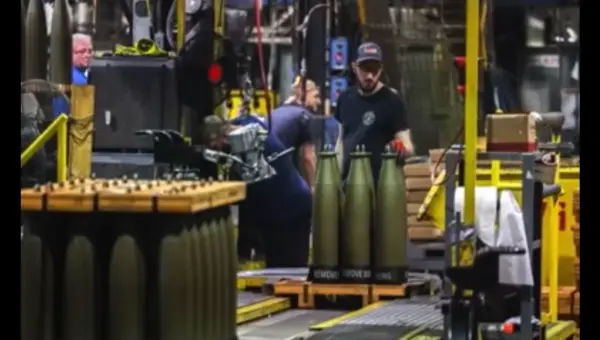
Detroit’s War Machine: Automakers Rejoin Arms Race
The U.S. Pentagon is in talks with major automakers like General Motors and Ford about shifting production to weapons and munitions. This move echoes World War II-era mobilization and aims to replenish dwindling stockpiles amid global conflicts.


China’s AI Chip Heist Threatens US Military Edge
Lawmakers are warning that China is using smuggling networks to acquire advanced US AI chips, potentially aiding its military. This could be the largest export ban violation in US history, prompting tech rivals to collaborate on protecting intellectual property.