Solar Lens Mission: A 20-Year Journey to Cosmic Magnification
A proposed mission to use the Sun as a giant cosmic magnifying glass, known as the Solar Gravitational Lens, could revolutionize astronomy. Reaching this distant vantage point, however, requires overcoming significant propulsion challenges, with a journey expected to take around 20 years after launch, potentially in the 2070s or 2080s.

Solar Lens Mission: A 20-Year Journey to Cosmic Magnification
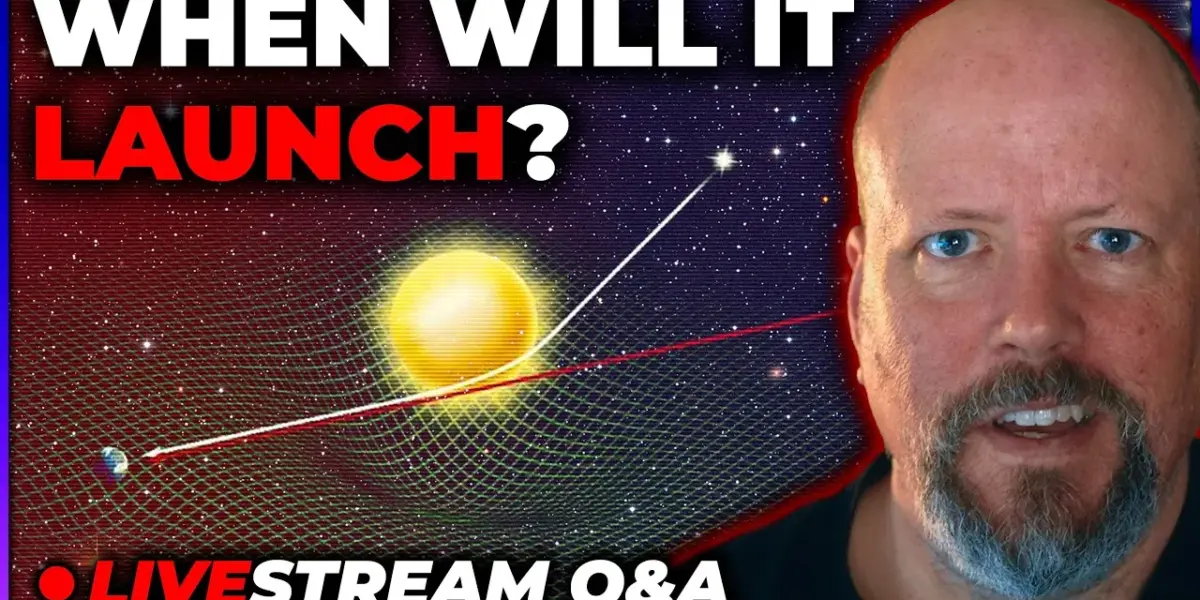
Humanity’s quest to see farther into the universe may soon take a monumental leap, not with a bigger telescope, but with a mission that uses the Sun itself as a giant magnifying glass. The concept of a Solar Gravitational Lens (SGL) promises to unlock unprecedented views of distant exoplanets and cosmic phenomena. However, reaching this cosmic vantage point is a journey of decades, requiring breakthroughs in propulsion technology.
Harnessing the Sun’s Gravity
The SGL is not a physical object but a region in space where the Sun’s immense gravity bends light from objects behind it, much like a lens focuses light. This gravitational lensing effect can magnify distant light sources, potentially allowing us to see details on exoplanets that are currently impossible to resolve.
To effectively use this cosmic magnifying glass, a spacecraft needs to travel far beyond the orbits of the planets, reaching distances of at least 500 astronomical units (AU) from the Sun. An AU is the distance between the Earth and the Sun, about 93 million miles (150 million kilometers).
The Long Haul: Reaching the Solar Gravitational Lens
Current spacecraft, like the Voyager probes, which have traveled for over 45 years, are only about 170 AU from the Sun. Even with today’s most advanced propulsion systems, like chemical rockets used for missions like Europa Clipper and JUICE, reaching the SGL would take centuries. The Voyagers’ success in reaching their current distance relied on gravity assists from planets, a method that is not efficient for such extreme distances.
Propulsion Innovations Needed
To make an SGL mission feasible within a human lifetime, new propulsion technologies are essential. Dr. Slava Turishv, a key proponent of the SGL concept, suggests using a solar sail.
This method involves dropping a solar sail towards the Sun, unfurling it at its closest approach, and using the Sun’s intense radiation to gain a massive speed boost. This could potentially reduce the travel time to the SGL to around 20 years.
Other proposed solutions include plasma rockets or nuclear propulsion, which can either provide a powerful initial acceleration or sustain thrust over long periods. Chemical rockets, while effective for initial boosts, quickly exhaust their fuel, making them unsuitable for such extended journeys.
A Mission for the Distant Future
Given the technological hurdles, a mission to the Solar Gravitational Lens is not imminent. Scientists estimate that if development efforts are prioritized, we might be ready to launch such a mission within the next 20 years.
However, the journey itself would still take another two decades. This means the earliest we could expect to utilize the SGL for scientific observation would be in the 2070s or 2080s.
Why the Solar Gravitational Lens Matters
The ability to magnify distant objects using the Sun’s gravity could transform our search for life beyond Earth. It could allow us to directly image exoplanets and study their atmospheres for biosignatures.
The SGL could reveal details about planetary formation and the distribution of life in the cosmos, answering fundamental questions about our place in the universe. This ambitious endeavor represents humanity’s drive to push the boundaries of exploration, even if the journey is long and challenging.
Next Steps
The immediate next steps involve continued research into advanced propulsion systems, particularly solar sails and high-efficiency electric or nuclear propulsion. Mission planners will also need to refine the trajectory and operational strategies for a spacecraft designed to harness the Sun’s gravitational lensing power.
Source: Solar Gravitational Lens Launch Date? [Q&A Livestream] (YouTube)

Related Articles


Artemis II Shatters Distance Records on Lunar Flyby
The Artemis II mission achieved a historic lunar flyby on April 1, 2026, sending four astronauts farther from Earth than ever before. Meanwhile, new images from JWST and Hubble offer deeper insights into Saturn's atmosphere, and the mysterious "super-puff" exoplanet Kepler 51D continues to baffle scientists.

Artemis II Crew Shares Mission Highlights and Future Hopes
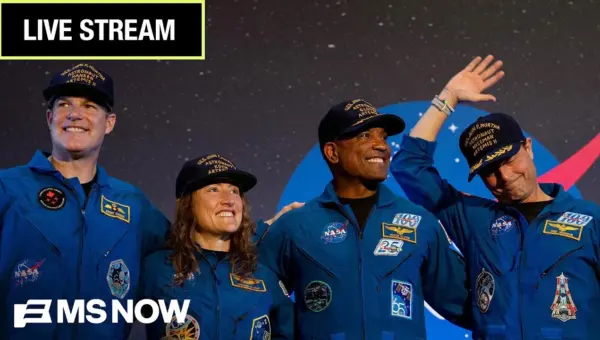
The Artemis II crew detailed their successful 10-day mission around the Moon during a press conference today. Astronauts shared awe-inspiring views and highlighted the exceptional performance of the Orion spacecraft. The mission's success provides vital data and momentum for future deep space exploration efforts.
Artemis II Crew Shares Deep Reflections After Historic Moon Flyby
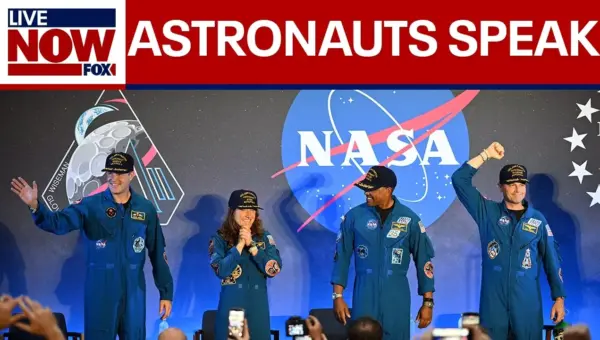
The Artemis II astronauts shared profound reflections following their historic lunar flyby, detailing experiences that transcended photos and videos. They discussed unexpected emotional shifts, technical challenges, and the critical role of teamwork and communication during their deep space journey. The crew also offered advice to aspiring explorers, emphasizing resilience, lifelong learning, and collaboration.