Artemis II Astronauts Prepare for Fiery Earth Return
The four astronauts of the Artemis II mission are preparing for their fiery re-entry into Earth's atmosphere tomorrow. After orbiting the Moon, the Orion spacecraft will splash down off the coast of San Diego, where Navy teams await to recover the crew. Initial medical evaluations will assess astronauts for common space travel symptoms like nausea and vertigo.

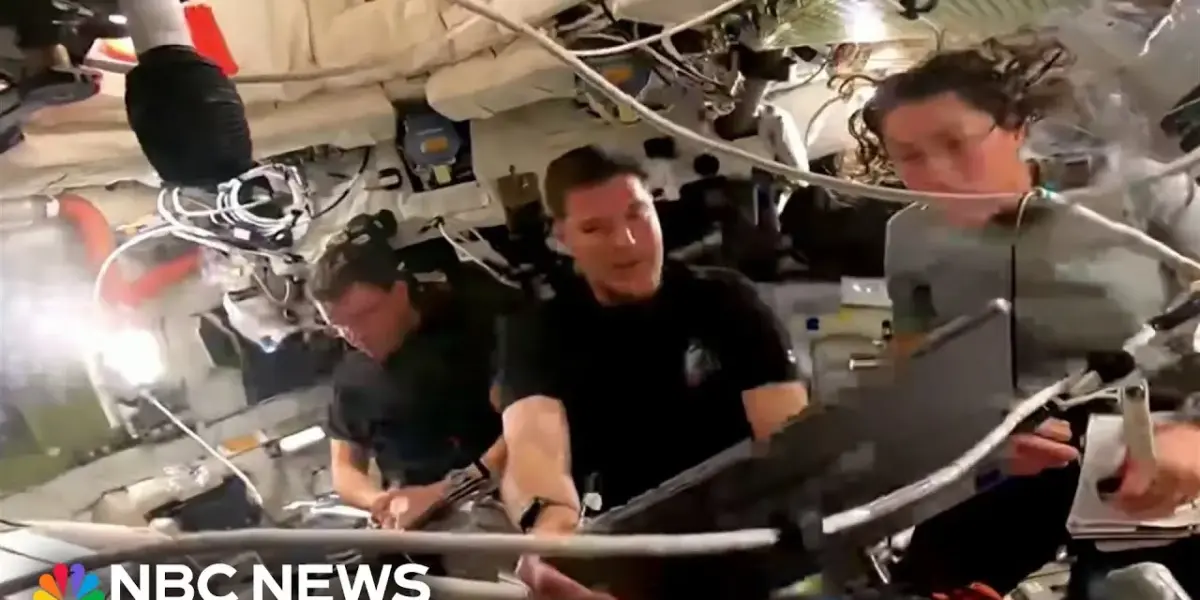
Artemis II Crew Nears Earth After Lunar Journey
The four astronauts of the Artemis II mission are making final preparations to return home tomorrow after their historic journey around the Moon. The Orion spacecraft is currently speeding towards Earth, carrying a crew that has spent days learning and experiencing the challenges of deep space. NASA continues to release stunning high-resolution images from the mission, offering a breathtaking view of the lunar surface and time-lapses of the solar system.
Splashdown Preparations Underway Off San Diego
Naval teams are on standby near San Diego, California, with ships positioned to recover the astronauts and the Orion capsule upon its splashdown in the Pacific Ocean. The USS John P.
Murtha and specialized naval units are ready to execute the recovery mission. Their primary objective is to safely retrieve the crew from the capsule immediately after it lands in the water.
A Fiery Re-Entry Awaits Orion
The Orion spacecraft is set to hit Earth’s atmosphere at a blistering speed of 25,000 miles per hour. During this intense re-entry phase, the spacecraft’s heat shield will face temperatures reaching 5,000 degrees Fahrenheit. This extreme heat is roughly half as hot as the surface of the Sun, highlighting the incredible forces the capsule must withstand to protect its crew.
Parachutes Slow Orion for Safe Landing
As Orion descends to Earth, a critical sequence will unfold to ensure a safe landing. At an altitude of 22,000 feet, the spacecraft’s parachutes will deploy.
These chutes will dramatically slow Orion’s speed from 25,000 miles per hour down to a much more manageable 20 miles per hour. This controlled descent is vital for a successful splashdown in the Pacific Ocean.
Navy Divers Ready for Immediate Recovery
Once Orion safely splashes down off the coast of San Diego, Navy divers will quickly approach the capsule. Their swift action is essential for securing the spacecraft and assisting the astronauts. Lieutenant Commander Dr. Jesse Wang’s team will then conduct an initial medical evaluation of the crew aboard the recovery ship.
Astronauts Expected to Face Space Adaptation Symptoms
Following their extended time in space, the Artemis II astronauts are expected to experience some physical effects. Dr. Wang anticipates symptoms such as nausea and vertigo, which are common reactions for individuals readapting to Earth’s gravity after space travel. These symptoms are temporary as the astronauts’ bodies adjust back to normal conditions.
The Final Minutes of the Mission
The successful completion of the mission hinges on the final minutes of Orion’s descent and splashdown. NASA mission control will monitor every aspect of the re-entry process closely. The safe recovery of the crew is the ultimate goal, marking the end of this significant lunar flyby mission.
Looking Ahead: Artemis Program Continues
The return of the Artemis II crew marks a crucial milestone in NASA’s ambitious program to return humans to the Moon and eventually journey to Mars. Future missions will build upon the knowledge gained from Artemis II, bringing astronauts closer to lunar landings and establishing a long-term human presence beyond Earth. The success of this mission enables the next steps in space exploration.
Source: Artemis II astronauts set to return home (YouTube)

Related Articles


Artemis II Crew Shares Earth Views, Mission Lessons
The Artemis II crew is nearing home, sharing reflections on Earth's fragility and the profound sense of unity found in shared purpose. Astronauts emphasized the value of teamwork and the necessary sacrifices for deep space exploration. Their mission provides crucial insights for future lunar and Mars endeavors.

Artemis II Crew Nears Earth After Lunar Flyby Mission
NASA provided a detailed update on the Artemis II mission as the Orion spacecraft and its four-person crew near Earth after completing their journey around the Moon. Astronauts conducted final experiments and system checks, while mission control reviewed preparations for re-entry and splashdown. A joint NASA-military team is on standby for the safe recovery of the crew and capsule.


Artemis 2 Mission: Billions Fund Moon Journey, Toilet Costs Millions
The Artemis 2 mission has sent four astronauts further from Earth than ever before, with estimated launch costs exceeding $4 billion. This includes a $23 million titanium toilet, which the crew successfully repaired after a minor issue. The program, part of NASA's larger lunar exploration plan started in 2017, has already cost $93 billion.