DHS Shutdown Threatens National Security, Workforce
A prolonged shutdown of the Department of Homeland Security (DHS) is creating significant national security risks and severely impacting its workforce. Agencies like TSA, Coast Guard, and CISA are struggling with staffing shortages, operational disruptions, and morale issues due to missed paychecks and funding uncertainty.

DHS Shutdown Creates National Security Risks, Hurts Workforce
A prolonged shutdown of the Department of Homeland Security (DHS) is causing significant harm to national security and its dedicated workforce, officials warned during a recent congressional hearing. The shutdown, which has lasted 40 days, is weakening the nation’s defenses and creating long-term damage that will be difficult to overcome.
Lawmakers debated the impacts of the shutdown, with one side blaming Senate Democrats for initiating it and the other holding Republicans and the former President responsible. Regardless of who is to blame, the consequences are severe. Agencies like the Transportation Security Administration (TSA), U.S. Coast Guard, Cybersecurity and Infrastructure Security Agency (CISA), and the Federal Emergency Management Agency (FEMA) are struggling to maintain operations and support their employees.
TSA Faces Staffing Crisis, Security Lapses
The TSA is experiencing unprecedented disruptions, with nearly $1 billion in missed paychecks for its employees if the shutdown continues. Over 61,000 TSA employees are required to work without pay, leading to severe financial hardship.
Many have missed bill payments, faced eviction notices, and had their cars repossessed. Some are resorting to selling plasma or taking on second jobs just to make ends meet.
This financial strain is causing a significant increase in employees calling out sick. At multiple major airports, 40% to 50% of staff are absent, leading to wait times exceeding four and a half hours.
The TSA has already lost over 480 Transportation Security Officers (TSOs) during this shutdown, and a 25% increase in TSO departures was seen during a previous 43-day shutdown last fall. It takes four to six months to train a new TSO, meaning new hires won’t be ready to work checkpoints until well after the 2026 FIFA World Cup, which is less than 80 days away and expected to bring millions of international fans.
The situation is so dire that the TSA may have to close smaller airports and is seeing a more than 500% increase in assaults on officers since the shutdown began. These dedicated public servants are working tirelessly to protect travelers, but their morale and ability to perform are being severely undermined.
Coast Guard’s Readiness and Operations Compromised
The U.S. Coast Guard, the only armed force within DHS, has been without funding for nearly 50% of the past 176 days. This lack of consistent funding is creating unacceptable financial strain on its personnel.
Civilian employees have missed paychecks, and military members and their families face uncertainty about their next paycheck. Deployed crews are accumulating expenses they cannot be reimbursed for, eroding trust in the nation they serve.
The shutdown is also impacting mission readiness and causing financial hardship for businesses that supply the Coast Guard. Preparations for major events like the FIFA World Cup and America 250 have been halted.
The agency has incurred over $200 million in obligations to industry partners that cannot be paid. The inability to pay for utilities and parts risks widespread shutdowns of critical infrastructure and could lead to stop-work orders, worsening existing maintenance backlogs.
The National Maritime Center remains closed, halting the issuance of over 16,000 merchant marine credentials daily. Officials estimate that it takes two and a half days to recover from every day the Coast Guard is in a shutdown. If the shutdown ended today, full recovery wouldn’t occur until July 3rd.
CISA Faces Growing Cyber Risks
Cybersecurity and Infrastructure Security Agency (CISA) officials report that while the government is shut down, adversaries are not. Approximately 60% of CISA’s workforce is furloughed, while the remaining personnel work without pay. These essential workers face increasing pressure from nation-state and criminal actors targeting critical infrastructure.
The shutdown limits CISA’s ability to perform proactive assessments, coordinated planning, and strategic initiatives. This allows systemic risk to accumulate.
Delays in issuing directives, reduced coordination with industry partners, and constrained incident response capacity create openings for adversaries. Key efforts to finalize rules for the Cyber Incident Reporting for Critical Infrastructure Act have also been paused, delaying the development of a more coordinated national cyber defense.
CISA’s mission is to protect and defend the American people, but sustained funding uncertainty prevents them from operating at full strength. The agency stresses the need for stability and continuity to operate proactively rather than just reactively.
Market Impact and What Investors Should Know
The ongoing shutdown of DHS highlights the fragility of national security infrastructure when faced with political infighting. For investors, this highlights the importance of government stability for critical sectors like transportation, cybersecurity, and emergency response.
- Transportation Sector: Disruptions at airports and potential closures of smaller facilities due to TSA staffing shortages could impact airline operations and traveler confidence.
- Cybersecurity Sector: A weakened CISA, unable to proactively address threats, could increase the risk of cyberattacks on critical infrastructure, potentially affecting businesses and financial markets.
- Defense and Security Contractors: While not directly detailed, prolonged disruptions to DHS could indirectly affect government contractors reliant on consistent funding and operational support.
- Economic Impact: The loss of pay for thousands of federal employees has a ripple effect on local economies, reducing consumer spending and potentially impacting businesses that rely on this income.
The long-term consequences of this shutdown, including the difficulty in recruiting and retaining skilled personnel, could have lasting effects on the nation’s ability to respond to future threats and crises. The testimony emphasized that stable funding for DHS is not just a budgetary issue but a matter of trust, readiness, and national security.
As the shutdown continues, the focus remains on reaching a bipartisan agreement to restore full funding and operational capacity to the Department of Homeland Security. The upcoming major events like the FIFA World Cup and America 250 celebrations serve as urgent reminders of the need for a fully functional and funded DHS.
Source: WATCH LIVE: DHS officials testify on shutdown, sound alarm on security gaps (YouTube)

Related Articles


Plane Crash, Airport Chaos, and a Social Media Verdict
New details emerge from the LaGuardia plane crash investigation, highlighting potential failures in tracking systems and air traffic control staffing. Meanwhile, a potential deal to fund the TSA could end airport chaos, and Meta faces a landmark verdict for endangering children on its platforms.

ICE Detains DACA Dad; Congress Cites MS NOW Report
MS NOW's exclusive report on an ICE detention of a DACA recipient heading to see his premature baby was cited in Congress. Representative Robert Garcia used the story to highlight alleged DHS abuses, stating such cases should 'outrage every single American.' The incident raises questions about immigration enforcement priorities.

ICE Agents Help TSA Amid Airport Chaos and Delays
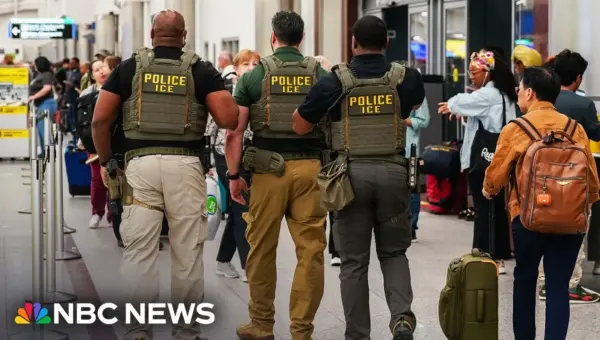
ICE agents are now assisting the TSA at major airports nationwide due to staffing shortages caused by the government shutdown. Travelers are facing hours-long waits at security checkpoints, leading to missed flights and disrupted plans. The exact role of ICE agents in assisting TSA operations remains under observation.