Ukraine War: Four Years of Resilience, Drone Warfare, and Uncertain Peace
Four years into the war, Ukraine faces a brutal reality of drone warfare and profound human cost. Despite immense resilience, exhaustion pervades on the front lines. Hopes for a swift peace deal are dim due to irreconcilable aims between Ukraine and Russia, while international support dynamics and the practicalities of holding elections amidst conflict add further complexity.

Ukraine War: Four Years of Resilience, Drone Warfare, and Uncertain Peace
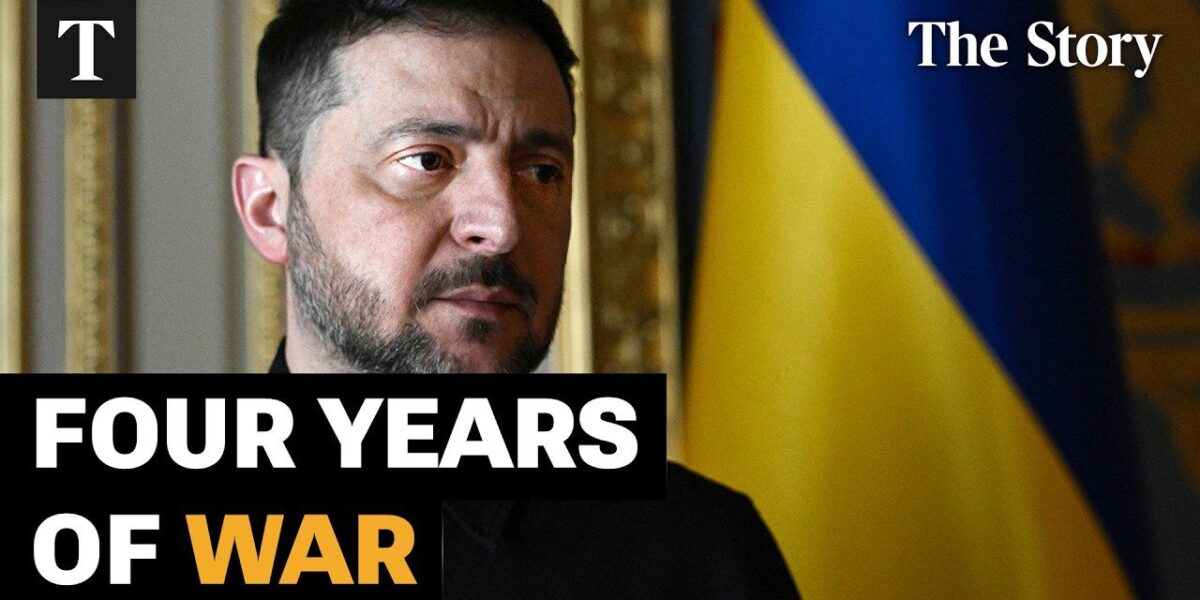
Four years since Russia’s full-scale invasion, Ukraine continues to resist Putin’s aggression, facing a brutal reality on the front lines characterized by technological warfare and profound human cost. The conflict, which began with initial predictions of a swift Russian victory, has evolved into a protracted struggle, testing the resilience of its people and reshaping the landscape of modern warfare.
The Human Cost: A Family’s Tragic End
The stark realities of the war are often best illustrated by the experiences of ordinary individuals. Anthony Lloyd, veteran war correspondent for The Times, recounts the harrowing story of Valentina and Valerie Klotchkov, an ordinary Ukrainian couple in their early 50s from the village of Kraboska. After their village was captured by Russian forces, they hid in their cellar. Driven by extreme cold and hunger, they attempted to escape on January 27th. Their desperate flight was captured by Ukrainian observation drones, revealing a tragic sequence of events. An initial Russian FPV kamikaze drone strike wounded Valentina. Valerie managed to place his injured wife on a sledge and began to pull her across the snow. A second drone strike killed Valentina, shattering her body. Valerie, wounded himself, knelt beside his wife. Hours later, a third drone strike killed him. Their bodies remained in the snow, a grim testament to the war’s brutality, as retrieval was too dangerous due to the constant drone threat.
Shifting Frontlines: From Trenches to Drone Warfare
The nature of warfare has dramatically transformed since the initial days of the invasion. Lloyd, who was in Ukraine just days after the full-scale war began, initially described scenes reminiscent of World War I, with extensive trench systems. However, the frontlines have since evolved. “We don’t live in the age of trench warfare in Ukraine anymore,” Lloyd explains. The current reality is a vast “kill zone” where thousands of soldiers are positioned in small bunkers and foxholes. Movement by vehicle or on foot is perilous due to the omnipresent threat of drones. This technological shift has had a profound impact on casualties: “up to 88% of casualties on both sides, fatal casualties amongst the infantry are caused by drones. Your drones are the biggest killer on the front line.”
Morale and Resilience: Exhaustion and Determination
The sustained conflict has taken a significant toll on the morale of Ukrainian soldiers and civilians. Neo, a Ukrainian soldier who has served for two and a half years as a drone operator and unit commander, describes a pervasive “exhaustion” and “unhappiness.” He notes that initial expectations of a swift end to the war have given way to a grim understanding that the conflict will be prolonged. The sense of isolation and the feeling of “losing your life” while others continue their lives is a significant burden. Despite this, a sense of duty persists: “we understand that we cannot do that. So if we leave someone has to do it and since it’s us then there is nobody else.” While acknowledging the current difficulties, Neo notes a recent improvement, stating, “things seems to be getting in the right direction. So that helps a little bit to keep sanity.” Civilians, too, exhibit a “dogged resilience,” continuing their lives amidst destruction, though the emotional toll is immense, as seen in the case of a 70-year-old woman grieving her missing son.
The Elusive Peace Deal: Divergent Aims
Despite ongoing diplomatic efforts, including recent meetings involving figures like Jared Kushner, a viable peace deal remains distant. Anthony Lloyd expresses pessimism, stating, “I am not optimistic at all… that there will be a peace deal or certainly not one that holds.” He identifies a fundamental disconnect between the aims of Ukraine and Russia. Ukraine’s objective is to maintain its sovereignty and align with the West. In contrast, Russia’s stated aim, according to Foreign Minister Lavrov, is the “elimination of the root causes of the conflict,” which implies the replacement of Ukraine’s government with a pro-Russian one and significant limitations on Ukraine’s military and NATO’s influence in Europe. These objectives are irreconcilable, suggesting the war will continue for the foreseeable future.
The Role of the United States and European Support
The dynamics of international support are shifting. While the US remains a critical provider of intelligence and sophisticated weaponry, Europe has taken the lead in overall financial support, contributing €220 billion in 2025 compared to the US’s €130 billion. However, Ukraine’s dependence on US support, particularly intelligence, is undeniable. The idea of Ukraine holding elections amidst martial law, a suggestion reportedly pushed by the US, is viewed as unrealistic by many Ukrainians, including Anastasia Romanuk, who works in election monitoring. She highlights the logistical challenges, such as destroyed polling stations and the absence of electricity, making legitimate and secure elections currently improbable. The pressure on Ukraine to hold elections while Russia continues its aggression is seen as a misreading of the situation on the ground.
What Ukrainians Want: Justice and Sovereignty
Ultimately, the desire for a just peace among Ukrainians is paramount. Many express a long-term hope for Russia’s complete withdrawal from Ukrainian territory, as articulated by President Zelenskyy: “one day Russia must leave Ukraine in entirety. One day.” While acknowledging the difficulty of reclaiming all territories, particularly in the current circumstances, a common sentiment is the need for justice and the preservation of sovereignty. Some envision a demilitarized zone in Donbas, secured by non-NATO and non-Russian forces, with continued security guarantees for Ukraine from the West. The overarching goal is to ensure Ukraine’s integration into the European economy and defense sector, preventing future aggression. As one individual put it, “It is not just the end of fighting. It is the end of an imperial mindset. Anything less than this is simply a pause before the next war.”
Source: Four Years Of War: Can Ukraine Continue To Defy Putin? (YouTube)

Related Articles
Trump’s Middle East Gambit: Escalation or Empty Threat?
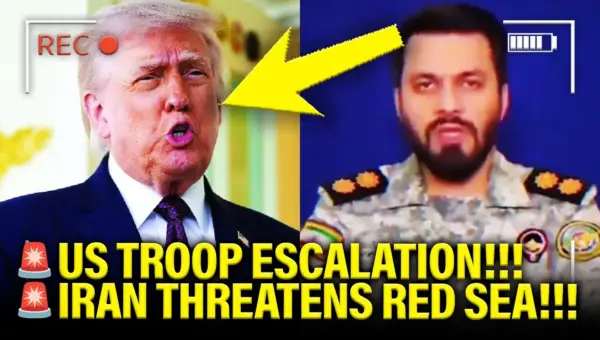
The US is sending troops and imposing a blockade in the Middle East, signaling escalation. Yet, conflicting messages from Donald Trump suggest peace is near. This analysis explores the contradictory actions, Iran's defiant response, and the potential global economic and political fallout.


Oil Prices Surge to $91 Amid Geopolitical Tensions
Oil prices have surged to $91 a barrel, driven by disruptions in the Strait of Hormuz. This is leading to higher gas prices across the U.S., with California facing particularly steep costs. The situation is fueling debate on energy policy, exports, and the transition to renewable fuels.

Ukraine War Robots Make Russian Tech Obsolete, Expert Says
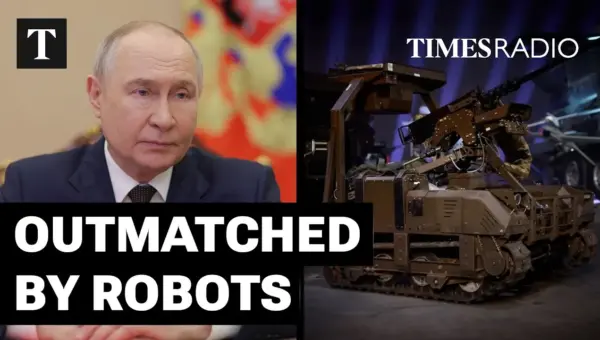
Ukraine has achieved a historic military victory using ground robotic systems, marking a potential turning point in warfare. Defense tech expert Igor Novikov described the event as groundbreaking, highlighting the rapid evolution of conflict and Ukraine's role in pioneering its future. The conversation also touched upon concerns regarding UK defense spending and the global implications of proliferating autonomous weapon systems.