Israel-Lebanon Talks Held Amidst Ongoing Hostilities
Israel and Lebanon held direct diplomatic talks for the first time in decades, mediated by the U.S., amid ongoing cross-border hostilities. Experts express skepticism about achieving a ceasefire without Hezbollah's involvement, highlighting Lebanon's precarious position and Israel's continued military operations.

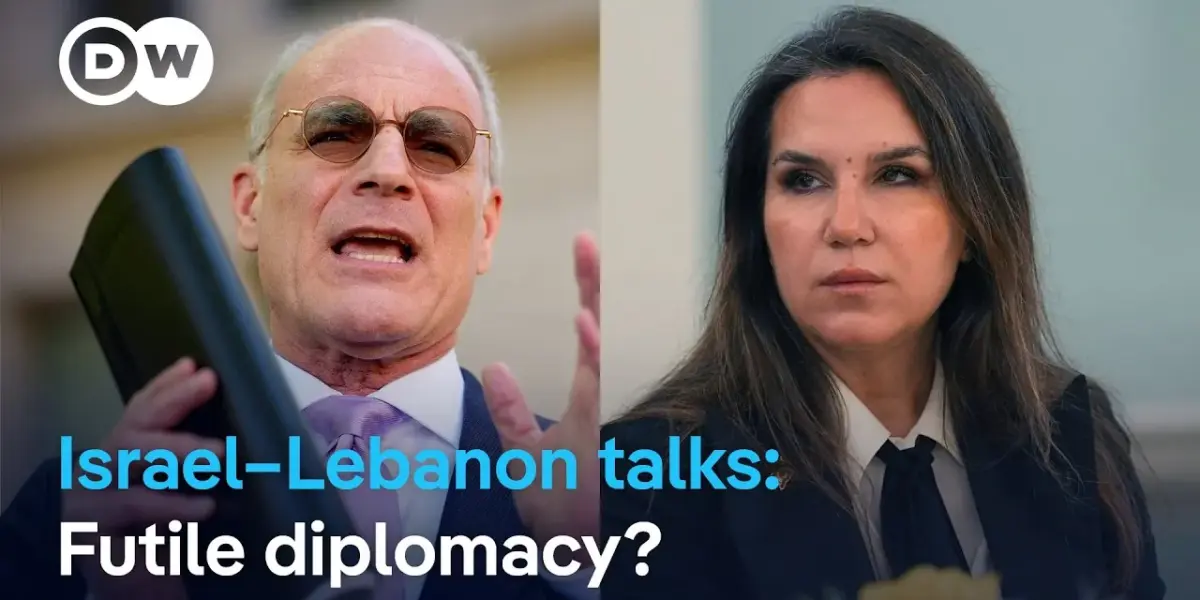
Historic Diplomatic Meeting, But Violence Continues
For the first time in nearly 40 years, Israel and Lebanon have engaged in direct diplomatic talks. U.S. Secretary of State Antony Blinken, who helped mediate the discussions in Washington, described the event as a significant opportunity. However, even as this diplomatic breakthrough occurred, Israel continued its attacks on Hezbollah positions in Lebanon, while the militant group fired rockets into northern Israel. Both governments have agreed to further discussions, with Israel’s ambassador to the U.S. expressing optimism.
What gives me hope is the fact that the Lebanese government made it very clear that they will no longer be occupied by Hezbollah and Iran has been weakened. This is an opportunity. This is the first time our two countries are sitting together in over three decades.
Lebanon Under Fire During Peace Talks
Despite the diplomatic progress, the reality on the ground for Lebanon remains dire. Professor Fawas Gajes of the London School of Economics highlighted that Lebanon participated in the talks while under attack. He noted that Lebanon has very little bargaining power, with over 2,000 people killed and more than a million displaced. Israel currently controls an 8-mile buffer zone in southern Lebanon, a significant territorial gain. The professor pointed out that during the talks, Lebanon’s health authority reported that Israel had killed 35 Lebanese civilians and bombed the historic city of Tyre, as well as a hospital in the south.
Hezbollah’s Role Clouds Ceasefire Hopes
Hezbollah has rejected the Washington talks and has seemingly increased its rocket fire into northern Israel. Professor Gajes expressed significant doubt about the potential achievements of these talks without Hezbollah’s participation. He explained that Lebanon is deeply divided over engaging with Israel, and many Lebanese are skeptical that Israel will cease its attacks or withdraw from the occupied territories. Israeli Prime Minister Benjamin Netanyahu has stated his intention to maintain the buffer zone, similar to those in Gaza and Syria.
Professor Gajes fears that if this polarization continues and the talks yield no results for Lebanon, the country could face domestic instability and further conflict. He emphasized that the primary topic of discussion was a ceasefire, yet no such agreement has been reached, and the U.S. has not significantly pressured Israel to halt its military operations. This situation, he warned, could exacerbate internal tensions within Lebanon.
Hezbollah: More Than Just a Militant Group
The question of Lebanon’s ability to distance itself from Hezbollah is complex. While many international observers view Hezbollah solely as a paramilitary organization, Professor Gajes stressed that it is also a political party and a social movement with millions of supporters. He acknowledged that many Lebanese now criticize Hezbollah, blaming it for giving Israel a reason to launch further attacks. However, he believes that without the support of the Shia community, which forms Hezbollah’s base, any agreement Lebanon makes with Israel will be difficult to implement.
Furthermore, Professor Gajes doubts Israel’s willingness to accept Lebanon’s demands, particularly regarding an end to the war and withdrawal from Lebanese territory, given Prime Minister Netanyahu’s clear stance. He also pointed out that Israel’s actions, including the destruction of villages and infrastructure in southern Lebanon using tactics similar to those in Gaza, aim to prevent civilians, especially from the Shia community, from returning to their homes.
Path to De-escalation: Iran, U.S., and Regional Stability
Iran has stated that an end to the war in Lebanon is a prerequisite for talks with the United States. Professor Gajes anticipates that the U.S. and Iran will likely resume negotiations soon, as both nations have a vested interest in avoiding further hostilities and reaching a diplomatic solution. He believes that behind-the-scenes diplomacy is crucial, potentially more so than public threats.
Regarding the Lebanon-Israel front, Professor Gajes remains skeptical. He believes that without direct pressure from the U.S. on Prime Minister Netanyahu to stop attacks, Israel is unlikely to change its course. He argued that Israel has historically disregarded agreements, citing its continued attacks even after a 2024 ceasefire and its use of past retaliations as pretexts for further military action.
U.S. Diplomacy and the Challenge of ‘Negotiating Under Fire’
The U.S. successfully brought both sides to the negotiating table despite a deep lack of trust and a history of conflict. Professor Gajes explained that the Lebanese government faced significant pressure from the U.S. to engage directly with Israel, especially since there is no internal consensus in Lebanon on such engagement. He suggested that President Biden may have persuaded Prime Minister Netanyahu to limit attacks on Beirut and engage diplomatically. However, this agreement came with the condition that negotiations would occur ‘under fire,’ leaving the Lebanese government with minimal leverage.
Professor Gajes described the Lebanese government’s position as precarious, unable to influence or pressure Israel while its cities are under constant attack. He believes that the U.S. and Iran are more likely to find common ground on their own, independent of a Lebanon-Israel peace treaty, as they have larger shared interests. While a stable Lebanon-Israel front is desired by the U.S., it may not be a deal-breaker for U.S.-Iran talks, even if it could potentially derail them.
Iran’s Proxies Remain Potent Forces
Contrary to narratives suggesting a decline in Iran’s power projection through its proxies, Professor Gajes asserts that this view has been proven false. He noted that organizations like Hezbollah, the Houthis in Yemen, and pro-Iranian groups in Iraq remain active and capable. Israeli military officials themselves have expressed surprise at Hezbollah’s resilience and effectiveness in southern Lebanon, where they are employing guerrilla warfare tactics. The ongoing conflict, he argues, demonstrates that Iran’s regional allies are not only active but also possess significant firepower. This potency is why Iran seeks a ceasefire on the Israel-Lebanon front, as these allies are crucial for Iran’s regional strategy.
Source: Caught between Israel and Hezbollah: How feasable is a Lebanon ceasefire? | DW News (YouTube)

Related Articles

Israel, Lebanon Launch Historic US-Mediated Dialogue
Israel and Lebanon have begun a historic US-mediated dialogue, marking the first direct negotiations between the nations since 1993. The talks aim to disarm Hezbollah and establish lasting peace, despite ongoing rocket fire into northern Israel. Israeli officials emphasized that Lebanon and Israel are now on the same side, opposing Hezbollah and Iranian influence.


US Tightens Grip on Iran: Blockade Continues, Troops Surge
The U.S. has initiated a naval blockade of Iranian ports, deploying thousands of additional troops to the Middle East to increase economic pressure. Meanwhile, diplomatic efforts are underway with the start of Lebanon-Israel ceasefire talks, occurring amidst significant civilian casualties and ongoing regional tensions.


Israel, Lebanon Engage in Direct U.S.-Mediated Talks
Israel and Lebanon have held direct talks mediated by the United States, aiming to ease border tensions. Discussions focused on security concerns, particularly the influence of Hezbollah. While the U.S. hailed the dialogue, skepticism remains regarding past negotiation outcomes.