Israel, Lebanon Hold Rare Talks in US on Ceasefire
Rare diplomatic talks between Israel and Lebanon took place in Washington D.C., hosted by the U.S. Secretary of State. The negotiations aimed to secure a ceasefire and explore peace, but faced challenges due to conflicting priorities and Hezbollah's refusal to abide by any potential agreement.

US Hosts Historic Talks Between Israel and Lebanon
In a significant diplomatic development, officials from Israel and Lebanon met in Washington D.C. on [Insert Date of Talks], marking some of the first direct negotiations between the two nations in decades. The high-stakes talks, hosted by U.S. Secretary of State Antony Blinken, aimed to address the ongoing conflict along their shared border, with a focus on achieving a ceasefire and exploring a broader peace agreement.
Conflicting Goals Set the Stage for Negotiations
The discussions began amidst starkly different expectations from each side. Lebanon’s primary objective entering the talks was to secure a ceasefire as a prerequisite for any further progress, drawing parallels to recent U.S.-Iran discussions held in Pakistan. Conversely, Israel framed the negotiations as peace talks, prioritizing the disarmament of Hezbollah, a powerful militant group operating from Lebanon.
According to reporting, Israel did not initially mention a ceasefire or the withdrawal of its forces from southern Lebanon as part of its agenda. This divergence in priorities highlighted the complex challenges ahead for negotiators.
“There’s not a direct war… between Israel and Lebanon,” noted David Daoud, a senior fellow at the Foundation for the Defense of Democracies, in an interview. “Lebanon has declared Hezbollah’s military activity… to be illegal… the Lebanese government has deprived Hezbollah of… coverage.”
Hezbollah’s Stance Clouds the Outlook
Adding another layer of complexity, a senior Hezbollah official stated that the group would not abide by any agreements resulting from the direct talks. This declaration casts a shadow over the potential outcomes, as Hezbollah remains a key military and political force within Lebanon.
Daoud explained the dynamic, stating, “Hezbollah used this [dialogue] in bad faith to continue regeneration.” He added that the group has refused to abide by any order by the Lebanese government to disarm.
Disarmament: A Key Israeli Demand, a Lebanese Challenge
The disarmament of Hezbollah has been a central demand from Israel for months. While the Lebanese government has expressed commitment to this goal, the practical steps remain a significant hurdle. Daoud elaborated on what disarmament would entail from the Lebanese government’s perspective:
- Arrests of individuals involved in militant activities.
- Seizures of weapons and military equipment.
- Control over land borders to prevent smuggling.
- Tighter controls at airports and other entry points.
- Deployment of the Lebanese army to southern Lebanon in sufficient numbers to prevent Hezbollah’s regeneration.
Daoud pointed out that much of this has not happened. The Lebanese government has cited a lack of resources and the ongoing Israeli operations as primary impediments. However, Daoud suggested that the issue might stem more from a lack of political will than a lack of capability.
Ongoing Hostilities on the Ground
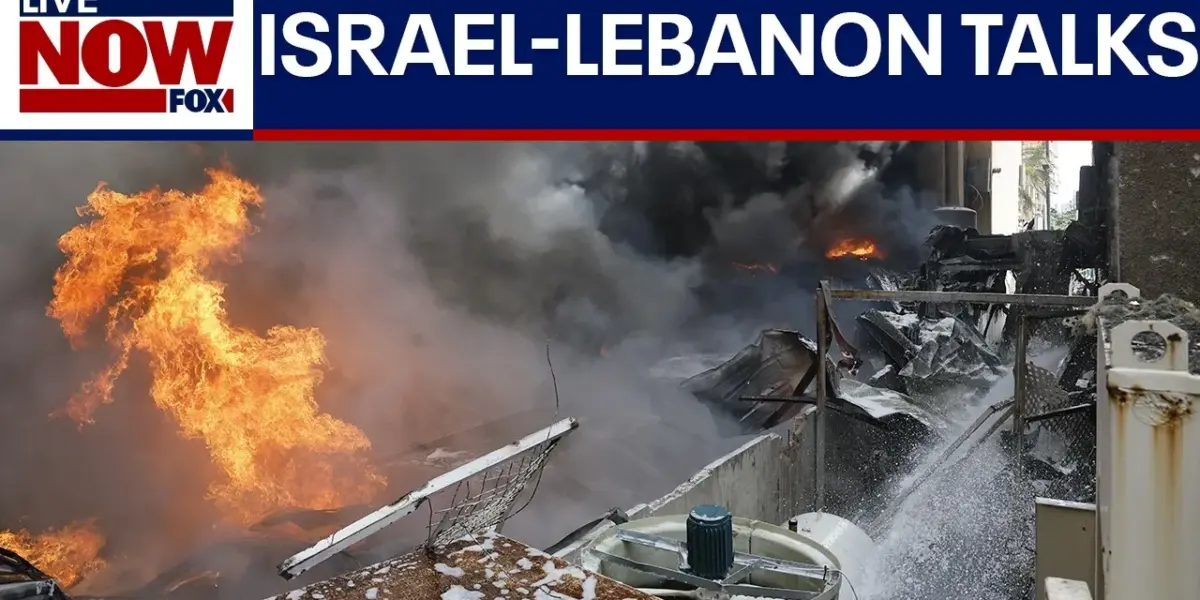
The diplomatic efforts unfolded against a backdrop of continued military operations. The Israeli military reported striking approximately 150 Hezbollah targets in southern Lebanon over a 24-hour period, including rocket launchers, military structures, and command centers. The Israel Defense Forces also stated that terrorist cells attempting attacks against their soldiers were thwarted.
Israel’s military operations have included intense fighting for strategic towns in southern Lebanon. Reports suggest the Israeli military aims to establish a buffer zone in southern Lebanon, potentially extending several kilometers from the border, to prevent Hezbollah attacks on northern Israel. This goal is reminiscent of a security zone that existed between 1985 and 2000.
Lessons from the Past: The 1983 Peace Agreement
The current talks evoked memories of previous diplomatic efforts. Daoud recalled the May 17, 1983, peace agreement between Israel and Lebanon, which was short-lived. Syria exerted pressure on Lebanon, leading to the treaty’s rescission.
“The lesson we can learn is that these things should not be done… [when] the conditions have not ripened,” Daoud advised. He warned that without addressing Hezbollah’s continued defiance and its social and military strength within Lebanon, any agreement reached today could be temporary, leading to a similar cycle of conflict in the future.
Looking Ahead: Uncertainty Remains
As the diplomatic meetings concluded, significant questions remain about their impact. The conflicting stances, Hezbollah’s refusal to be bound by any agreement, and the ongoing hostilities suggest that achieving a lasting peace will be an arduous task. The international community watches closely to see if these rare direct talks can lay the groundwork for de-escalation and stability in the region, or if the underlying issues will prevent any meaningful progress.
Source: Israel, Lebanon to hold diplomatic talks in US (YouTube)

Related Articles


Israel, Lebanon Hold Historic Talks in Washington
Israeli and Lebanese officials held unprecedented direct talks in Washington D.C., aiming to establish conditions for a ceasefire. The discussions, occurring at the ambassadorial level, highlight significant diplomatic progress but face deep-rooted challenges, including Lebanon's limited leverage over Hezbollah and concerns over civilian casualties.

US Brokers Israel-Lebanon Ceasefire Talks Amidst Tensions
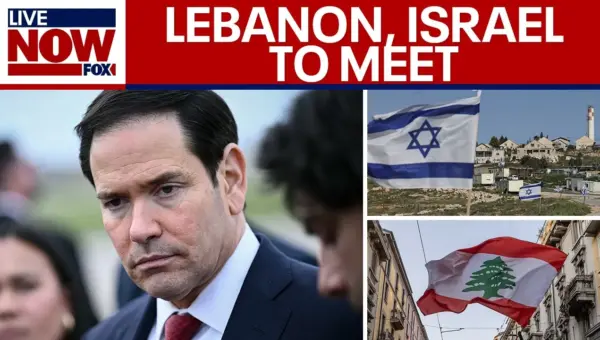
US Secretary of State Marco Rubio is mediating crucial ceasefire talks between Israel and Lebanon in Washington D.C. The negotiations aim to de-escalate ongoing conflict, which has exhausted residents and displaced over a million people. A central challenge is the disarmament of Hezbollah, an Iranian-backed group deeply entrenched in Lebanon's political and social fabric.

US Blockades Iranian Ports Amid Tensions, Risks Global Fallout
The U.S. military has begun blockading Iranian ports in an effort to pressure Tehran into a deal, risking higher global energy prices and wider conflict. Despite President Trump's warnings and Iran's retaliatory threats, diplomatic talks are reportedly being considered, with potential in-person negotiations on the horizon.