Labour Faces “No-Win” Defense Spending Dilemma
Lord Robertson has launched a strong attack on UK leaders over defense spending, calling it "corrosive complacency." Political Editor Steve Swinford explains Labour faces a "no-win scenario," needing to balance increased defense investment with economic realities and the cost of living crisis.

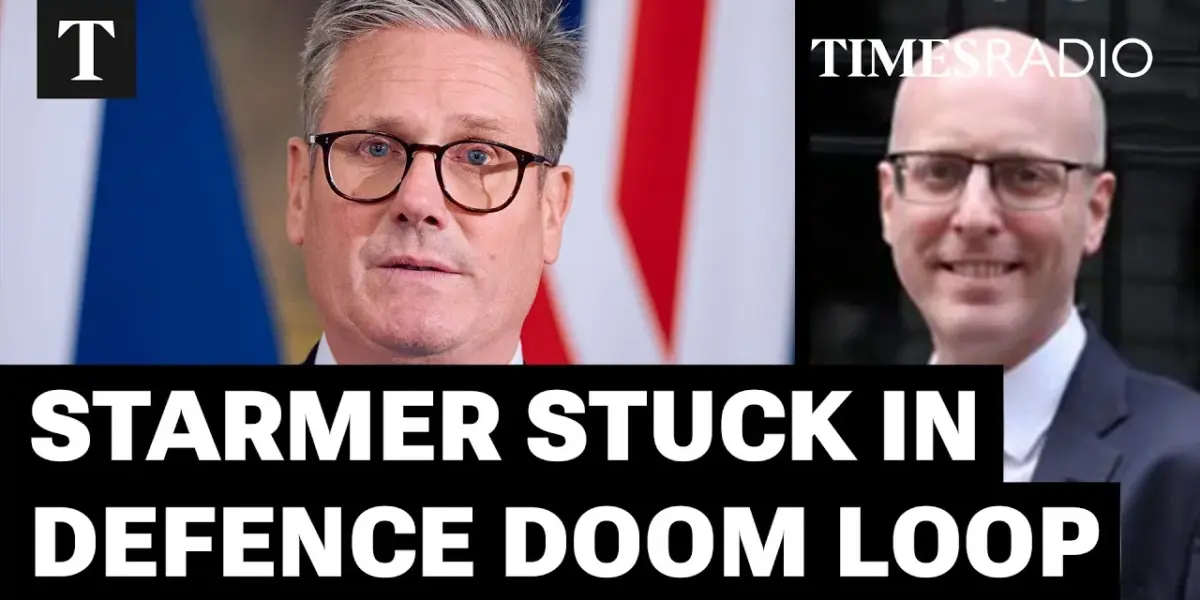
Labour Faces “No-Win” Defense Spending Dilemma
Former NATO chief Lord Robertson has sharply criticized the UK government and opposition leaders for “corrosive complacency” on defense spending. This comes as the Labour Party, led by Keir Starmer, finds itself in a difficult position regarding defense budgets, facing a “no-win scenario” according to The Times’ Political Editor, Steve Swinford. The party must balance the urgent need for increased defense investment with the harsh realities of public finances and the ongoing cost of living crisis.
“Corrosive Complacency” Over Defense
Lord George Robertson, a former Labour defense secretary and Secretary General of NATO, is set to deliver a stinging rebuke to current UK leaders. His upcoming speech accuses the government of neglecting defense, a sentiment that extends to the opposition’s approach. Swinford noted that Robertson, usually measured in his criticism, has reached his “end of his tether,” launching an “aggressive attack” that also targets Labour’s Shadow Chancellor, Rachel Reeves.
Balancing Act: Defense vs. Economy
The core of the problem lies in the government’s and Labour’s struggle to reconcile increased defense spending with economic pressures. “Money doesn’t come from nowhere,” Swinford explained. If Labour is serious about funding the “huge” defense figures being discussed, it would likely require either breaking fiscal rules or raising taxes. Neither option is palatable, especially during a cost of living crisis that is hitting families hard.
Swinford described the situation as a “difficult balance to strike.” The government aims to boost defense spending rapidly, but faces significantly strained public finances. This is compounded by recent global events, such as the conflict in Iran, which add further financial strain. The challenge is to manage these competing demands without alienating voters or undermining economic stability.
A “Perilous World” and a “Gap” in Policy
The debate highlights a perceived disconnect between the rhetoric about a “perilous world” and the actual policies being implemented. “We’re constantly told the world is a perilous place. Things are going badly,” Swinford observed. However, he noted that military capability is seen as “virtually non-existent,” and promised increases in defense spending, such as reaching 3% of GDP, have not materialized with a clear investment plan.
This gap between words and actions is a significant challenge for Keir Starmer. “There is a gap between his rhetoric and his very public commitments both on the numbers and his broader language around it and actually what he’s doing which is nothing at the moment,” Swinford stated. Starmer appears to be waiting for a decision on how to proceed, but the decision itself is complicated by the potential need to raise taxes, a move that proved unpopular in recent budgets.
Government Restructures for Iran Crisis
Adding to the complexity, the government now believes the Iran crisis is a long-term issue. This belief has led to the creation of a new “Middle East response committee,” which will meet regularly. Swinford explained that this restructuring of government machinery signals that the situation is not expected to resolve soon. The longer the crisis continues, the greater the potential negative impact on the public.
The implications are stark. While defense spending is being debated now, Swinford predicts that by autumn and winter, the conversation will inevitably shift back to the cost of living, with rising energy bills. “Those two things are rubbing up against each other. There is a friction between them, and that’s the challenge the prime minister is facing,” he said.
Fuel Security Concerns Add to Woes
The defense spending debate is occurring alongside growing concerns about fuel security. Nick Butler, a former advisor to Gordon Brown, has called the government’s approach to fuel planning “negligent.” He suggests that immediate action is needed, including potential rationing of fuel, cutting jet fuel use, and encouraging working from home. These measures are aimed at conserving fuel amidst supply worries.
The government’s reluctance to discuss fuel shortages openly stems from a desire to avoid panic. “Don’t panic” is the underlying message. However, the visible surge in fuel prices serves as a constant reminder of the conflict’s cost. While plans for rationing fuel for essential workers exist in draft form, they are not publicly discussed to prevent public alarm.
Brexit’s Impact on Jet Fuel
Interestingly, the UK is in a slightly better position regarding jet fuel than some European counterparts due to Brexit. European airlines face warnings of running out of jet fuel within weeks because they must refuel locally at destinations. The UK, however, is not bound by these rules, allowing it to source fuel from the US or elsewhere. Despite this advantage, the UK will still feel the impact, especially as summer holidays approach, potentially causing travel disruptions.
Prime Minister’s Pay: A Distraction?
In a separate discussion, the topic of the Prime Minister’s salary was raised. Swinford acknowledged that some argue the PM is underpaid compared to top executives. However, he countered that the role comes with significant perks, including a grace-and-favor residence in Downing Street and substantial earning potential after leaving office, citing Liz Truss’s continued earnings on the speaking circuit.
Ultimately, Swinford suggested that the motivation for seeking the premiership is not financial. “Everyone in this place in Westminster wants a prime minister, right? It’s… and they’d probably do it for no money, I would have thought,” he commented. The challenges of the job, including logistical difficulties, are part of the public service aspect, not a reason for higher pay.
Looking Ahead
The coming months will be critical as the government and Labour navigate these complex issues. The interplay between defense spending needs, economic stability, and the cost of living crisis will likely dominate political discourse. How leaders manage public expectations and deliver tangible solutions, particularly regarding energy and defense, will be closely watched.
Source: Keir Starmer Stuck In No Win Situation Over Defence Spending | Steven Swinford (YouTube)

Related Articles
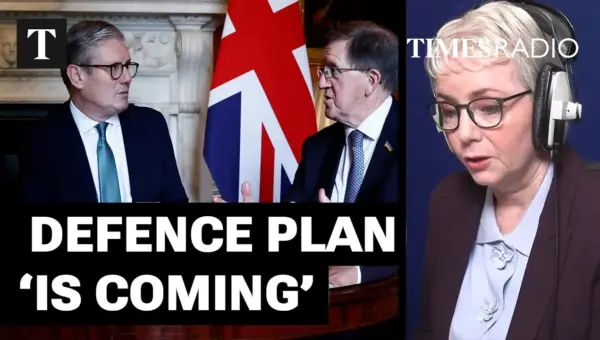
Health Minister Defends NHS Reforms Amid Defense Criticism
Health Minister Karen Smith announced new community diagnostic centers to boost NHS testing capacity and cut wait times. The move aims to bring care closer to patients and improve survival rates. The minister also defended the government's defense spending plans amid sharp criticism from a former NATO chief.
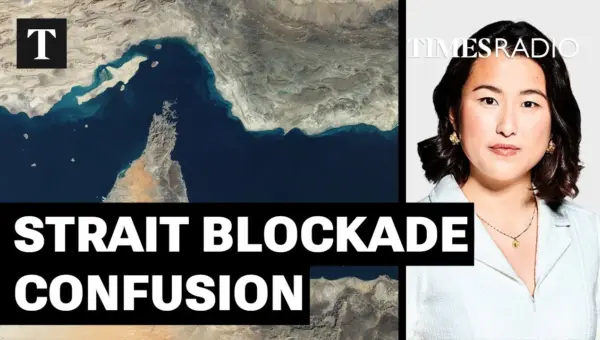
Trump’s Hormuz Blockade Plan Draws UK Rebuke, Sparks War Fears
The U.S. faces criticism for a proposed blockade of ships from Iranian ports, with the UK refusing to participate and citing concerns about escalating conflict. The plan raises questions about effectiveness and risks drawing in major powers, while a separate debate brews in the UK over adopting EU rules using "Henry VIII powers."
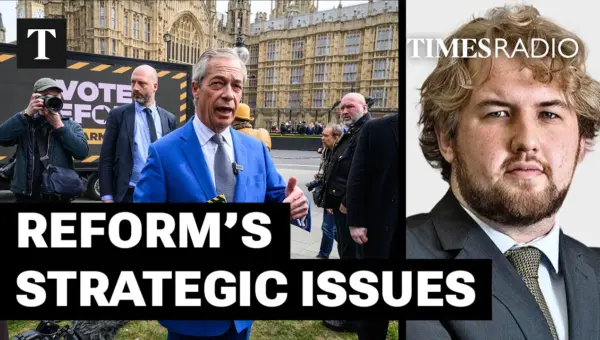
Reform Party Faces Challenge in Shedding ‘Trump Party’ Image
The UK's Reform Party faces pressure to distance itself from Donald Trump to broaden its appeal for government power. Meanwhile, international peace talks regarding the Iran conflict are hampered by deep divisions, with a negotiator describing the gaps as an "abyss." The geopolitical landscape is shifting, prompting discussions about alliances and leadership styles.