Trump’s Iran Blockade: A Risky Gamble With Uncertain Returns?
The U.S. has deployed significant naval power to the Persian Gulf, aiming to enforce a blockade against Iran. Military analysts warn this high-risk operation is difficult and potentially unsustainable without allied support. The strategy's effectiveness and costs are being closely scrutinized.


Trump’s Iran Blockade: A Risky Gamble With Uncertain Returns?
The United States has recently deployed significant naval power to the Persian Gulf, aiming to enforce a blockade against Iran. This move, championed by President Trump, is intended toPressure Iran by cutting off its access to vital resources and trade. However, seasoned military analysts and former Pentagon officials are raising serious concerns about the viability and risks associated with this strategy. They warn that such an operation is inherently difficult, costly, and potentially unsustainable, especially without strong backing from regional allies.
The High Cost of Force Posture
Maintaining a strong military presence in the region requires substantial resources. The U.S. has sent two aircraft carrier strike groups to the Gulf. One of these carriers has reportedly been deployed for the longest period since its construction. This sustained deployment raises questions about the significant taxpayer money being spent simply to maintain this force posture. Furthermore, instead of reducing troop presence, the U.S. has actually dispatched more soldiers. This suggests a potential preparation for further military actions, aligning with President Trump’s stated objectives.
Historical Parallels and Potential Dangers
While not a military expert, the concerns echo historical precedents. Operations similar to what might be envisioned in a full blockade or amphibious assault scenario have been described as potential “horror shows” by those with direct experience. Marines who have trained for such amphibious missions have voiced strong apprehension. They believe American soldiers could be sent into “kill boxes,” areas where they would be extremely vulnerable to enemy fire. The Iranian forces have also made it clear they intend to inflict maximum harm on American soldiers, signaling a dangerous intent.
Differing Expectations and Strategic Goals
President Trump’s approach to this situation seems to be based on a specific set of expectations. However, the reality on the ground may present a much more complex and challenging environment than initially anticipated. The effectiveness of a blockade relies heavily on international cooperation and the ability to enforce it comprehensively. Without the full support of allies, such as those in the Persian Gulf region, the blockade’s impact could be significantly weakened. Allies often provide crucial intelligence, logistical support, and naval presence, making enforcement more robust and less risky for any single nation.
The Role of Allies
The transcript highlights the critical need for allied support. Without it, the blockade becomes a much riskier proposition for the United States alone. Allies can offer different perspectives, share the burden of enforcement, and provide essential intelligence on Iranian movements and activities. Their participation also lends greater international legitimacy to the operation. Conversely, a unilateral U.S. effort might be viewed with suspicion by some nations, potentially undermining diplomatic efforts and increasing regional tensions.
Assessing the Risks vs. Rewards
The core question remains: will this blockade actually work? The potential downsides are significant. There’s the financial cost, the risk to American service members, and the possibility of escalating tensions in an already volatile region. The rewards, if successful, would be putting significant economic pressure on Iran, potentially forcing a change in its behavior. However, the path to achieving those rewards is fraught with peril. The strategy appears to be a high-stakes gamble, where the potential for failure or unintended consequences is substantial.
Why This Matters
The deployment of naval forces and the imposition of a blockade have far-reaching implications. They directly impact regional stability, international trade routes, and the safety of military personnel. The effectiveness of such measures can shape geopolitical dynamics and influence diplomatic negotiations for years to come. Understanding the potential risks and rewards is crucial for evaluating the wisdom of this policy. It forces us to consider whether the objectives are achievable through such forceful means and at what potential cost.
Implications, Trends, and Future Outlook
This situation reflects a broader trend of assertive foreign policy actions taken by the Trump administration. The focus on economic pressure and military deterrence is a common theme. The future outlook for this blockade depends on several factors: Iran’s response, the willingness of allies to participate or at least tacitly support the effort, and the sustained political will within the U.S. to bear the costs. If the blockade proves ineffective or too costly, it could lead to a reassessment of U.S. strategy in the region. Conversely, if it achieves its intended goals, it could embolden similar tactics in future international disputes. The potential for miscalculation and escalation remains a significant concern, underscoring the need for careful consideration and clear objectives.
Source: Will Trump’s Iran blockade actually work — or is it too risky to sustain? (YouTube)

Related Articles
Trump’s Pope Feud Risks Alienating Key Catholic Voters
Former President Donald Trump is facing mounting pressure following a public spat with Pope Francis and escalating international tensions. The dispute with the Pope risks alienating crucial Catholic voters, while the US blockade of Iranian ports adds to global instability. These events unfold as Trump continues to fight legal battles against media organizations.

Hungary Rejects Orban, Embraces Pro-EU Path
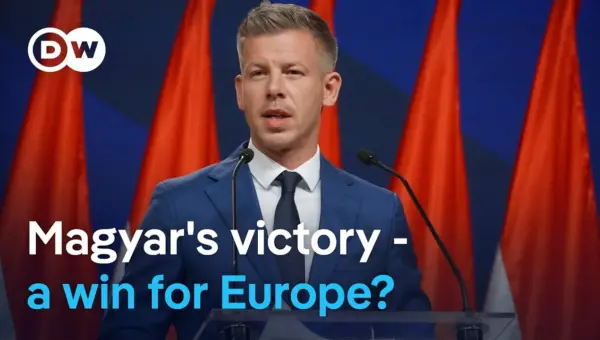
Hungary has elected Peter Magyar as its new leader, signaling a significant shift away from Viktor Orban's nationalist policies and a renewed commitment to the European Union. Magyar's government prioritizes securing frozen EU funds and improving relations with the bloc, though challenges remain in addressing migration and past ties to Russia.


Iran Blockade Shifts Global Oil Flow to U.S.
A blockade in the Strait of Hormuz has triggered a major shift in global oil supply routes, with supertankers now heading to the U.S. Gulf Coast. Despite geopolitical tensions, markets remain resilient, and corporate profits are projected to rise.