Trump’s Faith Feud: Pope Clash, Jesus Pic Raise Doubts
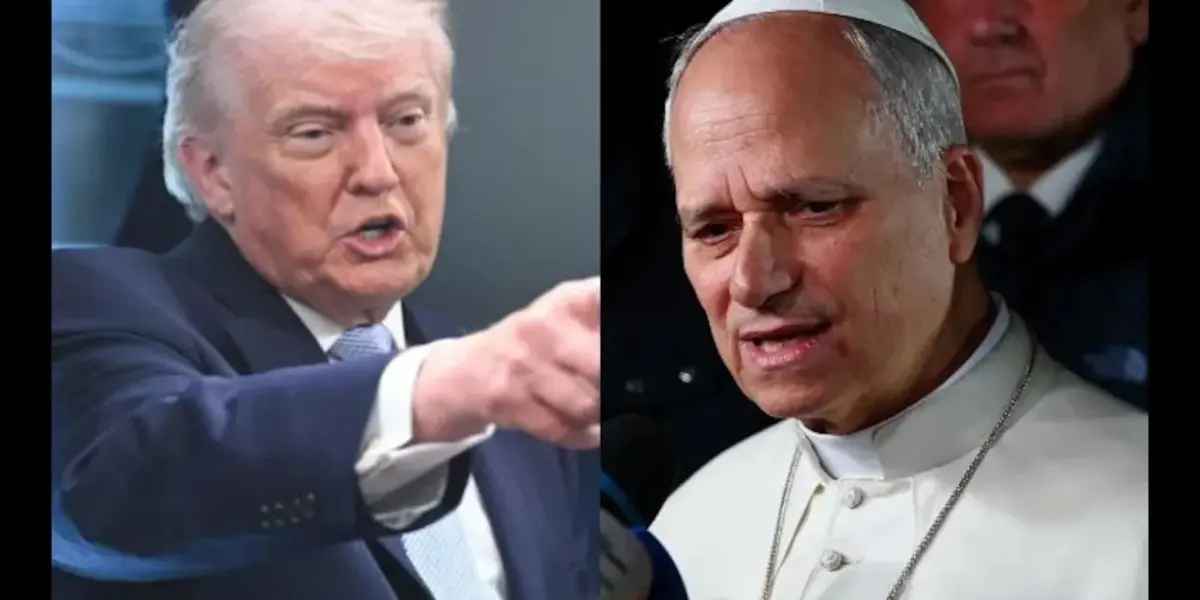
Former President Donald Trump's recent public clash with Pope Francis over the war in Iran, followed by his posting of a Christ-like image, has ignited debate about his use of faith and leadership. Critics question his sincerity and judgment, drawing parallels to biblical warnings about false prophets.

Trump’s Faith Feud: Pope Clash, Jesus Pic Raise Doubts
In a recent public exchange, former President Donald Trump found himself in a notable disagreement with Pope Francis, sparking widespread discussion. This event, alongside Trump’s later posting of an image depicting himself in a Christ-like manner, has led many to question his understanding and portrayal of faith and leadership.
Pope Criticizes Trump’s Stance on Iran
The friction began when Pope Francis, in comments reported by 60 Minutes, spoke out about the war in Iran, urging a peaceful resolution. He stated, “Too many innocent people are being killed. And I think someone has to stand up and say, ‘There’s a better way to do this.'” This call for peace was met with a sharp retort from Trump, who told reporters, “I’m not a big fan of Pope Leo. He’s a very liberal person.” Trump specifically criticized the Pope’s stance on Iran, arguing that a nuclear Iran would be catastrophic and that the Pope’s approach was too weak.
The Pope, identified as Pope Leo XIV, is the first U.S.-born Pope, often referred to as the “American Pope.” This detail made Trump’s criticism particularly noteworthy, as it involved an American figure on a global religious stage. The exchange highlighted a stark difference in their approaches to international conflict and diplomacy, with the Pope advocating for peace and Trump emphasizing a strong stance against perceived threats.
The Christ-like Image Controversy
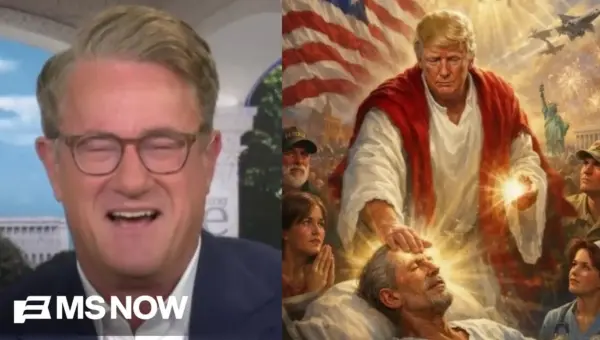
Adding another layer to the controversy, Trump later posted an image on Truth Social that appeared to show him in religious robes, healing a sick man. While Trump claimed the image was meant to depict him as a doctor, possibly in connection with the Red Cross, many observers saw it as a deliberate attempt to portray himself as a Christ-like figure. This post came shortly after Trump had threatened war crimes and clashed with the Pope, leading to widespread criticism of his judgment and the appropriateness of such imagery.
When questioned about the image, Trump insisted it was not depicted as Jesus but as a doctor. He suggested that only “fake news” would interpret it otherwise. However, this explanation did little to quell the criticism. Many felt that if Trump was willing to post such a potentially blasphemous image, he should have the courage to stand by it, rather than offering a revised explanation.
Questions of Faith and Leadership
The incidents raise significant questions about how public figures, especially political leaders, use and represent faith. The Pope’s call for peace and Trump’s dismissive response, coupled with the controversial image, have led some to question Trump’s sincerity and his fitness for leadership. Critics point to biblical passages, such as Matthew 7:15, which warns against “false prophets,” suggesting a parallel to Trump’s public persona and actions.
The analysis suggests that Trump has a talent for marketing himself as something he is not, a skill he has employed with both political and religious groups. For example, he presented himself as a champion of the poor, yet his administration’s policies, like expanding work requirements for SNAP benefits and potentially reducing health insurance coverage, have been criticized for potentially harming vulnerable populations. Similarly, his strong appeal to evangelicals is contrasted with his admitted doubts about reaching heaven and his claims about reading the Bible, which some suggest are not genuine.
Why This Matters
This situation matters because it highlights the complex relationship between faith, politics, and public perception. When a prominent political leader engages in public disputes with religious figures and uses religious imagery in a way that many find questionable, it can shape public discourse and influence voters’ views on character and authenticity. It also raises concerns about the potential for leaders to exploit religious sentiment for political gain, a tactic that has been historically problematic.
Implications and Future Outlook
The ongoing debates around Trump’s public statements and actions, particularly concerning faith, suggest a continuing trend of challenging traditional norms in politics. His ability to mobilize a dedicated base, even amidst controversy, indicates a significant shift in how political leadership is perceived and accepted. The future may see more leaders engaging in similar rhetorical strategies, blurring the lines between personal conviction, political messaging, and public image.
The events also underscore the importance of critical evaluation of political figures. The public’s ability to discern genuine conviction from calculated performance is crucial in a democratic society. As political discourse continues to evolve, the ability to analyze such instances thoughtfully will be essential for informed decision-making.
“The reality is it may not have been the greatest idea for conservatives to put their faith in a man who clearly only has faith in himself.”
This statement reflects a growing sentiment among some observers that placing unwavering faith in any single political figure, regardless of party affiliation, can be misguided. It suggests a need for a more nuanced approach to political support, one that prioritizes policy and principle over personality.
Historical Context
Historically, the intersection of religion and politics has always been a sensitive and often contentious area. Leaders have frequently invoked religious themes to connect with voters and legitimize their actions. However, the direct public clashes and the use of self-aggrandizing religious imagery, as seen in these recent events, represent a more overt and perhaps provocative approach to this dynamic.
The challenge for the public is to distinguish between genuine religious observance and political performance. In the past, such displays might have been met with greater public skepticism or condemnation. Today, in a highly polarized environment, interpretations can vary widely, making objective assessment more difficult. The impact of social media in amplifying these messages, both positive and negative, further complicates the historical context, allowing for rapid dissemination and intense scrutiny.
Source: Trump gets BRUTAL update amid Pope feud | Another Day (YouTube)

Related Articles
Judge Tosses Trump’s $10B Lawsuit Against WSJ
A federal judge has dismissed former President Donald Trump's $10 billion lawsuit against The Wall Street Journal. The judge ruled that Trump's team failed to prove 'actual malice' by the newspaper. Trump's legal team stated they will continue to fight against what they call 'fake news'.
Trump’s ‘Jesus’ Image Sparks Outrage, Laughter
Donald Trump's Easter social media post depicting himself as Jesus Christ sparked widespread outrage and disbelief, leading to the image's swift deletion. His subsequent claim that he thought the image was of himself as a doctor was met with derision, with critics citing biblical ignorance and blasphemy. The incident occurred amid broader criticism of Trump's remarks about Pope Francis, further fueling debate about faith and politics.

Trump Cleans House Amidst Growing Chaos
President Trump's recent cabinet shake-ups reveal a pattern of prioritizing loyalty over competence. With a depleted talent pool and a leader who shuns advice, the administration faces increasing chaos and uncertainty, impacting both domestic policy and global stability.