Judge Slams Trump’s $10 Billion Lawsuit as Baseless
A federal judge has dismissed Donald Trump's $10 billion defamation lawsuit against The Wall Street Journal. The judge found no evidence to support Trump's claim that a birthday card sent to Jeffrey Epstein was a forgery or that the newspaper acted with malice. The card's presence in Ghislaine Maxwell's compiled book further undermines Trump's forgery claim.

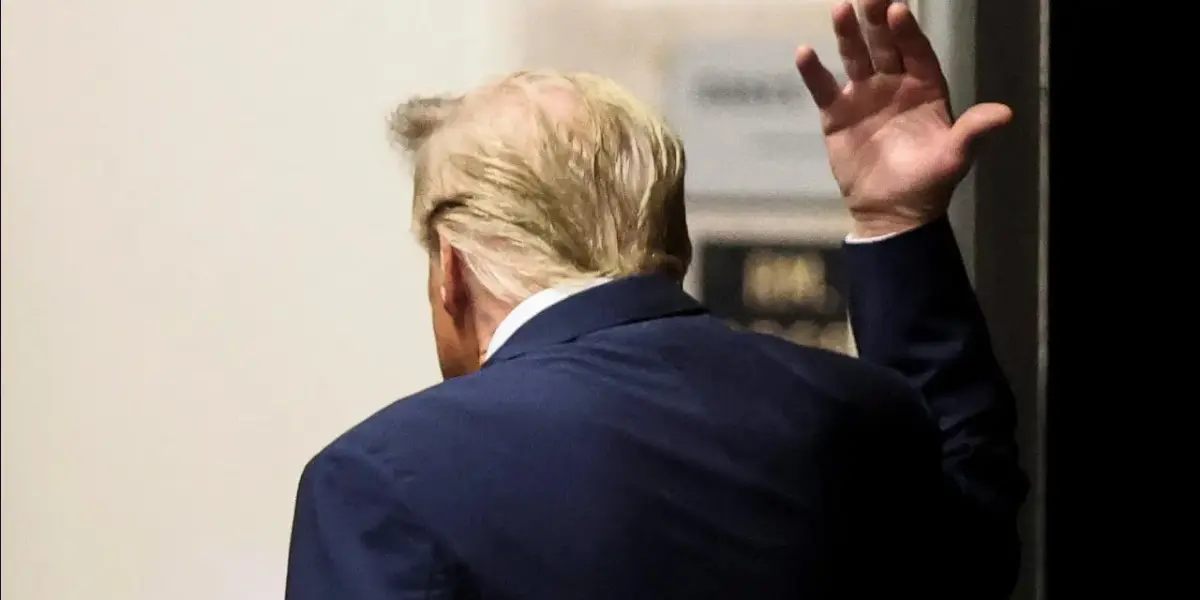
Judge Slams Trump’s $10 Billion Lawsuit as Baseless
A federal judge in Florida has thrown out a massive $10 billion defamation lawsuit filed by Donald Trump against The Wall Street Journal. The lawsuit claimed the newspaper defamed him by publishing a story about a birthday card purportedly sent by Trump to Jeffrey Epstein. The card was said to be shaped like a young woman and signed by Trump. This case pitted two powerful figures against each other: Donald Trump and Rupert Murdoch, the owner of The Wall Street Journal.
No Evidence, No Malice, No Case
The judge dismissed the lawsuit because, according to his ruling, there was simply no evidence to support Trump’s claims. To win a defamation case, a plaintiff must show not only that a statement was false but also that the publisher knew it was false and acted with “actual malice.” This means they acted with knowing or reckless disregard for the truth. The judge found that Trump’s complaint did not provide facts showing the Wall Street Journal’s reporting was false or that the newspaper acted with malice.
The judge also noted that the Wall Street Journal had made efforts to get comments. They reportedly reached out to Donald Trump himself, his White House, the Department of Justice (led by Trump’s own Attorney General), and the FBI. The fact that Trump’s own government agencies would not comment on his behalf speaks volumes. If his own Attorney General or FBI Director had evidence the letter was fake, they likely would have said so. Their silence suggested they had no such evidence to offer in support of Trump’s claim.
What Trump Needed to Prove
To move forward with his $10 billion claim, Trump needed to present facts, not just assertions. For example, he could have provided a handwriting analysis expert to testify that the signature on the card was not his. He could have also presented witness affidavits stating the letter was a forgery. Instead, Trump’s claim relied on his own word that the letter was fake. A $10 billion lawsuit requires more than just a simple denial.
The judge gave Trump and his lawyers a chance to fix the complaint. They have about a week to refile it with actual facts that could support a legitimate claim. If they can present evidence showing the Wall Street Journal knew the card was fake and published the story anyway, the case might proceed. However, simply stating the letter is fake is not enough to meet the legal standard required for such a significant lawsuit.
Why Judges Dismiss Cases Early
Some might wonder why a judge would dismiss a case so early, rather than letting it go to trial. Judges are bound by strict rules and procedures. If a lawsuit’s initial complaint does not meet the required legal standard, the judge has an obligation to dismiss it. The judge’s job is not to help a party avoid looking bad, but to ensure that legal proceedings are fair and follow established protocols. Letting a baseless case proceed wastes everyone’s time and resources.
The Epstein Connection and Maxwell’s Book
A key piece of evidence that strengthens the argument that the letter is not fake comes from an unexpected source. After Trump filed his lawsuit, Congress subpoenaed records from the Jeffrey Epstein estate. They were particularly interested in a leather-bound birthday book compiled by Ghislaine Maxwell, Epstein’s former associate. When this book was turned over, it contained the very same birthday card Trump claimed was a forgery. While it’s possible Maxwell could have forged it, the presence of the card in a book assembled by her, and the lack of evidence from Trump’s side, makes his forgery claim less believable.
What This Means for Trump and the Courts
The dismissal of this lawsuit sends a clear message: even powerful individuals must follow legal procedures and present evidence. Trump’s strategy of filing large lawsuits based on weak claims may be facing greater scrutiny. While this dismissal is specific to one court and one judge, the practical implications are clear. Judges are aware when the legal system is being used for publicity or to make political statements rather than to seek genuine justice. The $10 billion price tag on this lawsuit, now dismissed as meritless, highlights the gap between Trump’s assertions and legal reality.
Future Outlook
It remains to be seen whether Trump’s team will be able to refile an amended complaint with sufficient evidence. Given Trump’s history, it is possible he will try again. However, without solid proof of falsity and actual malice, any refiled complaint faces a high likelihood of being dismissed again. This case underscores the importance of evidence in legal proceedings and suggests that Trump’s legal challenges may continue to face uphill battles if not supported by concrete facts.
Why This Matters
This case matters because it demonstrates the checks and balances within the legal system. It shows that even a former president cannot win a defamation suit simply by claiming a published report is false. The requirement to prove falsity and actual malice, supported by evidence, is crucial for protecting a free press. Furthermore, the judge’s decision highlights that lawsuits must have a factual basis to proceed. Using the courts for publicity or to intimidate opponents, rather than to seek justice, is not tolerated. The judge’s thorough ruling, citing the lack of evidence and the Wall Street Journal’s due diligence, reinforces the integrity of the judicial process.
Source: Trump’s biggest lawsuit dealt SURPRISE BAD NEWS (YouTube)

Related Articles

Trump’s Pope Feud Risks Alienating Key Catholic Voters
Former President Donald Trump is facing mounting pressure following a public spat with Pope Francis and escalating international tensions. The dispute with the Pope risks alienating crucial Catholic voters, while the US blockade of Iranian ports adds to global instability. These events unfold as Trump continues to fight legal battles against media organizations.
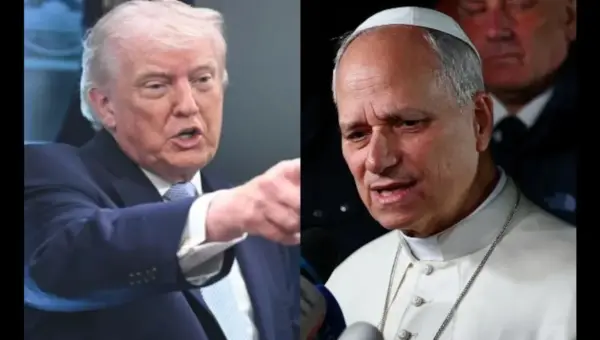
Trump’s Faith Feud: Pope Clash, Jesus Pic Raise Doubts
Former President Donald Trump's recent public clash with Pope Francis over the war in Iran, followed by his posting of a Christ-like image, has ignited debate about his use of faith and leadership. Critics question his sincerity and judgment, drawing parallels to biblical warnings about false prophets.
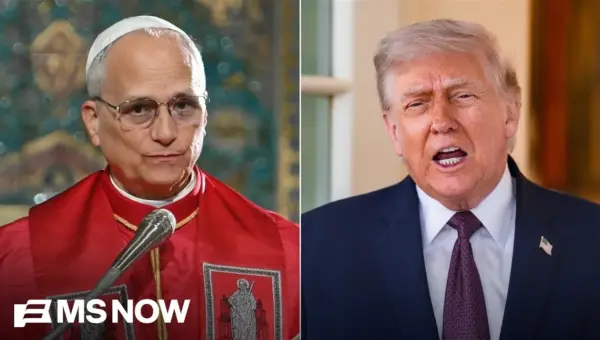
Bishop Budde: Trump’s Attacks on Pope Are About Right vs. Wrong
Bishop Mariann Budde criticizes President Trump's attacks on Pope Francis, framing the conflict as a matter of right versus wrong and the misappropriation of faith. She discusses the role of religious leaders in public life and urges a focus on peace and human well-being over partisan politics.