Corporate Catastrophes: Leaders Who Sank Their Companies
From beer blunders to tech titans' missteps, discover the leaders whose decisions led to the downfall of iconic companies like Blockbuster, Nokia, and Yahoo. A look at corporate catastrophes and the individuals at their helm.

From Beer to Blockbuster: Tales of Business Ruin
In the cutthroat world of business, a single misstep by leadership can have devastating consequences. From beloved brands to innovative startups, numerous companies have faced ruin, not from external market forces alone, but from the internal decisions of their own leaders. This article delves into some of the most striking examples of how one person’s poor judgment led to the downfall of once-thriving enterprises, as highlighted in a recent Watch Mojo compilation.
The Schlitz Brewing Fiasco: A Taste of Disaster
The Joseph Schlitz Brewing Company, a titan of the beer industry for much of the 20th century, found its fortunes plummeting in 1967. President and chairman Robert Eline Jr.’s ambitious initiative, ‘accelerated batch fermentation,’ introduced an additional beer stabilizer. Unfortunately, this stabilizer reacted with another, creating unappetizing, mucous-like flakes that revolted customers. Despite Schlitz’s historical reputation and its role in popularizing the brown beer bottle, this quality issue proved too much to overcome. By the time Eline passed away in 1976, the company’s slide was well underway. Though the Schlitz brand lives on today under Pabst Brewing Company with a reconstructed formula, the original company’s legacy was irrevocably tarnished.
Blockbuster’s Missed Opportunity: The Netflix Revolution
For decades, Blockbuster was synonymous with home video entertainment. Its ubiquity was captured in the tagline, “There are over 9,000 ways to make tonight a Blockbuster night.” However, under CEO John Antio, who took the helm in 1997, the company failed to adapt to the burgeoning threat of Netflix. While Antio took Blockbuster public in 1999, he famously, and allegedly, laughed off a $50 million offer from Netflix to acquire them in 2000. This decision proved to be a monumental miscalculation. Blockbuster’s reliance on late fees and physical stores proved unsustainable as Netflix’s mail-order DVD service, and later its streaming model, offered convenience and a superior customer experience. Blockbuster declared bankruptcy in 2010, while Netflix ascended to become an entertainment powerhouse.
Nokia’s Downfall: The ‘Burning Platform’ Memo
Steven Elop’s appointment as CEO of Nokia Corporation in 2010 was seen as a strategic move to combat the market share lost to Apple’s iPhone. However, Elop’s tenure was marked by a series of decisions that led to Nokia’s dramatic decline. The infamous “burning platform” memo, leaked in 2011, was intended to be motivational but was perceived as demoralizing. More critically, Elop announced Nokia’s pivot to Microsoft’s Windows Phone system, phasing out its existing operating systems. This shift proved disastrous, leading to plummeting sales, massive layoffs (over 40,000 employees), and an 85% drop in Nokia’s stock value. Elop stepped down in 2013, the same day Microsoft announced its acquisition of Nokia’s devices and services division.
Yahoo’s Lost Potential: The Microsoft Bid Rejection
At its zenith, Yahoo was valued at an astonishing $125 billion. However, growing competition from Google eroded its dominance. In 2008, Microsoft saw an opportunity and made a $44.6 billion offer to acquire Yahoo. CEO Jerry Yang, however, rejected the bid, viewing it as an undervaluation of the company. Negotiations faltered, and Yahoo’s value continued to decline. The subsequent announcement of an advertising partnership with Google, which was later curtailed, did little to stem the tide. Yang resigned in November of that year. In 2016, Yahoo was sold to Verizon for a mere $5 billion, a deal widely described as one of the saddest in tech history.
OceanGate’s Tragic Hubris: The Titan Submersible Disaster
Stockton Rush, founder of OceanGate, led the company offering submersible trips to the Titanic wreckage. Despite widespread concerns about the Titan submersible’s safety, voiced by industry experts as early as 2018, Rush appeared to disregard them. A group of three dozen experts even wrote to OceanGate, warning of impending catastrophe. In June 2023, the Titan submersible, carrying Rush and four other passengers, lost contact with its mother ship. Days later, debris was discovered, confirming the tragic loss of all five individuals. The incident led to multiple investigations, a $50 million lawsuit, and the suspension of OceanGate’s operations, underscoring the dangers of prioritizing innovation over safety.
Elon Musk and X (Twitter): A Branding Blunder
Elon Musk’s acquisition of Twitter for $44 billion in 2022 was a landmark event, but his subsequent decisions have been widely criticized. The rebranding of Twitter to ‘X’ erased years of established brand recognition. More significantly, a drastic reduction in content moderation led to a substantial increase in hate speech and disinformation. This, coupled with mass layoffs, drove away advertisers and users alike. Within two years of the acquisition, the company’s estimated value had plummeted by nearly 80%, severely damaging both the platform’s reputation and Musk’s own.
MySpace’s Demise: Rupert Murdoch’s Costly Mistake
In 2005, Rupert Murdoch’s News Corp acquired MySpace for $580 million when it was the world’s most popular social networking site. A lucrative $900 million advertising deal with Google, however, led to a significant decline in user experience due to site slowdowns. Simultaneously, Facebook emerged as a formidable competitor, siphoning users away from MySpace. Despite MySpace’s powerful network effects, gross incompetence and systematic mismanagement over several years allowed Facebook to overtake it. By 2009, nearly 40% of MySpace’s workforce was laid off. Two years later, it was sold for a mere $35 million, a fraction of its purchase price. Murdoch himself later admitted it was a “huge mistake.”
Other Notable Downfalls
The list of leaders whose decisions led to corporate ruin is extensive:
- Christopher Scayes (Quintex Limited): Engaged in massive expansion financed by enormous debt, ultimately leading to bankruptcy and his flight to Spain to avoid legal repercussions.
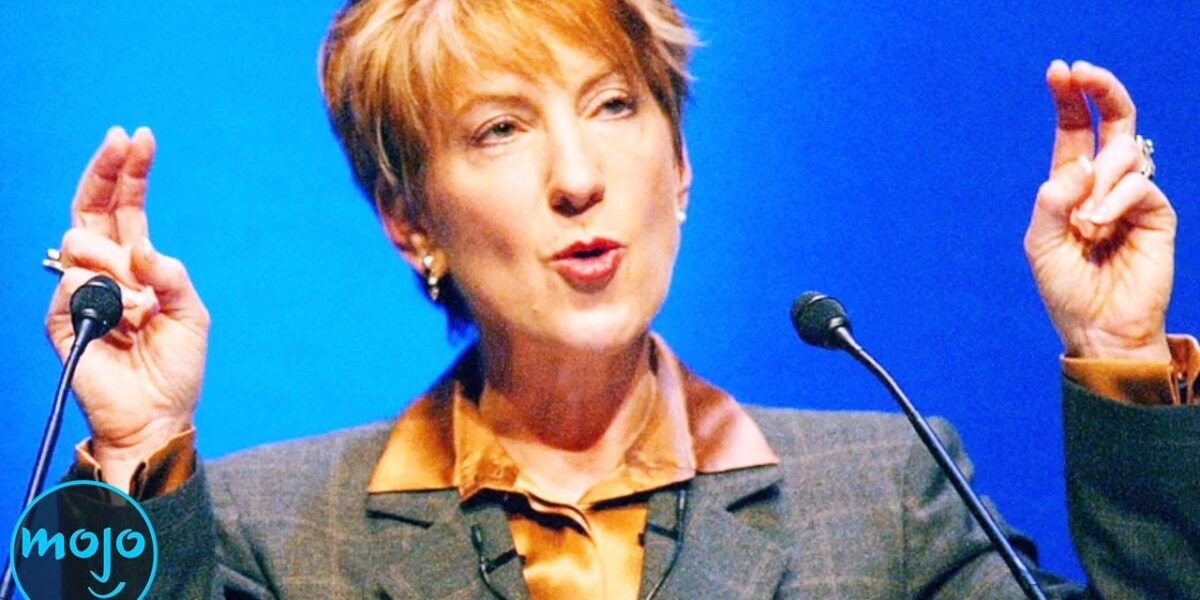
- Carly Fiorina (Hewlett-Packard): Her tenure saw a significant shift away from the company’s founding principles, marked by layoffs and an unpopular acquisition of Compaq, which negatively impacted HP’s value and reputation.
- Jack Welch (General Electric): While lauded for increasing shareholder value, his aggressive downsizing, offshoring, and outsourcing practices came at the expense of the workforce and the company’s long-term stability, eventually leading to GE’s debt crisis.
- John DeLorean (DeLorean Motor Company): Despite the iconic status of the DMC-12, production issues, cost overruns, and DeLorean’s involvement in a cocaine trafficking scheme ultimately led to the company’s collapse.
- Albert Dunlap (Sunbeam Products): Known as “Chainsaw Al,” he was infamous for gutting workforces to boost short-term profits. His fraudulent booking of revenue at Sunbeam led to its second bankruptcy.
- Mitch Lowe (MoviePass): The co-founder of Netflix and former president of Redbox, Lowe’s unsustainable business model for MoviePass, which offered unlimited movies for a low monthly fee, led to massive losses and the company’s eventual bankruptcy.
- Angelo Mozilo (Countrywide Financial): Accused of insider trading and misleading investors about the company’s risky mortgage underwriting practices, Mozilo became a symbol of the predatory lending that fueled the 2008 financial crisis.
- Ron Johnson (J.C. Penney): A former Apple executive, Johnson’s attempt to overhaul J.C. Penney with a new pricing strategy and branding alienated loyal customers, leading to plummeting sales and his eventual ousting.
- Dennis Kozlowski (Tyco International): Treated the company as his personal ATM, financing an extravagant lifestyle with corporate funds, resulting in his conviction for fraud and Tyco’s subsequent struggles.
- Eddie Lampert (Sears): Through aggressive cost-cutting and financial engineering, Lampert is accused of stripping Sears of its valuable assets, leading to its eventual bankruptcy.
- Sam Bankman-Fried (FTX): Orchestrated one of the largest financial frauds in crypto history, funneling billions in customer funds to his hedge fund, resulting in an $8 billion loss and his conviction for fraud.
- Elizabeth Holmes (Theranos): Built a $9 billion illusion around a faulty blood-testing technology, leading to her conviction for fraud and a prison sentence.
- Richard S. Fuld Jr. (Lehman Brothers): His leadership during the subprime mortgage crisis, characterized by risky investments and a refusal to merge, led to Lehman Brothers’ collapse and the largest bankruptcy in U.S. history.
- Gerald Ratner (Ratner Group): His infamous joke about his company’s products being “total crap” led to a public outcry, a stock price collapse, and severe damage to the brand’s reputation.
These cautionary tales serve as stark reminders that leadership, integrity, and strategic foresight are paramount to the survival and success of any enterprise.
Source: Top 30 Times One Person DESTROYED a Company (YouTube)

Related Articles


Trump’s Faith Feud: Pope Clash, Jesus Pic Raise Doubts
Former President Donald Trump's recent public clash with Pope Francis over the war in Iran, followed by his posting of a Christ-like image, has ignited debate about his use of faith and leadership. Critics question his sincerity and judgment, drawing parallels to biblical warnings about false prophets.

Economy Plunges While Distractions Dominate Trump’s Presidency
A deep dive into President Trump's administration reveals a concerning trend: economic struggles are being overshadowed by distractions. The analysis argues that a consistent refusal to adapt, seen in past business failures, is hindering progress and impacting Americans' ability to afford basic necessities.

Arcade Classics That Still Rule the Game
A recent countdown reveals the top 20 greatest arcade games of all time, celebrating titles like Gauntlet, Daytona USA, and Mortal Kombat 2. These classics defined genres and remain beloved by gamers worldwide.