Space Race Heats Up: New Missions and Private Ventures Ascend
Recent space news highlights a surge in launch activity, a strategic shift by Blue Origin towards lunar missions, and ongoing progress on SpaceX's Starship. Challenges persist with ULA's Vulcan rocket and Artemis II's timeline, while international players and private ventures expand Earth observation and orbital capabilities.

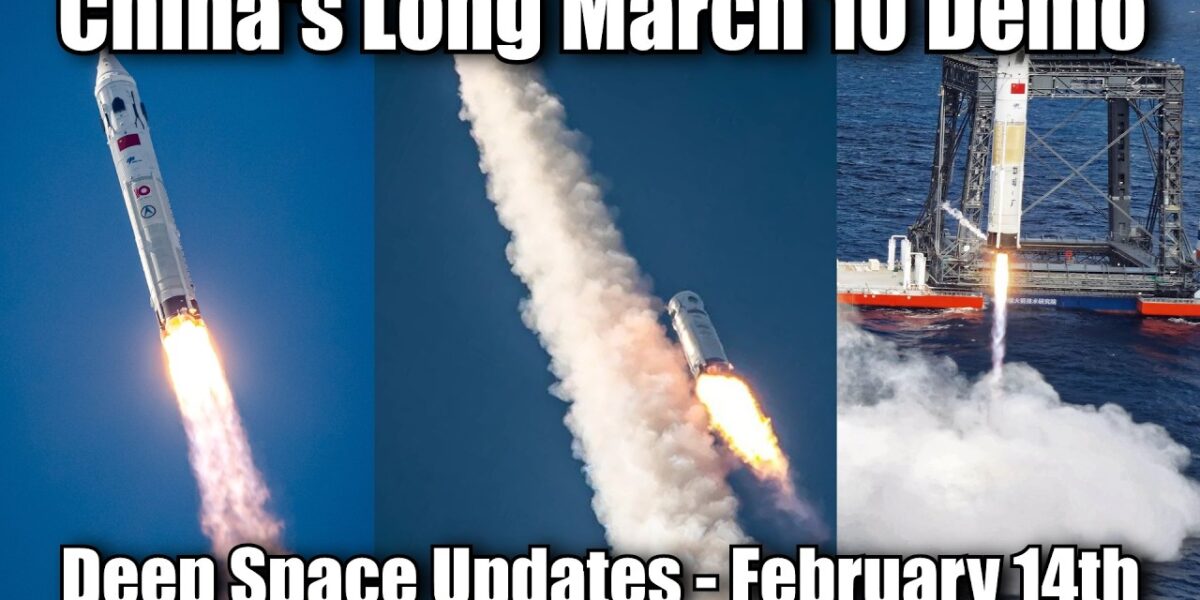
Space Race Heats Up: New Missions and Private Ventures Ascend
The cosmos is buzzing with activity as both established space agencies and burgeoning private companies push the boundaries of exploration and commercialization. Recent weeks have seen a flurry of rocket launches, significant strategic shifts from industry giants like SpaceX and Blue Origin, and crucial updates on lunar missions, painting a dynamic picture of humanity’s accelerating presence in space.
Starlink Constellation Grows Amidst Falcon 9 Investigations
SpaceX has been remarkably busy launching its Starlink satellites, with multiple successful missions from Vandenberg and Cape Canaveral throughout January and early February. However, a minor anomaly on a February 2nd Falcon 9 launch, involving an engine relight issue, led to a brief grounding of the fleet. The investigation revealed a gas bubble in a transfer tube, prompting SpaceX to refine its chill-down procedures for engine relights in space. Despite this, the Falcon 9 returned to flight promptly, demonstrating the resilience and rapid problem-solving capabilities of the company. Notably, a January 28th Falcon 9 launch from Florida carried the USA 581 satellite, also known as GPS3 number 9, named ‘Ellison Onizuka’ in honor of the Challenger astronaut, coinciding with the 40th anniversary of the Challenger disaster. This mission highlights the dual-purpose nature of these launches, serving both national security and scientific objectives.
International Collaborations and New Earth Observation Capabilities
Beyond SpaceX, the global launch manifest has been diverse. Rocket Lab’s Electron rocket successfully deployed Korea’s first new space earth observation satellite, NEON 1A, on January 30th, a precursor to a 10-satellite constellation aimed at high-resolution Earth imaging. Algeria also joined the ranks of nations with advanced Earth observation capabilities with the launch of ALSAT 3B on a Chinese Long March 2C rocket on January 31st. Meanwhile, Russia’s Soyuz 2.1b launched Cosmos 2600 and eight smaller satellites on February 5th, believed to be for Earth observation and reconnaissance, with the main satellite reaching a 3,300 km orbit and the smaller ones at approximately 500 km, showcasing the versatility of the Fregat-M upper stage in deploying multiple payloads at different altitudes. China continued its advancement with the launch of the Shenlong space plane, its version of a reusable experimental spacecraft, on a Long March 2F/T on February 7th. While details remain scarce, this mission signifies China’s progress in developing reusable orbital technologies, similar to the U.S. X-37B.
Challenges and Triumphs for Heavy-Lift Launchers
The heavy-lift sector has seen both successes and significant challenges. On February 12th, a Chinese Gilong 3 successfully launched Pakistan’s PRSS-1 EO2 Earth observation satellite. In Kazakhstan, a Proton-M rocket with a DM3 upper stage launched a geostationary weather satellite on February 12th, marking the final flight for the Proton-M with this particular upper stage, signaling the gradual retirement of the aging, hypergolic-fueled rocket. However, the United Launch Alliance’s (ULA) Vulcan Centaur faced a critical issue on its USSF-87 mission on February 12th. One of its GEM 63XL solid rocket boosters, manufactured by Northrop Grumman, appeared to lose its nozzle during ascent, a repeat of a similar incident on Vulcan’s second flight. Despite the anomaly, the core stage compensated, enabling the mission to reach orbit. This recurring problem with the solid rocket boosters raises serious concerns about Northrop Grumman’s manufacturing and quality control processes, potentially impacting future national security payloads and Amazon’s Kuiper constellation deployments, which rely heavily on these boosters.
Artemis Program Faces Setbacks, Private Missions Expand
The Artemis program, NASA’s initiative to return humans to the Moon, encountered a delay on its planned wet dress rehearsal for Artemis II on February 3rd. Issues with hydrogen leaks around umbilical seals during a full countdown held the test, necessitating repairs. While a subsequent test of the seals was conducted, the earliest potential launch window for Artemis II has been pushed to early March, with April being a fallback if further delays occur. This highlights the persistent challenges of working with cryogenic propellants like hydrogen. On a brighter note, NASA has finally approved the use of commercial smartphones, starting with the Crew-12 mission to the ISS and Artemis II, allowing astronauts to capture high-resolution imagery and leverage personal electronic devices in space, a move that has been standard on private spaceflights for years.
Blue Origin Shifts Focus to the Moon, SpaceX Eyes Lunar and Mars Ambitions
In a surprising strategic pivot, Blue Origin has announced the permanent shutdown of its New Shepard suborbital program. All 500 personnel involved are being reassigned to lunar missions, with their Blue Moon Mark 1 lander currently undergoing thermal vacuum testing. This move signals a clear prioritization of NASA’s Artemis program and a dedicated effort to accelerate lunar capabilities, potentially bypassing multi-refueling flights for quicker lunar access. Meanwhile, SpaceX, under Elon Musk, has also declared a temporary shift in focus from Mars to the Moon, aiming for a self-sustaining lunar city. This strategic alignment with lunar goals was subtly acknowledged by Jeff Bezos, who tweeted an image of a tortoise, referencing the fable of the tortoise and the hare, perhaps suggesting a more measured, yet persistent, approach to lunar endeavors compared to SpaceX’s rapid pace. SpaceX’s ambition is further underscored by its recent merger with XAI, valuing the combined entity at $1.25 trillion, and plans for a million-satellite data center cluster in orbit, signaling a bold vision for space-based computing and industry.
New Space Ventures and Orbital Debris Concerns
The burgeoning private space sector continues to evolve. Axiom Space has secured approval for a fifth private astronaut mission to the ISS, scheduled for January 2027, and has raised $350 million in investment to support its private astronaut flights and future space station development. Similarly, VAST has received approval for its own private astronaut mission to the ISS, slated for late 2027, marking the first non-Axiom private mission. In a more somber note, the Russian satellite Luch (Olympic) broke up in geostationary graveyard orbit, creating a debris field that poses a risk to operational satellites. This incident serves as a stark reminder of the growing problem of space debris and the critical need for responsible deorbiting practices.
Starship’s Path to Flight and Emerging Technologies
Progress continues on SpaceX’s Starship program, with a V3 booster undergoing cryo testing and receiving FAA approval for launch complex 39A, allowing for up to 44 annual launches. Environmental approvals are also in place for Starbase, enabling new launch trajectories, including one over Florida. Looking ahead, Rocket Lab is preparing to test a scramjet engine on a suborbital hypersonic mission, showcasing advancements in high-speed propulsion. The ongoing developments, from private lunar ambitions to the maturation of heavy-lift rockets and the increasing commercialization of space, indicate an exciting and rapidly evolving era for space exploration and utilization.
Source: SpaceX & Blue Origin Shoot For The moon – Deep Space Updates February 14th (YouTube)

Related Articles


NASA Aims for Moon Base, Eyes Mars with Artemis Missions
NASA's Artemis program is advancing plans for a lunar base and future Mars missions, emphasizing scientific discovery and technological innovation. The Artemis II mission successfully tested key spacecraft systems, crucial for future landings and deep-space exploration.


US Blockades Hormuz Strait; Space Race Heats Up
The U.S. military is implementing a naval blockade of the Strait of Hormuz following failed peace talks, raising global concerns about oil supply. Meanwhile, U.S. lawmakers face a packed agenda including a DHS shutdown, while NASA celebrates a successful moon mission and looks ahead to Artemis III.


SpaceX IPO Could Reach $2 Trillion Valuation
SpaceX is reportedly preparing for an IPO that could value the company at $2 trillion, driven by its advancements in AI and satellite internet. The company's innovative approach to space travel and its vision for orbital data centers position it as a major player in the tech landscape.