Starlink Disruption Fuels Ukrainian Advances in Zaporizhzhia, Sparks Russian Panic
Ukrainian forces are reportedly exploiting recent Starlink disruptions to launch localized offensives in the Zaporizhzhia and Dnipro regions, sparking panic among some Russian military bloggers who claim a frontline collapse. While Ukrainian officials describe these as tactical "mop-up operations," the events highlight the critical role of communication in modern warfare and the ongoing struggle for initiative along the southern front.


Ukrainian Forces Exploit Communication Gaps, Russian Frontline Under Pressure
Ukrainian forces are reportedly capitalizing on recent disruptions to Russian military communications, primarily the disconnection of Starlink terminals, to launch localized offensives and consolidate tactical positions in the Zaporizhzhia and Dnipro regions. While official Ukrainian assessments describe these actions as “mop-up operations” and tactical improvements, some prominent Russian military bloggers have expressed alarm, with one claiming the frontline in Zaporizhzhia has begun to “collapse.”
The situation underscores the critical role of satellite communication in modern warfare and highlights the ongoing struggle for initiative along the extensive front lines in southern Ukraine. As the conflict grinds on, even localized pushes can have significant psychological and tactical implications, particularly when coupled with vulnerabilities in an adversary’s command and control infrastructure.
The Zaporizhzhia-Dnipro Front: A Shifting Landscape
Reports from both sides indicate a heightened level of activity in the southern sector. Ukrainian forces are said to be advancing in pockets of territory previously held by Russia, particularly within the Dnipro Oblast, bordering Zaporizhzhia. This area, located southwest of the more frequently contested Dopil’ya and Pokrovsk axes, has seen recent Ukrainian pushes aimed at clearing Russian presence from what some analysts suggest is a strategic clearing operation along the administrative border.
Russian media outlet Rybar acknowledged Ukrainian counterattacks, stating, “The enemy is launching counterattacks, seeking to buy time to strengthen their defensive line between Popovsk and Velyka Novosilka.” Further north, intense battles have been reported in the vicinity of Ternove and Berizove. Deep State Map, a widely monitored open-source intelligence platform, has begun to show changes in territorial control within the ‘gray zone’ in these areas.
Initial Ukrainian assaults west of Ternove involved armored vehicles, leading to Ukrainian forces temporarily planting a flag before being targeted by Russian drones and artillery. While the western outskirts of the settlement remain contested, Ukrainian infantry groups reportedly continue to exert pressure, slowing Russian advances despite sustaining losses.
The Starlink Factor: Disrupting Russian Coordination
Central to the heightened Russian anxiety is the recent disconnection of Starlink terminals used by Russian forces. According to multiple Russian military commentators, this shutdown has led to a “complete and total loss of coordination on the ground.” One Russian milblogger, Alex Parker, explicitly linked the perceived “catastrophe” on the Dnipro and Zaporizhzhia fronts directly to the Starlink disruption, lamenting, “Damn it.”
The Starlink system, operated by SpaceX, provides high-speed, low-latency satellite internet, which has proven invaluable for military communications due to its reliability, portability, and relative security compared to traditional radio or cellular networks. While Russia possesses alternative communication methods, none are considered as robust or convenient as Starlink, which has become a critical tool for battlefield coordination, drone operations, and intelligence sharing.
The recent shutdown was implemented by SpaceX, reportedly in cooperation with Ukrainian authorities, who submitted a ‘whitelist’ of authorized terminals. Any terminal not on this list was rendered inoperable, effectively turning Russian-held units into “bricks” or “paperweights.” This sudden communication blackout has forced Russian units to adapt to less efficient and less secure backup systems, creating a significant learning curve and operational friction at a critical juncture.
The timing of the Ukrainian offensive, coinciding with difficult weather conditions and the Starlink problems, is seen by some analysts, including Russian milblogger Yuri Podolyaka, as a deliberate attempt to exploit the element of surprise and capitalize on Russian disarray. This disruption has likely hampered Russian forces’ ability to rapidly assess battlefield situations, coordinate troop movements, and respond effectively to Ukrainian maneuvers.
Conflicting Narratives: Russian Panic vs. Ukrainian Prudence
While some Russian accounts speak of a “collapse” and a 10-kilometer push into Russian-controlled territory near Ternove and Berizove, Ukrainian officials offer a more measured assessment. The spokesperson for Ukraine’s Southern Defense Forces stated that maps drawn by Russians “do not correspond to reality.” They emphasized that Ukrainian soldiers are conducting “reconnaissance and search operations and mop-up actions,” rather than a large-scale counteroffensive with “tens of kilometers” breakthroughs.
According to the Ukrainian perspective, these operations represent a “significant improvement in the tactical situation and the elimination of tactical vulnerabilities through mop-up actions and local offensive operations.” This suggests that Russia may have exaggerated its control over certain forward positions, and Ukrainian forces are now clearing out thinly held or isolated Russian elements. Malcontent News, another respected open-source intelligence resource, echoed this sentiment, suggesting that Russian mappers often assess any geolocated Russian soldier, dead or alive, as a consolidated gain, leading to inflated claims of advances.
The “fog of war” remains thick, and independent verification of the full extent of territorial changes is challenging. However, the disparity in rhetoric highlights the psychological dimension of the conflict, where perceptions of success or failure can be as impactful as actual gains. Ukrainian units, such as the 225th Assault Regiment, have also engaged in psychological warfare, issuing messages to Russian soldiers offering survival if they surrender, underscoring their intent to deplete Russian forces rather than solely engage in territorial conquest.
Challenges in Pokrovsk: A Russian Push Continues
While Ukrainian forces press advantages in the south, the situation on other fronts remains challenging. In the Pokrovsk direction, Russian forces continue their relentless push, particularly in the northern parts of the city. Reports indicate Russian infantry disguised in civilian clothes are engaged in retrieving bodies, and remote mine-laying operations are actively hindering Ukrainian advances and re-mining cleared areas.
Russian forces are also making constant attempts to enter Hroshyv, just northwest of Pokrovsk. Ukrainian drone pilots, focused on defending Hroshyv, inadvertently open corridors for Russian forces to entrench further north in Pokrovsk. Pressure is also intensifying daily on Rodynske, a crucial populated area that provides an exit route to Myrnohrad. Russian small infantry groups are conducting raids west of Rodynske, probing Ukrainian defenses and searching for drone pilots.
The operational situation in Myrnohrad has significantly deteriorated over the past week. Russian forces are concentrating heavy equipment, including artillery, in the central part of the town and conducting assault operations on the eastern outskirts. The intense Russian pressure north of Myrnohrad is severely limiting Ukraine’s ability to use unmanned aerial systems, thereby narrowing opportunities for effective fire impact on the enemy.
The 79th Separate Airborne Assault Brigade has been conducting search and strike operations north of Myrnohrad to detect and eliminate enemy groups, preventing Russian forces from entering the rear of Ukrainian positions. The fight for this pocket remains fierce, with Russia attempting to seal off Ukrainian forces. While some Russian milbloggers are already discussing post-capture scenarios for Pokrovsk, the battle for the city and surrounding areas remains highly contested, with heavy fighting ongoing, particularly on its northern outskirts.
Conclusion
The ongoing conflict in Ukraine remains a complex and dynamic struggle, characterized by localized offensives, tactical maneuvering, and the critical impact of technological factors like satellite communications. The reported Ukrainian advances in Zaporizhzhia, fueled by Russian communication breakdowns, highlight a potential shift in initiative in that sector, even if official assessments temper expectations of a broad collapse. Simultaneously, the persistent Russian pressure in areas like Pokrovsk underscores the multi-front nature of the war and the continuous grind for territorial control. As both sides adapt to evolving battlefield conditions and exploit new vulnerabilities, the situation remains fluid, with the ultimate extent of these operations yet to be definitively determined.
Source: Russia Wasn't Ready For This Attack (YouTube)

Related Articles
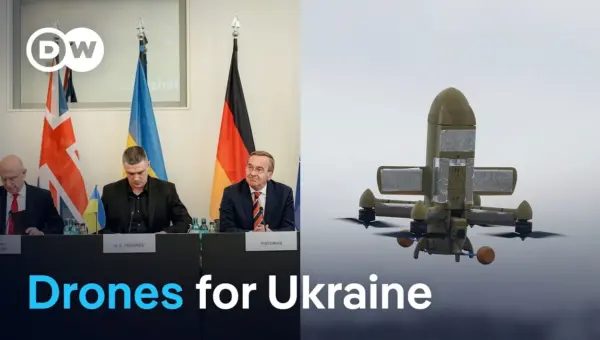
UK Pledges 120,000 Drones to Ukraine in Major Aid Package
Britain has pledged 120,000 drones to Ukraine, marking its largest aid package of its kind, during a meeting of the Ukraine Defense Contact Group in Berlin. The meeting highlighted both strong international solidarity and ongoing challenges in aid delivery, as Germany also boosts its own defense capabilities.


Russia’s War Costs Strain Putin’s Elite Bargain
Russia's prolonged war in Ukraine is straining President Putin's grip on power. Declining oil revenues and escalating military costs are forcing internal power shifts, with intelligence services reportedly gaining influence. This financial pressure is creating significant discontent among the elite and risking broader instability within the Kremlin.


Ukraine Strikes Russian Oil, Army Pushes Westward
Ukraine's spring offensive is underway, with Ukrainian forces making gains and forcing difficult choices for the Russian army. Meanwhile, Ukraine has intensified drone strikes on Russian oil infrastructure, aiming to cut off war funding. International interest in Ukraine's drone technology is growing, potentially reshaping global defense markets.