Starship Tiles Spotted on Falcon 9, New Space Race Heats Up
Recent weeks have been filled with intriguing space developments, including the potential testing of Starship heat shield tiles on Falcon 9 rockets and a surge in global rocket launches. China and the US continue to expand their satellite constellations, while NASA progresses with its lunar ambitions, including preparations for the Artemis 2 mission and a new nuclear power initiative for the Moon. The period also saw both successes and failures in launch missions, alongside advancements in suborbital flight and commercial space ventures.

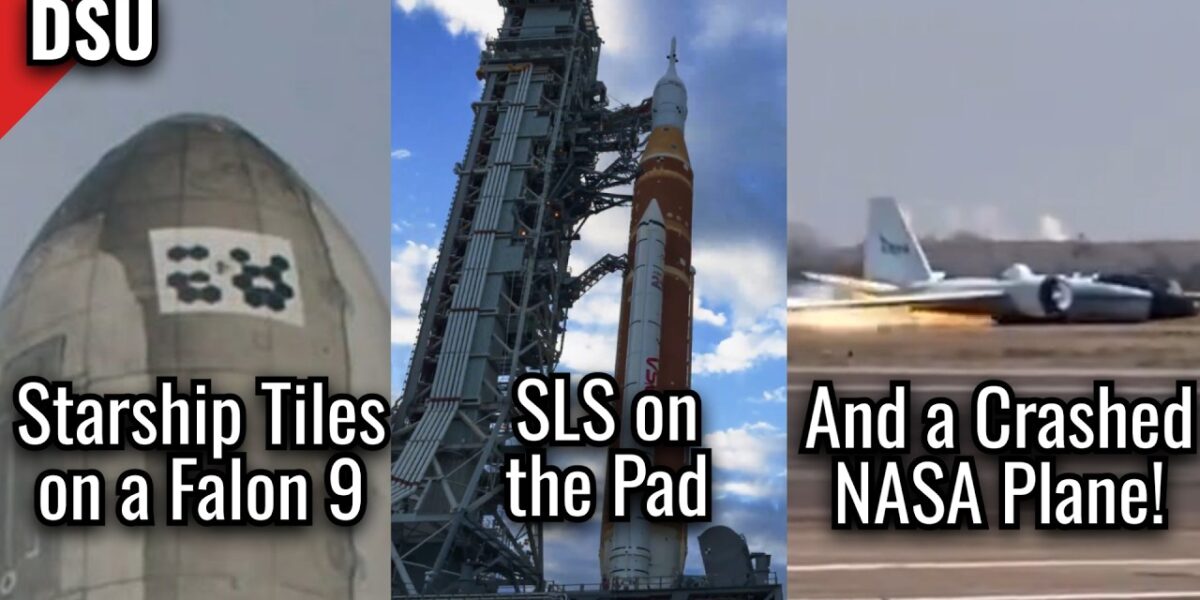
Starship Tiles Hint at Falcon 9 Testing, Unveiling New Space Race Dynamics
In a flurry of activity from the final weeks of January, the global space sector has seen a surge in rocket launches, intriguing technological tests, and significant updates on major space programs. From the burgeoning mega-constellations to the ambitious lunar ambitions of NASA, the pace of innovation and competition is accelerating. Among the most visually striking developments was the appearance of what seemed to be Starship’s signature hexagonal heat shield tiles on the fairing of a SpaceX Falcon 9 launch on January 25th. While SpaceX has yet to offer an official confirmation, the observation has sparked widespread speculation that these tiles are undergoing rigorous testing for dynamic forces and adhesion during ascent. This subtle yet significant detail underscores the relentless iteration and testing that underpins SpaceX’s rapid development of its Starship program, a colossal vehicle designed for interplanetary travel.
Adding a touch of pop culture to the high-tech world of rocketry, internet personality Mr. Beast even made a visit to SpaceX’s Starbase in Texas, where he was reportedly allowed to install a Starship tile himself. The anticipation builds around whether this particular tile will endure the stresses of a launch, a moment that could capture the attention of a vast online audience.
Mega-Constellations Expand Across Borders
The expansion of satellite mega-constellations continues unabated, with both the United States and China making significant strides. SpaceX launched four Starlink missions between January 14th and 25th, deploying more satellites into Earth’s orbit. Meanwhile, China’s Guawang constellation is also growing, with Long March rockets launching nine satellites on January 13th and another nine on January 19th. These vast networks of satellites are critical for global internet coverage, Earth observation, and potentially military reconnaissance.
A Mixed Bag of Launches and Failures
The period also saw a series of rocket launches with varying degrees of success. China’s Long March 6 launched the classified Yaoan 50 satellite on January 13th, likely for military reconnaissance or Earth observation. This launch notably utilized a new booster drop zone in western China, indicating an expansion of China’s launch capabilities to accommodate retrograde launches into higher inclinations.
Further Chinese launches included the Algerian Earth observation satellite Alsat on a Long March 2 on January 15th, and the Ti IoT constellation satellites from a sea-based platform on a Ceres 1 rocket the same day. However, not all missions were successful. A Long March 3B/E carrying the Shien 32 experimental spacecraft suffered a failure on January 16th due to an issue with reigniting its third-stage engine, causing the payload to burn up over the Pacific. In a more dramatic failure, the debut flight of China’s larger Ceres 2 rocket on January 16th experienced an early activation of its flight termination system, resulting in the loss of the Zidding Xiang 3 Earth observation satellite.
The US saw a successful SpaceX launch of Star Shield 572 for the National Reconnaissance Office (NRO) on January 17th, deploying classified payloads into a sun-synchronous orbit. On January 22nd, Rocket Lab successfully launched a mission for Open Cosmos from New Zealand, marking a swift deployment for the company’s new communications constellation, which had only received licensing approval in early December. This rapid execution was highlighted by Open Cosmos, contrasting their tangible orbital hardware with the typical white papers and animations of emerging constellations.
Suborbital Flights and Space Tourism Developments
The suborbital spaceflight arena also saw activity. On January 12th, China’s Cass Space launched its Lihong 1 capsule on a suborbital rocket, a platform designed for microgravity research and potentially space tourism, akin to Blue Origin’s New Shepard. Just days later, on January 22nd, Blue Origin conducted its New Shepard 38 flight, carrying six passengers, including Dr. Laura Styles, Director of Flight Operations and Astronaut Training, who stepped in when a paying customer dropped out.
Lunar Ambitions and the Artemis Program
NASA’s Artemis program, aiming to return humans to the Moon, continues to move forward. The Space Launch System (SLS) rocket for the Artemis 2 mission, which will carry astronauts around the Moon, was rolled out to the launchpad. Preparations are underway for a wet dress rehearsal, potentially as early as January 31st, with a launch window opening as early as February 6th. This mission is significant not only for its lunar destination but also for carrying the first toilet designed for use in space beyond low Earth orbit, a crucial piece of human-centric technology for long-duration missions.
Further solidifying lunar ambitions, NASA and the Department of Energy have formalized a partnership to develop a 100-kilowatt nuclear fission surface power system for the Moon by the end of the decade. This initiative is seen as a critical step towards establishing sustainable lunar bases, providing the essential power needed for extended human presence, especially during the lunar night, which can last up to 14 Earth days.
Solar Flares and Unexpected Landings
The Sun also made its presence felt with an X1.9 solar flare on January 23rd, one of the most powerful recorded since 2003. While significant auroral activity was anticipated, the polarization of the accompanying coronal mass ejection meant Earth was not directly enveloped, resulting in enhanced but not extreme auroral displays.
In a concerning incident, a NASA WB-57 high-altitude research aircraft experienced a landing gear failure upon landing at Ellington Field on January 27th. Fortunately, the crew was unharmed, though the aircraft sustained damage. This particular aircraft has been instrumental in capturing stunning footage of space missions, including the descent of Blue Origin’s New Glenn booster.
Commercial Space and Future Prospects
The commercial space industry continues to innovate. Firefly Aerospace is preparing for its Flight 7 mission and has announced the development of Alpha Block 2, a stretched version of its Alpha rocket with increased payload capacity. Blue Origin unveiled its Terra Wave satellite constellation, a two-tiered system designed for enterprise customers, distinct from consumer-focused constellations. They also announced that their New Glenn booster, “Never Tell Me The Odds,” will fly again on its third mission, carrying Bluebird Block 7 satellites.
Vast Space is integrating its Haven 1 space station, designed for 30-day commercial missions, with plans to launch it on a Falcon 9. Meanwhile, the startup Space Beyond aims to offer a more accessible, albeit posthumous, way for individuals to have their remains sent to orbit for a nominal fee.
Rocket Lab faced a setback when a carbon composite first-stage tank for its Neutron rocket experienced a structural failure during hydrostatic testing at Stennis Space Center. Despite this, the company maintains its schedule for a 2026 debut. The incident highlights the challenges in developing large composite structures for spaceflight.
As these diverse missions and developments unfold, they paint a picture of a rapidly evolving space landscape, marked by intense competition, technological breakthroughs, and ambitious plans for humanity’s future beyond Earth.
Source: Starship Heat Shield Surprises, NASA's Bad Landing, Blue Origin's Terawave – Deep Space Updates (YouTube)

Related Articles


Artemis II: Humanity Reaches for the Moon Again
Artemis II marks humanity's return to lunar exploration, sparking public excitement and practical questions. The mission signifies progress and inspires future generations. It's a crucial step toward deeper space exploration.


Artemis II Rocket Sheds Escape System at Liftoff
Curious objects seen speeding away from the Artemis II rocket at liftoff were part of the Emergency Egress System. This high-tech zipline is designed to rapidly remove astronauts from danger in the event of a launchpad emergency before the rocket commits to flight.


NASA Rockets to Moon’s South Pole After Crew’s Victorious Return
NASA's Artemis II astronauts have returned safely from lunar orbit, marking a major milestone after 50 years. The agency is now setting its sights on Artemis III, which aims to land humans on the moon. This program is building towards a sustained lunar presence and future Mars missions.