Trump Pledges to Declassify ‘All’ Alien Files, Sparking Debate Over Transparency and Political Distraction
Former President Donald Trump has announced his intention to declassify all government files related to extraterrestrial life, following intriguing remarks from Barack Obama. This pledge has ignited a debate over transparency and is viewed by some as a calculated political distraction from pressing global and domestic issues, echoing historical instances where governments have used 'flying saucers' to divert public attention.

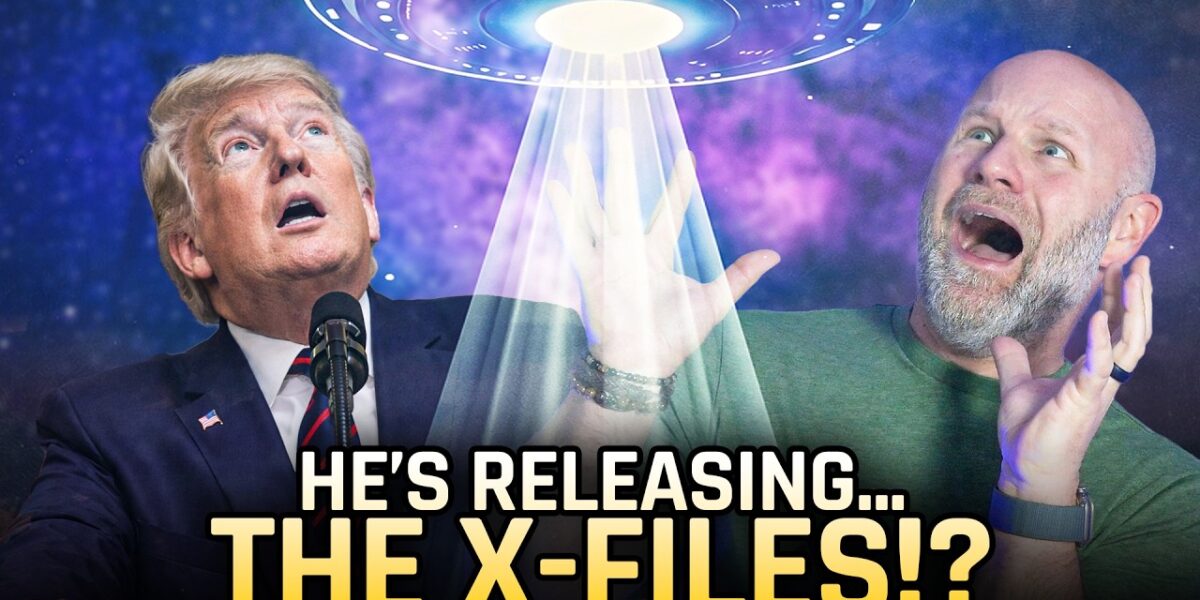
Trump Pledges to Declassify ‘All’ Alien Files, Sparking Debate Over Transparency and Political Distraction
In a dramatic turn of events that has captivated public attention, former President Donald Trump has announced his intention to declassify and release all government files related to extraterrestrial life. The pledge, made via his Truth Social platform, follows a series of intriguing comments from former President Barack Obama regarding the reality of aliens, and has ignited a fervent discussion about government transparency, the nature of classified information, and the potential for political maneuvering.
The announcement has been met with a mix of excitement from UFO enthusiasts and skepticism from political observers who view it as a calculated distraction from pressing national and global issues. As the prospect of unprecedented disclosure looms, the public is left to ponder the true motives behind this sudden push for transparency regarding the cosmos.
Obama’s Candid Remarks Ignite the Spark
The chain of events leading to Trump’s declaration began with an interview featuring former President Barack Obama. During a discussion with Brian Tyler Cohen, Obama was directly confronted with the question, "Are aliens real?" His response, a seemingly casual "Yeah," quickly caught the attention of many. While Obama elaborated with a caveat – "But you know, I mean, you know, they they really have it. We don’t have them like somewhere" – his initial affirmative created a ripple effect across social media and news outlets.
Obama’s remarks were widely interpreted as a lighthearted, yet intriguing, acknowledgment of the enduring mystery surrounding unidentified anomalous phenomena (UAPs), the modern term for what were once commonly known as UFOs. His comments, while not a definitive confirmation of alien visitation, certainly added fuel to the long-standing public fascination with the topic, coming from a former Commander-in-Chief known for his measured public statements.
Trump’s Swift and Strategic Response
The narrative took a significant turn when, aboard Air Force One, former President Trump was questioned by a reporter, Ducy, about Obama’s comments. "Back Obama said that aliens are real. Have you seen any evidence of nonhuman visitors to Earth?" Ducy asked. Trump’s initial reaction was to criticize his predecessor, stating, "Well, he gave classified information. He’s not supposed to be doing that."
This statement immediately raised eyebrows, as it implied that Obama’s casual "Yeah" was, in fact, a breach of classified information. When pressed further by Ducy, "So aliens are real?" Trump initially demurred, saying, "Well, I don’t know if they’re real or not. I can tell you he gave classified information. He’s not supposed to be doing that. He made a big mistake. He took it out of classified information. I don’t have an opinion on it."
However, Trump quickly pivoted, adding a significant promise: "I may get him out of trouble by declassifying." This hinted at a potential move towards disclosure, setting the stage for his subsequent, more explicit announcement. Later that same evening, Trump took to Truth Social, his own social media platform, to declare unequivocally: "I’m going to release all the files. I’m going to declassify everything. I’m gonna let y’all know what is happening with the extraterrestrials."
The Shadow of Political Distraction
While the prospect of alien disclosure has generated considerable excitement, many political commentators and analysts have viewed Trump’s announcement through a lens of skepticism, characterizing it as a potential political distraction. The timing of such a high-profile promise, amidst a complex domestic and international landscape, has fueled theories that the former president is strategically diverting public attention.
This theory posits that governments, throughout history, have employed similar tactics to shift public focus away from inconvenient truths or controversial actions. A notable historical parallel, cited by commentators, harks back to the early 1950s. During this period, the CIA reportedly considered various methods to distract the American public while it planned to overthrow the government of Guatemala. Internal telegrams from the era, as highlighted by some analysts, suggested options ranging from human interest stories about unusual births to the more exotic concept of "flying saucers."
This historical context underscores a long-held suspicion among some segments of the public that discussions around UAPs can serve as a convenient smokescreen. In the current climate, with numerous significant events unfolding globally and domestically, the suggestion that an alien disclosure could be a "distraction" resonates with those who are wary of political motives.
A History of Government Secrecy and Public Fascination
The topic of UAPs and government secrecy has a long and complex history in the United States. For decades, official government policy largely dismissed sightings and reports, often attributing them to conventional explanations, misidentification, or even mass hysteria. However, in recent years, there has been a notable shift, with the Pentagon officially acknowledging the existence of UAPs and establishing task forces to investigate them. Reports from the Director of National Intelligence have detailed encounters by military pilots, often involving objects displaying advanced capabilities beyond known human technology.
Figures like former intelligence official Luis Elizondo, who headed a secretive Pentagon program investigating UAPs, and former Senate Majority Leader Harry Reid, who championed funding for such studies, have contributed to a growing public and governmental recognition of the phenomenon. This evolving landscape has created a demand for greater transparency, making Trump’s promise to "declassify everything" particularly resonant for those who believe the public has a right to know.
Beyond the political and governmental spheres, public fascination with extraterrestrial life is deeply ingrained in popular culture. Generations have grown up with television shows like "Unsolved Mysteries" and "The X-Files," movies, and books that explore the mysteries of the universe and the possibility of alien contact. This cultural omnipresence means that any credible suggestion of alien disclosure taps into a deep well of curiosity, wonder, and sometimes, fear.
The Mechanics and Limitations of Declassification
While the promise of declassifying "all files" is compelling, the actual process of declassification is often complex and fraught with limitations. Government documents are typically classified to protect national security, intelligence sources and methods, or sensitive diplomatic relations. The declassification process usually involves a thorough review by relevant agencies to ensure that releasing information does not cause undue harm. This often results in heavy redactions, where sensitive portions of documents are blacked out, potentially leaving the public with incomplete or fragmented information.
The scope of what "all files" truly encompasses also remains to be seen. Does it include documents from the CIA, NSA, FBI, military intelligence, and other agencies? What timeframe would these files cover? Without specific parameters, the public’s expectations could either be met with groundbreaking revelations or with a collection of heavily redacted documents that ultimately raise more questions than answers.
Furthermore, the motivation behind such a sweeping declassification could be multifaceted. While a genuine desire for transparency cannot be entirely ruled out, the political advantage of controlling the narrative, garnering public attention, or even subtly discrediting past administrations by implying they withheld crucial information, are all potential underlying factors.
Looking Ahead: Excitement, Skepticism, and the Search for Truth
Donald Trump’s pledge to declassify all alien-related files has undoubtedly injected a new level of intrigue into the ongoing discourse surrounding UAPs. For many, the prospect of finally gaining insight into decades of government secrecy is exhilarating. It represents a potential turning point in humanity’s understanding of its place in the cosmos.
However, the announcement also serves as a potent reminder of the intricate interplay between information, power, and public perception. Whether this move ultimately leads to groundbreaking revelations, a carefully managed narrative, or merely a sophisticated distraction, one thing is certain: the world will be watching closely as the former president prepares to open what he claims are the government’s ultimate "X-Files." The truth, as always, remains elusive, but the promise of its unveiling has never been more prominent.
Source: Trump Confirms Aliens Are REAL (YouTube)

Related Articles
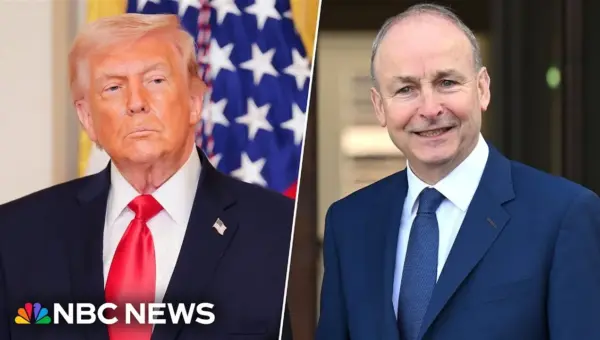
Trump Welcomes Irish Leader, Discusses Trade, Iran Tensions
President Trump welcomed Ireland's Taoiseach to the White House, discussing trade and the strong historical ties between the nations. The meeting also covered President Trump's views on Iran's military capabilities, his criticisms of NATO's support for U.S. initiatives, and upcoming foreign policy engagements.
Trump Reveals Congressman’s Terminal Diagnosis Amid Health Plea
Former President Donald Trump revealed that U.S. Representative Neal Dunn has a "terminal" heart condition. Trump stated he and Speaker Mike Johnson urged Dunn to stay in Congress despite the diagnosis. Dunn had previously announced he would not seek re-election, without specifying his health issues.


Trump’s Jesus Image Backfires, Sparking Outrage
Donald Trump's AI-generated image of himself as Jesus Christ has backfired, drawing widespread criticism and accusations of blasphemy. His shifting explanations and ongoing feud with Pope Francis have further fueled the controversy, potentially alienating key voter groups.